
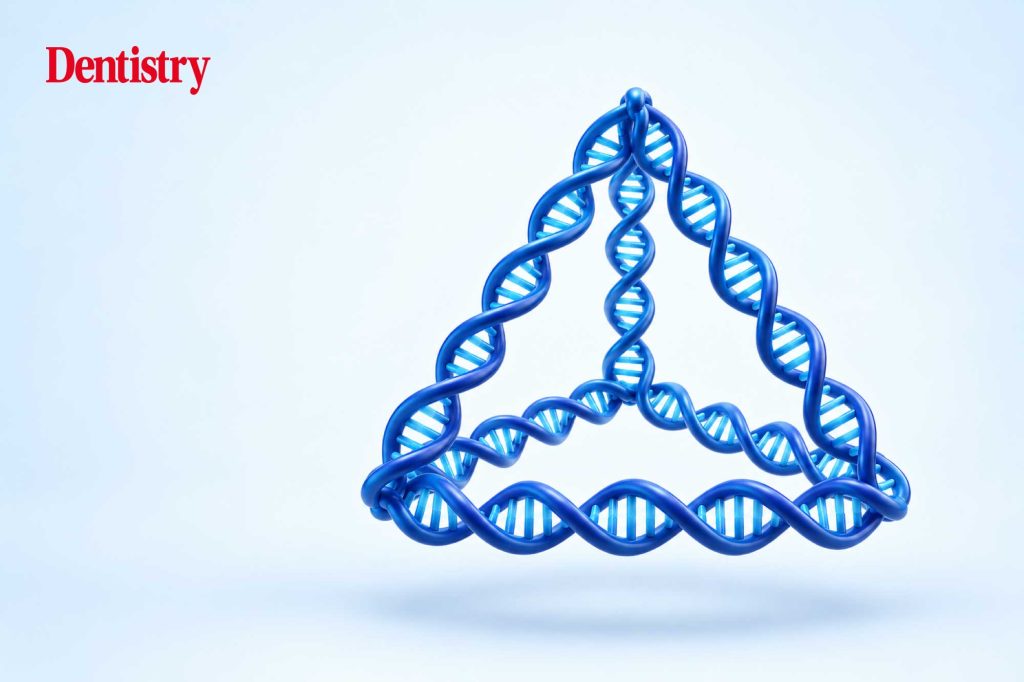
Programmable DNA cages are being explored for their potential to promote oral tissue regeneration by breaking the cycle of oxidative stress and inflammation in oral diseases.
Researchers at Sichuan University set out to find a solution to the harmful cycle of oral tissue damage whereby inflammation generates excessive reactive oxygen species (ROS), which further intensify inflammation and tissue destruction. They described this as a ‘vicious cycle of sustained immunological activation and severe oxidative stress’.
One potential solution investigated by the team is a ‘promising nanotechnology-based strategy’ that uses pyramid-shaped DNA structures to absorb the damaging ROS molecules and deliver repair-promoting medicines to a precise location. Allowing delivery of molecules such as RNAs, antioxidants and bioactive peptides moves the treatment beyond symptom control and towards active regeneration.
The programmable shape of the DNA cages also allows them to be adapted to a range of therapeutic applications including recovery from periodontal disease, oral submucous fibrosis and some forms of jaw osteonecrosis.
Could DNA cages be incorporated into dental treatment?
These findings were published in a review in Oral Science and Homeostatic Medicine, considering previous studies that have employed DNA cages. In some animal models, the structures have reduced inflammatory or oxidative markers and improved measures of wound healing or bone repair.
The authors note that translating their findings into patient care presents questions around long-term safety, how and when the nanostructures are cleared from the body, and whether they can be produced consistently for clinical use.
The review calls for more detailed studies of how the DNA cages behave inside living tissues, alongside disease-specific designs, reliable manufacturing and safety investigations.
The researchers concluded: ‘If these hurdles can be overcome, programmable DNA nanostructures may eventually provide a new way to treat inflammatory damage while helping oral tissues regenerate.’
Read Dentistry‘s breakdown of the latest research in oral regeneration.
Create a free account for unlimited access — plus the Dentistry Bulletin delivered to your inbox.


