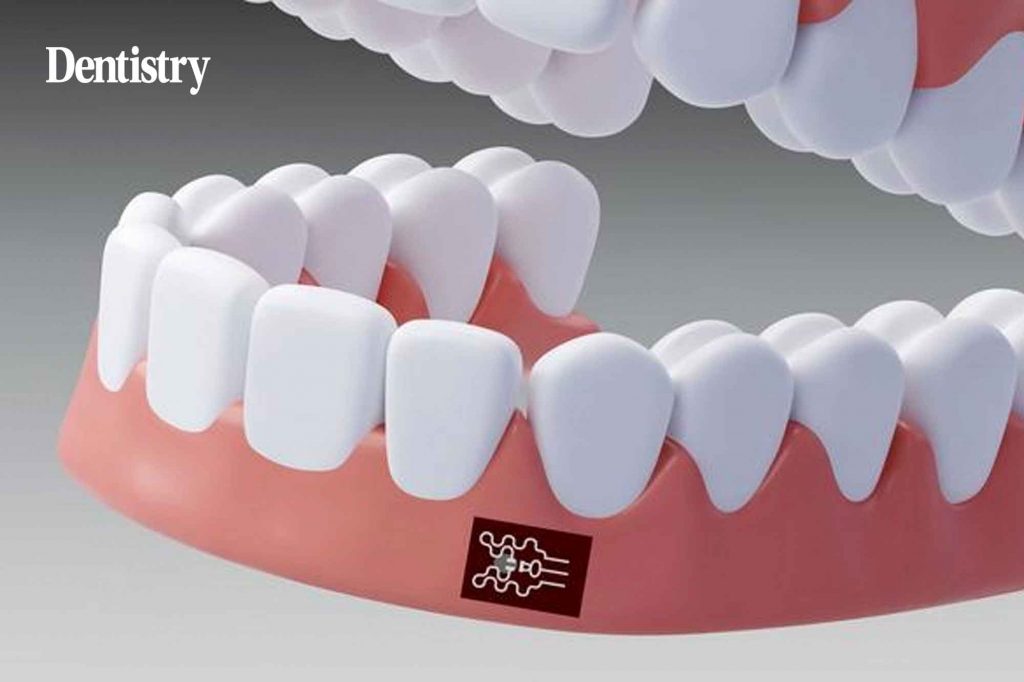
A new tissue-adhesive biosensor has been developed to detect gum disease, which researchers say will ‘shift care from reactive to proactive’.
Developed by researchers at Texas A&M University, the sensor detects inflammatory biomarkers in the mouth with molecular precision. It is unaffected by the moisture of the oral environment and remains attached while eating and talking.
In particular, the biosensor picks up the necrosis factor-alpha (TNF-⍺) protein, a key biomarker for inflammation. The researchers were motivated by a desire to decrease the time it takes to diagnose oral health problems such as gum disease and tooth decay.
They said: ‘The ability to quickly diagnose infections before symptoms appear could shift oral healthcare from reactive responses to anticipatory action.’
How does the gum disease sensor work?
Dr Chenglin Wu is associate professor of civil and environmental engineering at Texas A&M University. He said: ‘My collaborator at Michigan State University engineered a very small opening that will only allow the smaller biomarkers through. Combining that with the highly selective probe attached to the sensing layer makes for accurate selectivity.’
The selective permeable layer acts like a mesh lattice, allowing only molecules of the right size through. This was developed by Dr Shaoting Lin, assistant professor of mechanical engineering at Michigan State. Dr Lin also helped to develop a tissue-adhesive hydrogel that keeps the sensor in place.
He said: ‘Sensing measurements can be significantly influenced by the dynamic movement of tissues. A more robust tissue bond allows for a more reliable sensing performance independent of the strain.’
The biosensor was tested on guinea pigs as they ‘share a number of similar characteristics with humans, particularly with oral inflammation’. The next stages of the research would see it tested on humans. Future studies could also adapt the biosensor for use on other parts of the body and for different biomarkers.
Follow Dentistry.co.uk on Instagram to keep up with all the latest dental news and trends.