
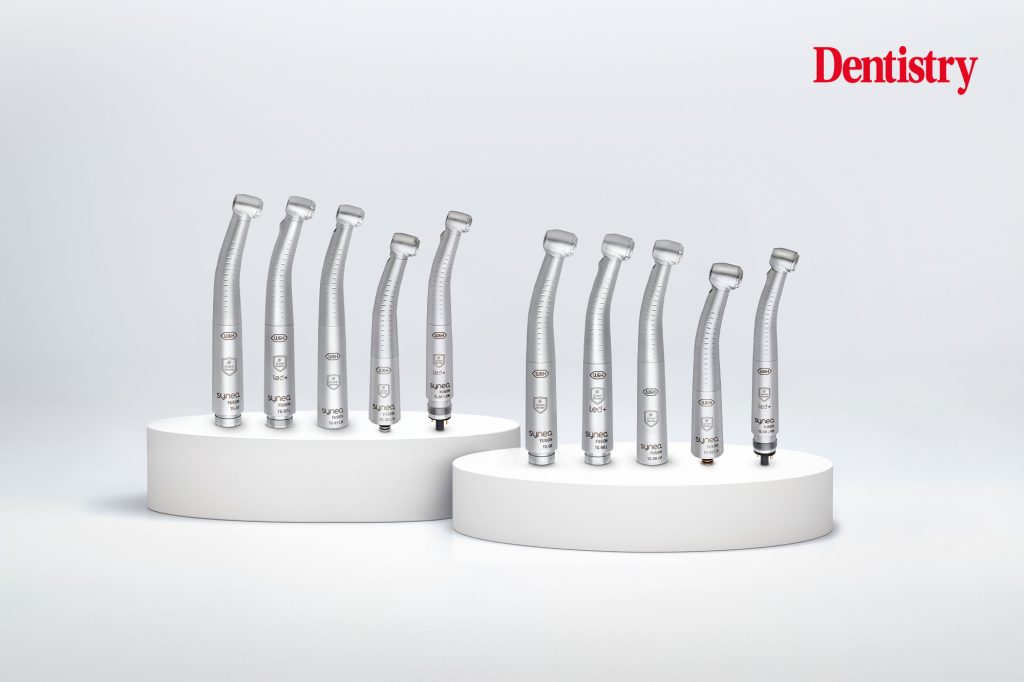
Is saving money worth putting patient safety at risk? Gavin Knight explores the hidden risks of non-genuine handpiece parts.
When a dental handpiece is repaired, what goes back into it matters just as much as who carries out the repair. How many healthcare providers genuinely know whether their service provider is fitting genuine manufacturer spare parts, or taking shortcuts that could compromise the safety, performance, and reliability of their equipment?
There is an uncomfortable question that every healthcare provider should be asking: do I know exactly what is being fitted into my handpiece when it is repaired?
If the answer is no, how can you be certain that the equipment remains safe, reliable and fit for its intended clinical purpose?
Medical equipment is not ordinary machinery, it is precision-engineered, tested, and validated to operate within specific safety and performance parameters. Every component, however small, can contribute to the overall integrity of the device.
Replacing an original component with an unverified alternative may appear to be straightforward cost-saving but what if that replacement compromises accuracy, reliability, or an essential safety feature? What if it contributes to a malfunction during a critical clinical procedure? Who ultimately carries the responsibility when something goes wrong?
The price of a spare part is easy to measure. The consequences of fitting the wrong one may be immeasurable.
This is why the use of genuine manufacturer spare parts should be a fundamental consideration in medical equipment maintenance, not an optional extra to be sacrificed in pursuit of a cheaper repair.
Patient safety is not a cost-saving exercise
To be clear: medical equipment exists to support patient care. Its performance cannot be left to chance, assumptions or the convenience of whichever replacement component happens to be available.
Genuine manufacturer spare parts are produced to the original equipment manufacturer’s specifications and are intended to operate within the handpiece’s established design parameters.
Non-genuine components may not provide the same verified characteristics, compatibility, or performance. Depending on the equipment and the component involved, the consequences could include inaccurate readings, inconsistent operation, premature failure or, in the worst circumstances, a critical malfunction.
Consider the implications in a clinical environment.
A diagnostic device that provides inaccurate information could influence a clinical decision. Equipment that fails unexpectedly could interrupt treatment. A component that compromises the operation of a device could expose both patients and clinical staff to avoidable risks.
These are not hypothetical concerns that can simply be dismissed as engineering technicalities. They go to the heart of patient safety.
Would you knowingly accept an unverified component in equipment that is being used to diagnose, monitor or treat a patient?
If not, why would you allow it to happen during a repair? Patient safety should never depend on an assumption that a replacement part is good enough.
Just because it fits doesn’t mean it works
One of the most dangerous misconceptions surrounding replacement parts is that physical compatibility equates to functional compatibility.
A component may look identical to the original, fit into the same location and allow the equipment to switch on, but that tells you very little about whether it will perform to the required specification.
Differences in materials, manufacturing tolerances, electrical characteristics, mechanical balance and software compatibility can all influence how a medical device operates.
An apparently minor deviation could result in misalignment, increased friction, electrical faults, software errors or accelerated wear on surrounding components.
Dental handpieces provide a particularly striking example.
Some operate at speeds exceeding 200,000 revolutions per minute. At these speeds, precision is not a luxury. Component balance, material quality and manufacturing tolerances are critical to safe and reliable operation. The bearings, turbine and chuck mechanism all must work together within very fine tolerances. A bearing or turbine component that is not to specification can generate excess heat, vibration and noise, and in the worst case could affect how securely the bur is held or create a risk of heat-related injury to a patient’s soft tissue.
A handpiece that switches on is not necessarily a device that works correctly. A repair that appears successful is not necessarily a repair that has restored the equipment to its required performance standard.
Healthcare providers need to understand this distinction.
Are you certain your handpiece remains compliant?
In the UK, medical equipment is subject to medical device legislation and regulatory oversight, including within a framework of applicable medical device legislation and regulatory oversight, including that of the Medicines and Healthcare products Regulatory Agency (MHRA).
Repairs must be undertaken appropriately, taking account of the manufacturer’s instructions, relevant regulatory requirements and the nature of the work being performed.
It is important to recognise that using a non-genuine component does not automatically make every repair unlawful. However, introducing an unsuitable component or departing from the manufacturer’s specified repair requirements can have significant implications for the device’s safety, performance and regulatory status.
The MHRA’s own guidance, Managing medical devices (January 2021), is clear on this point. It advises that replacement parts should be bought either from the manufacturer or to the same specification, and that any decision to use parts from other sources should be risk assessed, costed and documented before it is made. It also warns that there may be legal consequences for a healthcare organisation if a device failure associated with fitting such a part causes an injury or incident.
A cheap repair may look attractive, but what happens when questions are asked following an equipment failure or patient safety incident?
The components used, the repair procedures followed and the checks completed may all become relevant to an investigation.
If you cannot demonstrate what was fitted and how the equipment was returned to service, what evidence do you have that the repair was appropriate?
Compliance should never be treated as paperwork to be completed after the event. It must be considered throughout the repair process.
The false economy of cheap handpiece parts
Non-genuine parts can appear to offer an immediate financial advantage, particularly when the price difference between an original component and an alternative is significant.
But is that saving real?
A replacement component that wears prematurely, performs inconsistently or places additional strain on surrounding parts could result in repeat repairs, further equipment damage and increased downtime.
What initially appeared to be a cheaper repair can quickly become an expensive maintenance problem. The MHRA guidance makes the same point: a cheaper part that needs more frequent maintenance may not be cost-effective in the longer term.
Genuine manufacturer spare parts are specified for the equipment for which they are intended. When used in accordance with the manufacturer’s repair and maintenance requirements, they can help preserve the equipment’s designed performance and intended service life.
The important point is that repair costs should never be judged solely by the initial invoice. Practices should be looking at the total lifetime cost of their handpiece, not simply the price of getting it operational again.
Could your warranty or service agreement be at risk?
There is another issue that healthcare providers sometimes overlook: the potential impact of non-genuine parts on equipment warranties and service agreements.
Manufacturer warranties and service agreements may contain specific conditions relating to maintenance, repairs, authorised service providers and the components that can be used.
Using non-genuine parts, or carrying out work outside the agreed requirements, may affect warranty or service agreement coverage, depending on the applicable terms and circumstances.
Healthcare providers should insist on transparency and establish whether the proposed parts and repair methods are consistent with the manufacturer’s requirements.
Protecting equipment warranty rights and service agreement coverage is not simply an administrative consideration. It is part of responsible asset management.
Equipment downtime has a cost beyond the repair bill
When medical equipment fails, the financial implications are only part of the problem.
Appointments may need to be rearranged. Treatments may be delayed. Clinical teams may have to find alternative equipment, and already stretched staff may face additional pressure.
In busy healthcare environments, even relatively short periods of equipment downtime can have a significant knock-on effect.
Using genuine manufacturer spare parts as part of a competent and appropriate repair process can help reduce the risk of repeat failures associated with unsuitable components.
Of course, no component can eliminate every possible failure. But choosing parts designed for the equipment, alongside following the manufacturer’s service requirements, provides a stronger foundation for reliable operation.
Your equipment should be supporting patient care, not repeatedly disrupting it because corners have been cut during maintenance.
Traceability: can your service provider prove what was fitted?
Knowing that equipment has been repaired is not enough. Healthcare providers should also know what was done, which components were used and whether the work was properly documented.
Traceability is an essential part of responsible medical equipment maintenance.
Genuine manufacturer spare parts may be supported by identifiable part numbers, batch or serial information where applicable, supplier records and relevant quality documentation.
These records can help support maintenance histories, internal audits, troubleshooting and incident investigations.
The precise documentation available will vary depending on the manufacturer and component. However, the principle is straightforward: healthcare providers should be able to establish what has happened to their equipment.
If a service provider cannot identify the replacement parts used, explain where they came from or provide an appropriate service report, how can the healthcare provider independently assess the quality and suitability of the repair?
The questions every dental practice should be asking
Before authorising your next handpiece repair, ask your service provider some straightforward but important questions:
-
Are you using only genuine manufacturer spare parts?
Do not settle for vague assurances. Ask for confirmation that the components specified for the repair are genuine manufacturer parts or, where they are not, evidence that they meet the manufacturer’s specification and have been properly risk assessed.
-
Can you demonstrate where the parts came from?
Request relevant part numbers, supplier information and supporting documentation where applicable.
-
Will the repair follow the manufacturer’s instructions?
Establish which repair procedures and technical requirements will be followed and whether any proposed deviation has been appropriately assessed.
-
What checks will be completed before the equipment is returned?
Ask whether appropriate functional and safety checks, calibration or performance verification will be undertaken where required.
-
Could the repair affect my warranty or service agreement?
Check the applicable terms and establish whether the proposed parts and repair methods are consistent with them.
-
Will I receive a detailed service report?
Request documentation identifying the work undertaken, the parts fitted and the checks completed.
A reputable service provider should be prepared to answer these questions and provide appropriate evidence of the work undertaken.
Can you afford to take the risk?
For dental practices, the repair invoice is only one part of the decision. Knowing which parts have been fitted, how their suitability has been established and what checks have been completed provides a firmer basis for returning equipment to clinical use.
Asking these questions before authorising a handpiece repair can help practices make informed choices about cost, reliability and patient safety.
Create a free account for unlimited access — plus the Dentistry Bulletin delivered to your inbox.


