
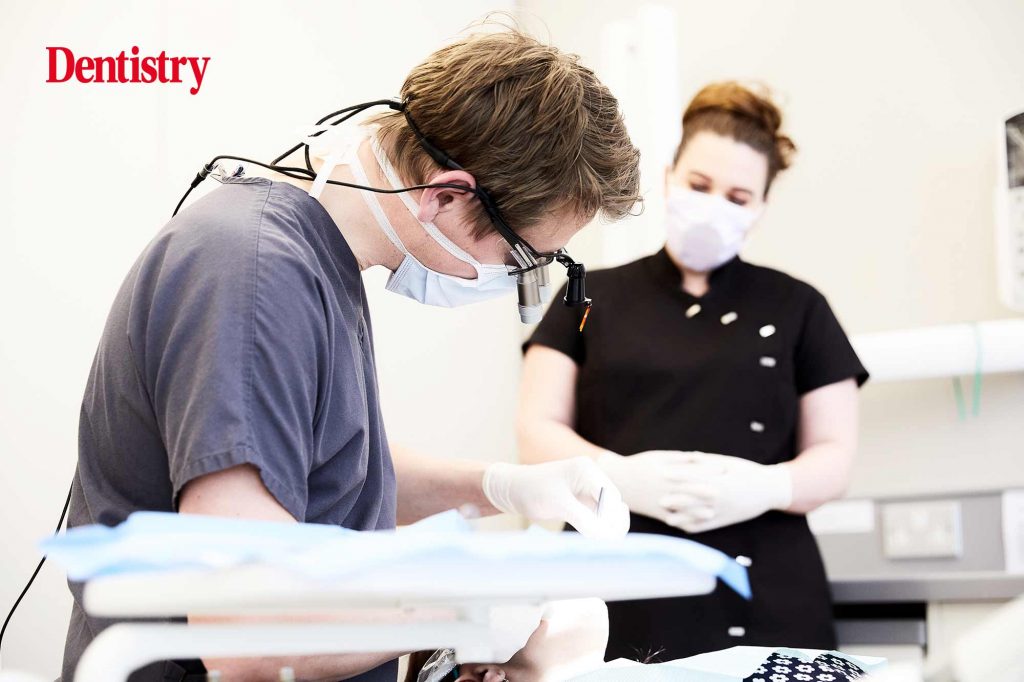
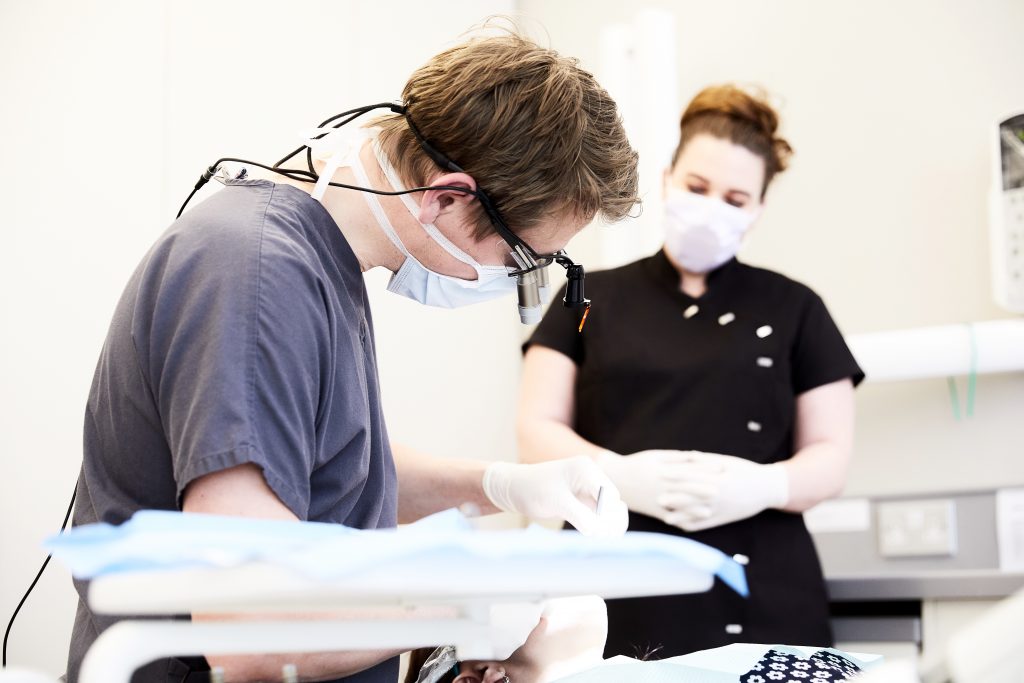
Principal dentist and specialist prosthodontist James Baker reflects on switching to W&H and how its dental handpieces transformed his clinical workflow.
Like most dentists of my generation who graduated last century, I quite literally cut my teeth on underpowered air turbines and rattly old latch-grip, slow-speed handpieces.
Then, 25 years ago, five years after graduating, I first started using W&H handpieces when I began a two-year, part-time certificate course in restorative dentistry at the Eastman ICED at 123 Gray’s Inn Road.
My teachers there, Alistair Stokes and Andrew Croysdil, insisted we used the 1:5 speed-increasing handpiece for all crown, veneer and onlay preparations. So, I dutifully bought my very first one for the practice, even though I was still an associate – and associates never buy their own dental equipment!
Discovering the benefits of the 1:5 handpiece
When I left general practice a couple of years later to start a full-time master’s degree in conservative dentistry at the Eastman Dental Institute and Hospital at 256 Gray’s Inn Road, we spent the first six weeks of the course in the phantom head room, exclusively using the 1:5 to cut all cavities, endodontic access and all types of preparations for indirect restorations.
The department head, Derrick Setchell, wouldn’t allow any of his postgraduate students to use air turbines and insisted we used the 1:5 handpieces due to their superior control, torque and the ability to vary the speed depending on the task in hand – with speeds as high as 200,000rpm for bulk reduction with coarse diamond friction-grip burs, to as little as 10,000rpm for smoothing preparation margins with white stones.
Superior control and torque
The main advantages of the 1:5 handpiece over the air turbine handpiece are that the bur runs true, without the wobble and judder caused by the air turbine’s slop within the handpiece head, and that, because the bur is turned mechanically rather than with compressed air, it will not lose torque when worked hard against a tooth or restoration.
This can be particularly useful when having to cut through hard, non-precious metal alloys, such as cobalt chromium, or modern dental ceramics, like zirconia.


Creating a versatile armamentarium
When I bought my own practice a couple of years after graduating from the Eastman, I kitted it out with W&H 1:5 handpieces for friction-grip burs, 1:1 handpieces for latch-grip burs, finishers and polishers, 4:1 endodontic handpieces for rotary canal preparation, 20:1 implant handpieces for osteotomies and 1:1 straight handpieces for prosthesis adjustment.
What I wanted was the versatility of this range of tools when combined with electric motors, allowing precise speed and torque control for whatever job was required.
An essential part of my teaching kit
For over 20 years now, I have taught postgraduate dentists undertaking their specialist and consultant training, on master’s programmes and at one-day hands-on courses. I always include these handpieces as part of my essential kit list, whether I’m teaching complex indirect restoration preparations or creating lifelike anatomy in direct resin composite restorations.
I find the design of the handpieces very ergonomic, and they provide an excellent level of grip without feeling rough to hold. This is essential when working in areas of reduced access, such as the posterior regions of the mouth, especially if using less-grippy, non-latex gloves.
The LED lights and directed water spray provide fantastic visibility while working, achieving excellent cooling without flooding the working area.
‘Looking back now at my early years in dentistry, I realise how much slicker my workflow has become’
Precise speed and torque control
On my chairside delivery unit, I have two electric motors, both with four customisable preset speeds which, when combined with both the 1:5 and 1:1 handpieces, provide me with eight different standard speed settings, from as low as 1,000rpm all the way up to 200,000rpm.
The endo motor provides a further four speed and torque options, providing complete versatility for all endodontic preparation procedures.
The last part of my W&H armamentarium is my Implantmed unit with a 20:1 handpiece. This again provides four preset speed and torque settings, which allow me, at one end of the scale, to use water-cooled, high-speed drilling at 1,200rpm for the initial preparation of hard cortical bone and, at the other end of the scale, to use ultra-slow speeds of 75rpm for soft cancellous bone. When used without coolant, this allows uncontaminated autogenous bone harvesting from the flutes of the twist drills.
A slicker workflow
Looking back now at my early years in dentistry, I realise how much slicker my workflow has become with such a versatile range of rotary instruments at my disposal.
Go back to using those same old two handpieces? I think I’m OK, thanks!
This article is sponsored by W&H


