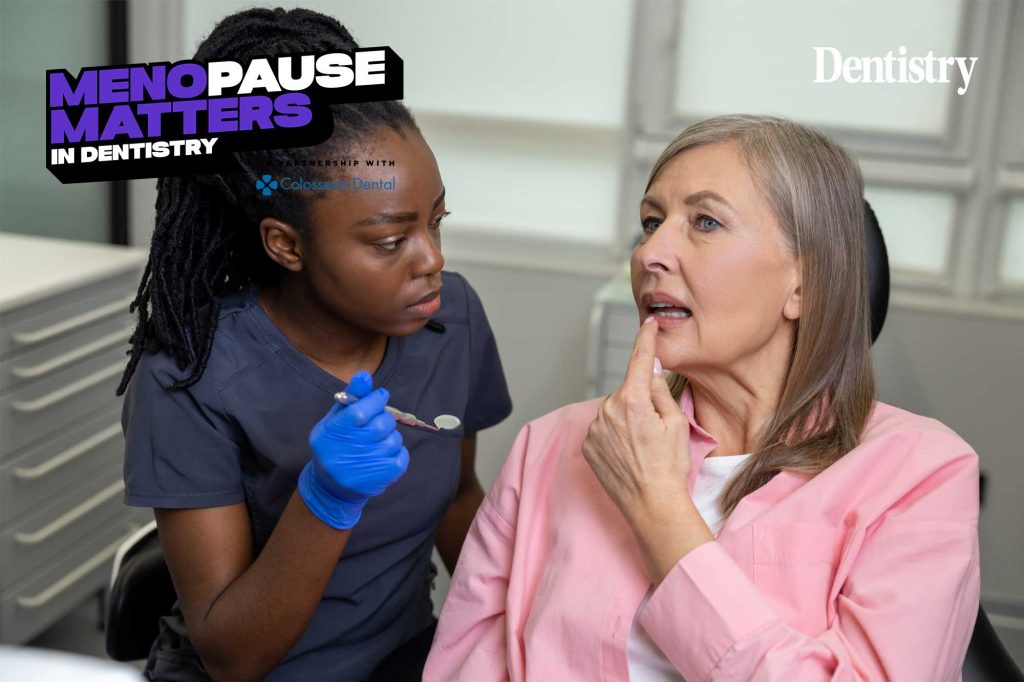
Sarika Shah explains why menopause training should be core clinical knowledge in dentistry, helping teams recognise oral symptoms, start conversations and provide clear pathways for care and referral.
During menopause, 70% of women report at least one oral health symptom – but 2% have ever mentioned it to their dentist (Delta Dental, 2023). Sit with that for a moment, because it is not a gap in patient awareness so much as a gap in what we, as a profession, have trained ourselves to ask.
The scale of what we are missing is not small. Roughly 13 million women in the UK aged 45 and over are currently perimenopausal or menopausal, close to a third of the female population, and more than half of the patients sitting in our chairs will be affected by menopause at some point in their lives. Yet around 90% of the public has no idea that menopause and oral health are connected at all (Berry and Tighe, 2025).
We are not dealing with a rare presentation. We are dealing with an ordinary, universal life stage that dentistry as a profession has largely left unexamined.
The silence on menopause starts in training
Practitioners surveyed on this exact question described leaving dental school with, in their words, zero knowledge of menopause’s oral health effects, and that gap in awareness tracked directly with a lack of confidence raising it at chairside (Williamson and Reed, 2023).
There is also a quieter, two-way taboo at play. Patients are reluctant to mention something that can feel private or ageing. Clinicians, meanwhile, are more likely to attribute oral changes to hygiene than to hormones, particularly among male colleagues treating female patients on a subject neither party was ever taught to discuss.
That matters clinically, not just culturally. Oral tissue and salivary glands carry oestrogen receptors in the same way bone and skin do, and declining oestrogen shows up in the mouth in ways that are fairly well documented but rarely connected back to menopause in a routine consultation: reduced salivary flow and dry mouth, burning mouth syndrome, altered taste, and periodontal disease accelerated by oestrogen-driven bone loss (Adam and Wooton, 2022).
A patient presenting with a burning tongue, a sudden change in denture fit, unexplained taste disturbance, or gum recession that will not respond to hygiene alone may be showing us a perimenopausal symptom, not a hygiene failure or an unrelated complaint. Without that context, we tend to treat what is in front of us rather than the cause behind it: a mouthwash for the dryness, reinforced brushing for the bleeding, a new denture adhesive for the fit, each reasonable on its own, but each missing the thread that connects them.
Holistic care in midlife
None of this needs to wait for national curriculum reform, although I believe that reform is overdue. It starts with a simple shift at chairside, and it is the gap I set out to address when I launched Menopause Mouth Matters, a campaign built to put this conversation on the profession’s radar.
Awareness alone will not change practice unless it comes with a standardised way of acting on it, which is what I have been developing through the Shah Menopause Oral Health Index (SMOHI) – a chairside menopause screening index currently on the pathway to ethical approval for a pilot study.
The intention is a consistent structure across the whole pathway, firstly by prompting the conversation at chairside the same way we already ask about pregnancy or medication changes. Then, by assessing for the oral symptoms linked to the menopausal transition, managing what sits within our scope, and referring onward through a clear pathway – whether to a GP, a menopause specialist or another allied healthcare professional.
Building that kind of connection between dentistry and the wider healthcare team is what patient centred care in modern dentistry is supposed to look like.
The value of clinical training on menopause
The wider fix is ours to build together as a profession: clinical training that treats menopause as core clinical knowledge rather than an optional extra, and a shift in mindset that treats a patient’s silence on the subject as a sign of our own gap in asking, not theirs in telling. This sits in the ordinary, daily list of half our patients, whether we have been trained to see it or not.
Two per cent of women are currently raising this with us unprompted. That number will not move until asking first is backed by a standardised way of doing it, and until it becomes as unremarkable a part of dental training as asking about smoking or diet ever was.
Menopause Matters in Dentistry
In partnership with Colosseum Dental, Dentistry is recognising October’s Menopause Awareness Month.
Through expert insight, evidence-based information and the real experiences of dental professionals, the month-long campaign will focus on education, visibility and practical support, exploring the different ways menopause can affect those working across dentistry – as well as its potential implications for oral health.
Read more from the campaign:
References
- Delta Dental of California. Menopause and Oral Health Survey, 2023. https://www.deltadentalinstitute.com/news/delta-dental-news/menopause-may-be-linked-to-change-in-teeth-or-gums-for-women-over-forty/
- Berry C, Tighe B. Menopause and oral health: bridging the knowledge gap. BDJ Team 2025. https://doi.org/10.1038/s41407-025-3040-9
- Williamson Z, Reed D. Barriers and enablers to patient conversations about menopause in the dental surgery. BSDHT, 2023. https://www.bsdht.org.uk/barriers-and-enablers-to-patient-conversations-about-menopause-in-the-dental-surgery/
- Adam M, Wooton J. Menopause and oral health. British Dental Journal 2022;233:170. https://doi.org/10.1038/s41415-022-4568-0
Create a free account for unlimited access — plus the Dentistry Bulletin delivered to your inbox.