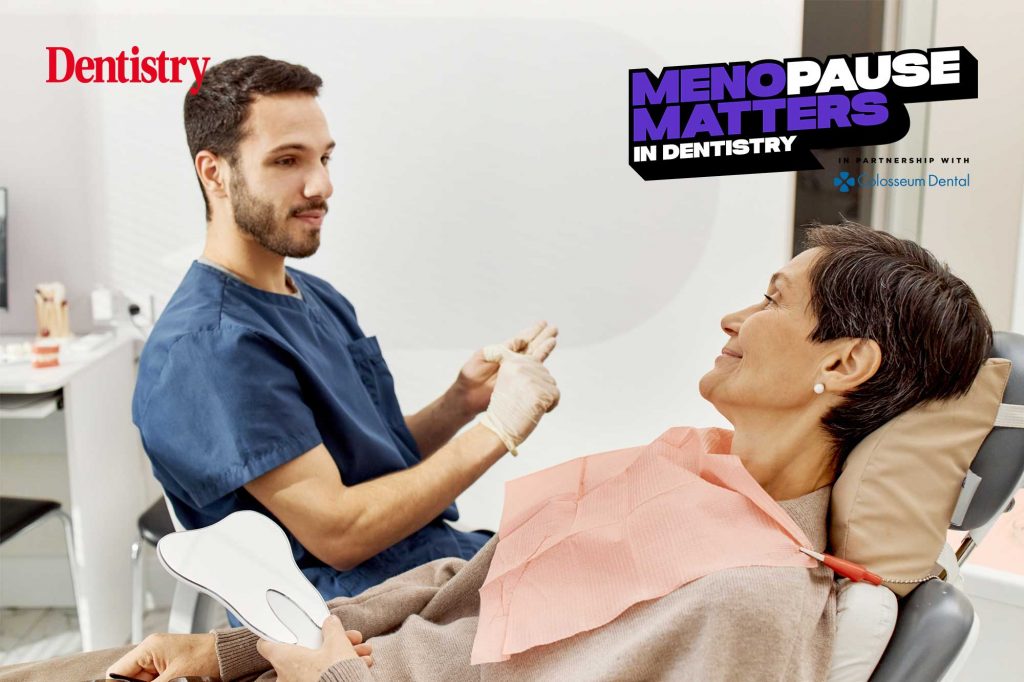
Rafina O’Brien shares the signs of perimenopause and menopause that should prompt dental professionals to ask more questions.
Perimenopause and menopause can bring a wide range of physical and psychological changes, but oral health is an area that can easily be overlooked.
For some women, the menopausal transition may coincide with symptoms such as dry mouth, altered taste, burning or oral discomfort, alongside changes in gingival and periodontal health. However, the evidence is complex, and these symptoms should not automatically be attributed to hormonal changes. Age, medication, systemic health, hydration, oral health behaviours and other factors can all contribute.
For dental professionals, menopause should therefore be a prompt to ask more questions, rather than make assumptions.
Start with a question
A simple conversation can uncover problems that might otherwise remain unreported.
Rather than waiting for a patient to volunteer information, dental professionals can ask whether they have noticed any changes in their mouth, particularly if they mention changes to their menstrual cycle or other symptoms associated with perimenopause or menopause.
A question such as: ‘Have you noticed any changes in your mouth since your periods or other menopausal symptoms started changing?’ can open the door to a much broader assessment.
This is relevant because an integrative review examining oral healthcare among women during perimenopause and menopause identified limited oral health knowledge and unmet oral-health needs, alongside gaps in advice from healthcare professionals. The authors also highlighted the limitations of the existing evidence base, reinforcing the need for caution when interpreting associations between menopause and oral health (Thomas et al, 2025).
The conversation does not need to become another lengthy medical history. It is about creating an opportunity for the patient to tell us what has changed.
Look beyond the scale and polish
Menopause does not create a separate set of periodontal protocols. The fundamentals of prevention and periodontal care remain the same.
However, the menopausal transition can be a useful prompt to reassess the patient’s individual risk. Plaque control, bleeding, periodontal probing findings, recession and attachment levels should be considered within the context of the patient’s overall periodontal assessment and established risk factors.
A 2026 systematic review found associations between postmenopausal status and several periodontal clinical outcomes, including greater clinical attachment loss, probing depths and periodontal inflammation compared with premenopausal women. However, the certainty of the evidence ranged from moderate to low, and there was considerable variation between studies. The authors concluded that higher-quality prospective research is required (Civiletto-S Martín et al, 2026).
That distinction is important in practice.
We should be attentive to changes in periodontal health, but we should not tell a patient that menopause itself means they will develop periodontal disease.
Don’t overlook dry mouth
Xerostomia is another symptom worth exploring.
Patients may describe waking with a dry mouth, needing to sip water frequently, difficulty eating dry foods, changes in taste or general oral discomfort. However, dry mouth has numerous potential causes, including medication, dehydration and mouth breathing. A careful medical and medication history is therefore essential.
‘Management should be individualised according to the patient’s symptoms, clinical findings and underlying risk’
Medication review is particularly important because xerostomia can be associated with a wide range of commonly prescribed medicines and should not automatically be attributed to hormonal change.
Saliva has an important protective role within the oral environment. Reduced salivary flow can increase susceptibility to caries and contribute to difficulties with eating, speaking and maintaining oral comfort.
Management should be individualised according to the patient’s symptoms, clinical findings and underlying risk. Depending on the circumstances, this may include advice on hydration, reducing the frequency of free sugars, stimulating saliva, using saliva substitutes and optimising fluoride exposure.
Current UK prevention guidance recommends that adults brush twice daily with toothpaste containing 1,350 to 1,500ppm fluoride. Additional fluoride measures may be appropriate where an individual’s caries risk indicates a need for them (Department of Health and Social Care, NHS England, Welsh Government, Department of Health Northern Ireland, 2025).
Burning, altered taste and oral discomfort
Burning oral symptoms can be particularly challenging for both patients and clinicians because significant symptoms may occur despite little or no obvious clinical abnormality.
A 2026 systematic review examining the relationship between menopause and burning mouth syndrome reported an association between the two, but also highlighted the multifactorial nature of the condition (Qaderi et al, 2026).
This means that persistent burning symptoms should not simply be explained away as ‘hormones’.
A thorough history and appropriate examination remain important. Consider the timing and nature of symptoms, medications, oral habits, dietary factors and relevant systemic conditions, alongside the clinical examination. Where symptoms persist or the diagnosis is uncertain, further investigation or referral may be appropriate.
The patient’s experience should be taken seriously even when the clinical examination appears relatively normal.
Don’t miss what isn’t menopause
Perhaps the most important clinical message is that menopause should never become a diagnostic shortcut.
A new ulcer, persistent red or red-and-white patch, unexplained lump or other concerning mucosal change should be assessed on its own clinical merits rather than attributed to perimenopause or menopause.
NICE recommends referral through a suspected cancer pathway for unexplained oral ulceration lasting more than three weeks. It also recommends urgent assessment of a lump on the lip or in the oral cavity and of a red or red-and-white patch consistent with erythroplakia or erythroleukoplakia.
This is not about alarming patients. It is about good clinical examination, appropriate documentation and recognising when a finding does not fit the expected clinical picture.
Make prevention personal
The menopause conversation does not need to become another lengthy checklist, instead:
- Ask what has changed
- Assess periodontal and caries risk
- Check saliva, medication and relevant medical history
- Reinforce fluoride and effective plaque removal
- Discuss interdental cleaning where appropriate
- Examine the oral mucosa carefully
- Investigate persistent or unexplained symptoms rather than automatically attributing them to menopause.
And where a patient is experiencing wider menopausal symptoms, dental professionals can signpost them towards an appropriate healthcare professional for further discussion.
Our role is not to diagnose or manage menopause treatment. It is to recognise potential oral-health changes, assess what we can clinically assess, identify problems that require further investigation and support patients with appropriate prevention and signposting.
NICE recommends an individualised approach to identifying, discussing and managing perimenopause and menopause, with care adapted according to the person’s symptoms and changing circumstances.
The menopausal transition is not a dental diagnosis. It is a life stage that can intersect with oral health in several different ways.
As dental professionals, we do not need to label every symptom as hormonal. We need to notice, ask, assess and act appropriately.
Sometimes, making oral health part of the perimenopause and menopause conversation is the most useful place to start.
Menopause Matters in Dentistry
In partnership with Colosseum Dental, Dentistry is recognising October’s Menopause Awareness Month.
Through expert insight, evidence-based information and the real experiences of dental professionals, the month-long campaign will focus on education, visibility and practical support, exploring the different ways menopause can affect those working across dentistry – as well as its potential implications for oral health.
Read more from the campaign:
References
- Civiletto-S Martín F, Rus MJ, de la Cruz Gándara Alvarez A, Simon-Soro A, Cantiga-Silva C (2026) Impact of menopause on clinical periodontal outcomes: a systematic review. Clinical Oral Investigations 30: 143
- Department of Health and Social Care, NHS England, Welsh Government, Department of Health Northern Ireland. Delivering Better Oral Health: An evidence-based toolkit for prevention. Updated 10 September 2025
- Labunet A et al (2025) Oral Manifestations in Menopause: A Scoping Review. Medicina. 61(5): 837
- National Institute for Health and Care Excellence. Suspected cancer: recognition and referral (NG12). Recommendations 1.8.2-1.8.4
- National Institute for Health and Care Excellence. Menopause: identification and management (NG23). Updated 15 April 2026
- Qaderi K, Eghdampour F, Mallah MA, et al (2026) Exploring the association between menopause and burning mouth syndrome: an updated review. BMC Oral Health 26: 1517
- Thomas N, Peters K, O’Reilly K, Sousa MS, George A (2025) Oral health care among women in perimenopause or menopause: an integrative review. Journal of Midwifery & Women’s Health 70(1): 17-31.
Create a free account for unlimited access — plus the Dentistry Bulletin delivered to your inbox.