
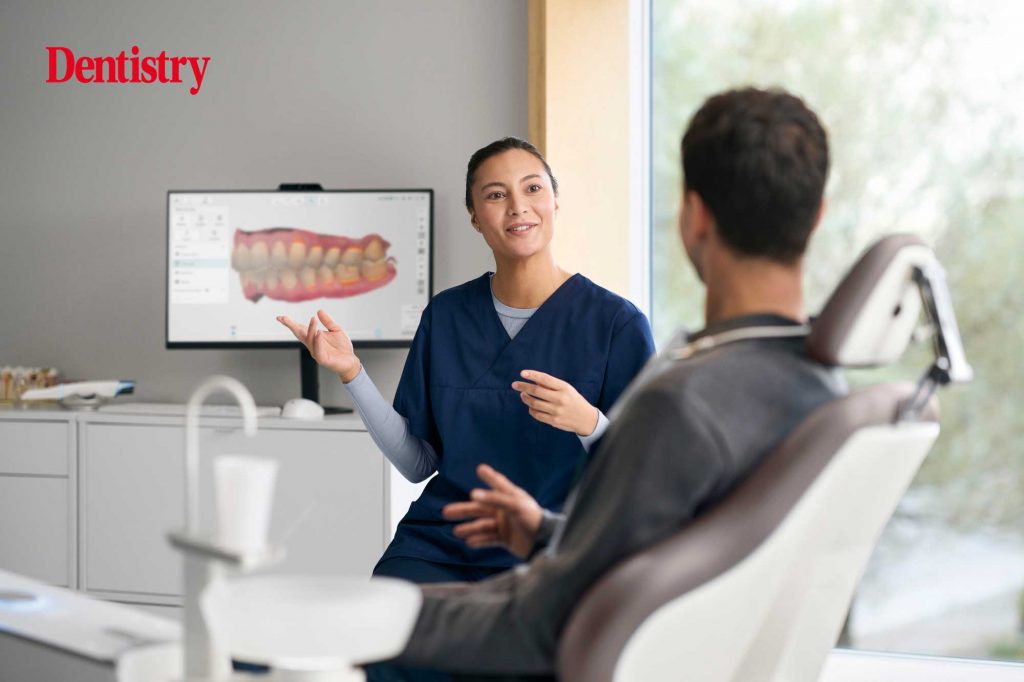
Digital diagnostic tools are reshaping patient education at Zahnarztpraxis Axel Wittmann in Germany, helping patients visualise their oral health, understand treatment recommendations and take a more active role in their care.
Patient education has always been one of the biggest challenges in dentistry. Even when clinicians clearly explain conditions such as tooth wear, plaque build-up, gingival recession, or early caries, many patients struggle to fully understand what is happening inside their mouths. Dental professionals can see clinical issues immediately, but patients often rely on verbal explanations, mirrors, or radiographs that may be difficult to interpret. As a result, treatment discussions can feel abstract and important recommendations may be delayed.
At Zahnarztpraxis Axel Wittmann in Kiel, Germany, digital diagnostic technology is helping bridge this communication gap. Led by Dr Axel Wittmann, the practice has embraced a digital workflow for many years and recently introduced the 3Shape TRIOS 6 intraoral scanner together with Dx Plus software. The objective was not simply to digitise impressions but to enhance patient understanding and create more meaningful conversations about oral health.
Making patient education more visual
The practice identified a common challenge seen across dentistry. Patients frequently leave appointments without fully appreciating the significance of the conditions identified during examinations. Even when preventive advice is provided, information can be forgotten after the appointment. Dr Wittmann wanted a more visual, objective way to communicate findings and help patients better understand their own oral health.
With Dx Plus, diagnostic scans become a visual communication tool. Following a scan with TRIOS 6, clinicians can review visualisations that highlight conditions such as plaque accumulation, tooth wear, gingival recession and potential caries directly on the digital model. Instead of relying solely on descriptions, clinicians can show patients what they are seeing in a clear and engaging format.
Bringing patient education into routine appointments
The impact of this approach has been significant. Today, diagnostic scanning is incorporated into routine check-up and prophylaxis appointments at the practice. Patients first receive a scan and then review the findings together with the clinician on a large screen. This transforms the consultation into a collaborative discussion. Patients can see their own oral health conditions, ask questions and gain a better understanding of the reasons behind treatment recommendations.
According to Dr Wittmann, the most valuable part of the process is not the scan itself but the conversation that follows. By making oral health conditions visible, discussions become easier to follow and more memorable. Patients are empowered to take a more active role in decisions regarding their care.
The results reported by the practice indicate improvements in patient engagement and treatment acceptance across a range of procedures, including preventive care, restorative treatments and crowns. Importantly, the goal is not to encourage unnecessary treatment but to support informed decision making. When patients understand their diagnosis and the biological factors affecting their oral health, they can make decisions with greater confidence.
Strengthening trust through clearer communication
This case reflects a broader trend within modern dentistry. Digital technologies are increasingly being used not only for clinical workflows but also for patient communication. As practices look for ways to improve education, trust and treatment acceptance, visual diagnostic tools can play an important role in strengthening clinician-patient relationships.
For dental professionals seeking new ways to enhance consultations, digital diagnostic workflows offer an opportunity to transform routine check-ups into educational experiences. By helping patients clearly see and understand their oral health, practices can create more informed conversations, strengthen trust and support long-term oral health outcomes.
Ready to elevate patient communication and engagement? Book a 3Shape Dx Plus demo and see how digital diagnostics can support better treatment conversations and outcomes. Get in touch on 01183 151 300 or ukenquiries@3shape.com.
This article is sponsored by 3Shape.


