
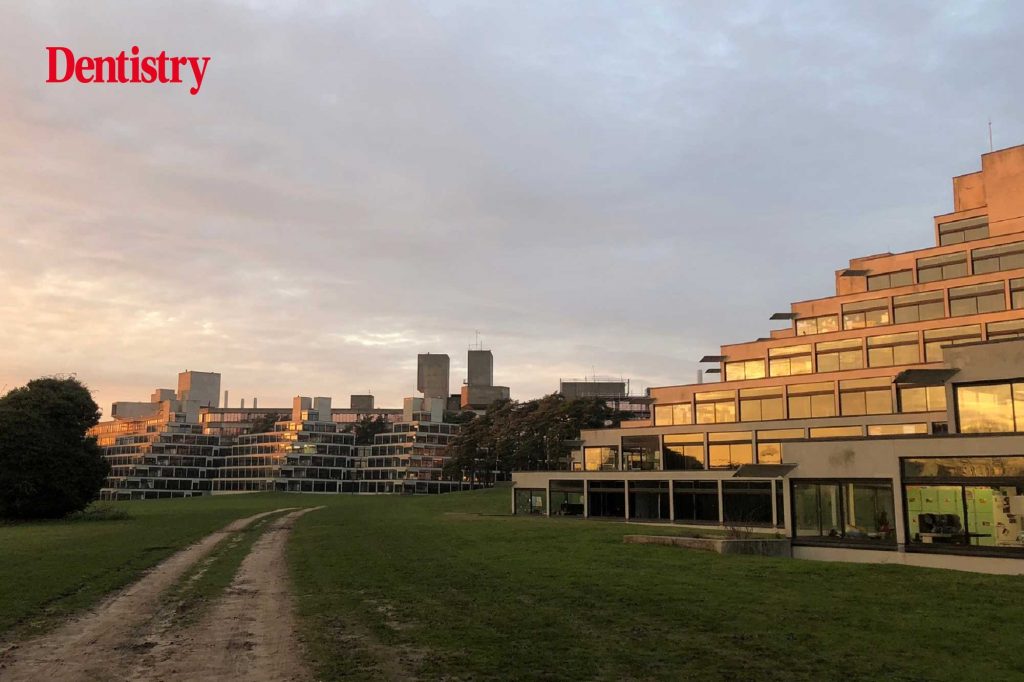
The University of East Anglia (UEA) said the low number of places allocated to its new dental school has created financial pressure as it asked alumni to consider donating £10 a month to fund new dental equipment.
The government announced in June that it would fund 50 new dental school places, divided between UEA and the University of Portsmouth. However, Professor Philip Baker, pro-vice chancellor of UEA’s Faculty of Medicine and Health Sciences, told the BBC they had been hoping for at least two times more than the 25 places allocated.
He continued: ‘Most dental schools have a cohort of around 70 students and that’s not a coincidence. Clearly extra students mean extra staff but that business model is tougher with a smaller number of students. It is doable but tougher.’
In an email to former students, UAE said: ‘Your support could help equip the clinical spaces where students learn, provide specialist instruments and state-of-the-art training equipment.’
Will the new dental school still go ahead?
UEA’s plans to develop a School of Oral Health were first announced in 2024, with students set to work on real patients from 2028. The new dental school has been supported by a £1.5 million grant from the Greater Norwich Growth Board’s Infrastructure Investment Fund.
Leader of South Norfolk Council Daniel Elmer said: ‘The need for change is clear. Access to NHS dental appointments remains a major concern for many of our residents, with long waiting lists and very limited availability. Norfolk ranks among the lowest performing areas in the country for access to NHS dentistry, highlighting the importance of us developing local solutions.’
Despite the financial strain, Professor Baker said he was ‘absolutely 100% confident that the dental school will start and our students will have a great experience’.
Construction of the dental school campus is now complete, with training facilities such as phantom heads due to be fitted over the coming months.
The ‘pubic duty’ of dental training
The University of Portsmouth was allocated the remaining 25 places, though it already trains dental therapists, hygienists and nurses. Chris Louca, director of dentistry at Portsmouth, told Dentistry that its existing facilities and training experience had created a strong foundation for delivering the new BDS.
However, he continued: ‘While 25 students a year is a strong start, we’d welcome the chance to build on it. We have the capacity to train more dental students and have included this ambition in our conversations with the government, it being widely recognised that between 50 and 70 places is the most efficient and effective cohort size.’
The desire to expand the course is partly motivated by the needs of the community. Professor Louca said: ‘To make real progress on waiting lists, particularly within the “dental deserts” our region faces, we believe we’ll need to train 50 or more dentists each year. We are ready to work with the government to increase the number of dental places we can offer when funding is expanded in the future.’
While acknowledging the ‘challenging financial environment’ faced by every UK university, he described dental training as a ‘public duty’ that he was proud to carry out.


