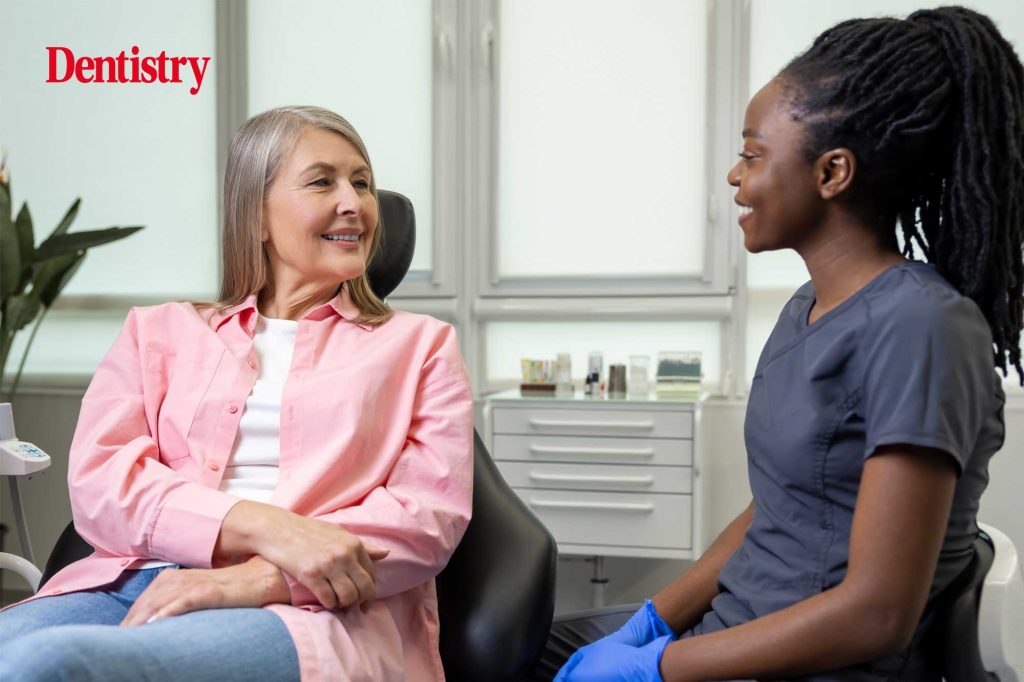
Claire Berry and Ben Tighe explore ways to build a dental system that considers menopause to support women at every stage of life.
The gender health gap faces new hurdles. Historically neglected, women’s wellness is increasingly being placed front and centre, and this shift in focus is gaining momentum. However, social media censorship now poses fresh challenges.
While the internet offers opportunities for professionals to unravel complex health issues and promote evidence-based products to audiences, ‘shadow banning’ – an algorithm that restricts, de-categorises, or hides content – is creating significant barriers to accessing this information.
In 2023, a survey by UK period product brand Bodyform revealed a list of more than 40 women’s health terms banned or restricted on social media platforms, including ‘menopause’. The issue has become so serious that in May this year, a UK parliamentary debate addressed the urgency of digital censorship and its impact on women’s health.
Why is menopause taboo in the dental sphere?
These challenges are all too familiar to award-winning hygienist Claire Berry and dental therapist and tutor Benjamin Tighe. They host the podcast Your Dental Besties and are part of a movement to change the narrative.
Last year, they toured the UK with their Women’s Health Roadshow – From Cradle to Grave – raising colleagues’ awareness of the links between wellbeing and oral health. More recently, they took their message further afield to Canada, where they addressed the dental implications of menopause at an oral health summit. Both are pursuing a postgraduate qualification in menopause medicine.
Ben says: ‘Digital platforms are one of the most powerful ways to share health information; they are where people go first to seek answers. With shadow banning making it harder for evidence-based information to reach those who need it, we need a strong digital presence. By creating accurate and easy-to-understand content, we can help counter misinformation and empower people to make informed decisions about their health.’
Unfortunately, menopause and periods remain taboo. Claire believes that the same openness online, which is breaking down these barriers, should extend to face-to-face conversations in clinical settings.
‘As clinicians, it is imperative we help normalise these conversations. We build long-term relationships with our patients, which puts us in a unique position to discuss “difficult” topics, such as menopause.’
The science behind menopause and dental health
For this to happen, clinicians must first understand the science.
Claire explains: ‘Ben and I spent almost a year preparing for the Women’s Health Roadshow, attending lectures, reading research papers, speaking with experts, and consolidating the latest evidence. Our aim was to distil that knowledge into a practical, evidence-based course so hygienists and therapists didn’t have to spend time interpreting the information themselves.’
The key takeaways equip them with the knowledge and confidence to discuss the implications of hormonal fluctuations with patients.
She says: ‘Women experience significant hormonal changes throughout their lives, and the hormonal fluctuations of perimenopause, followed by the oestrogen deficiency associated with menopause, can lead to a range of oral symptoms. These may include altered taste, burning mouth sensations, and reduced salivary flow resulting in xerostomia (dry mouth). Saliva plays a vital role in maintaining oral homeostasis by lubricating the oral tissues, supporting the oral microbiome and providing antimicrobial protection.
‘Reduced salivary flow can therefore increase the risk of dental caries, mucosal discomfort and oral infections, and may also make plaque control more challenging, potentially exacerbating existing gingival and periodontal inflammation. Dry mouth can also occur as a side effect of many prescription and over-the-counter medications.’
How can dental professionals help?
Ben adds: ‘During perimenopause, fluctuating oestrogen levels can influence the oral tissues, leaving some women more susceptible to gingival inflammation, dry mouth and increased sensitivity. Following menopause, persistently reduced oestrogen levels may contribute to changes in the oral environment and soft tissues, potentially affecting periodontal health and quality of life.
‘Beyond the oral cavity, hormonal changes during the menopause transition can also contribute to symptoms such as anxiety, low mood, sleep disturbance and cognitive changes, all of which may influence a patient’s ability to prioritise and maintain their oral health.
‘Our role is to manage the patient’s presenting symptoms while addressing the underlying causes through good oral hygiene, prevention, and appropriate periodontal care and products. For example, Gengigel contains hyaluronic acid, which supports tissue hydration and the natural healing process, making it a useful adjunct for patients experiencing soft tissue irritation or following periodontal treatment.’
Gengigel is a unique, patented range of oral care products that utilise the natural healing properties of hyaluronic acid to treat a range of oral conditions associated with soreness and inflammation. It stops any minor bleeding, soothes soreness, alleviates pain, and promotes rapid healing.
Claire and Ben encourage dental teams to proactively enquire about relevant health issues and to base any at-home recommendations on the available evidence. Explaining how hormonal changes can affect oral health and reassuring patients that these are common and significant topics to discuss underpins a holistic approach. Offering advice on the best available products further supports this.
Supporting gum health during menopause
The Gengigel Perio range is designed to help support gum health with a unique combination of high-molecular-weight hyaluronic acid and chlorhexidine.
The range contains Gengigel Perio toothpaste and Gengigel Perio mouth rinse. For more information or to place an order, click below.
This article is sponsored by Dentocare.