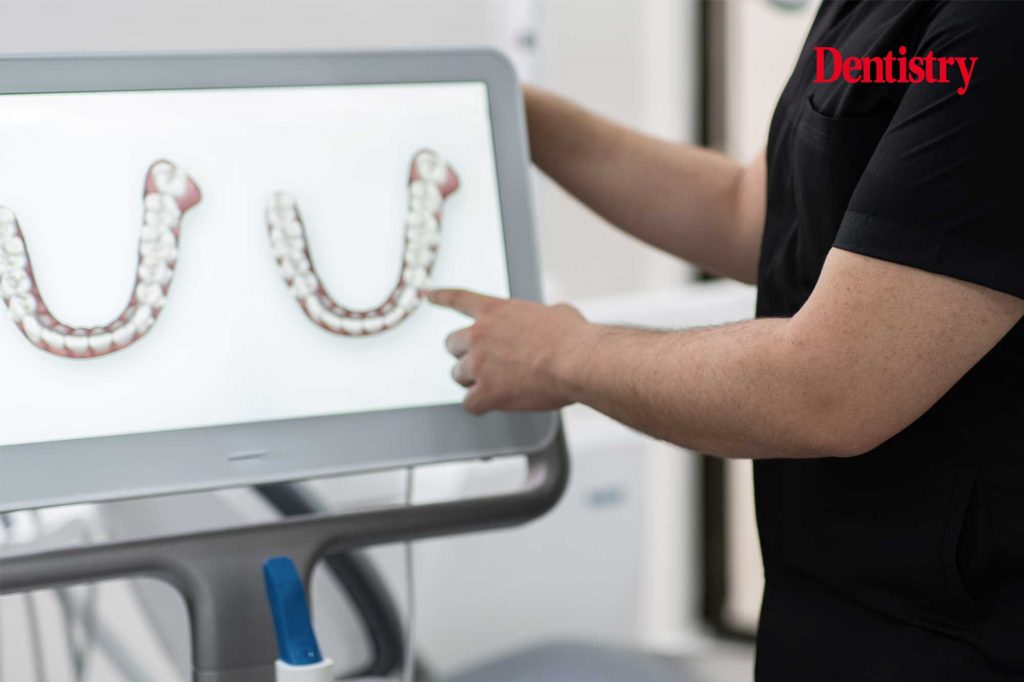
With unprecedented digital transformation reshaping how dental practices operate, we hear how embracing technology as a solution to a problem can deliver more personalised, compassionate care – and a happier workforce.
As dentistry sees in the beginning 2026, many clinicians will be looking ahead to wonder what the year will hold for the profession, its people and its patients.
But two of the biggest questions are: what will we see in the space of digital transformation and how will dental practices adapt?
Over the last few years, dentistry has witnessed an intense and exciting period of innovation, with new tools and tech hitting the market at an unprecedented speed.
For Mark Allan, general manager at Bupa Dental Care, he sees technology as a mutual journey that brings together every type of dental practice.
‘As fast as you think you’re getting somewhere, the technology moves the game on,’ he explains.
The digitalisation of dentistry is no mean feat for an organisation responsible for more than 380 practices. But he believes Bupa Dental Care has a solid foundation. Clinicians and patients alike are no stranger to digital tools, with online booking systems, intraoral scanners and digital workflows a firm part of the day to day – with plenty of pilots in the pipeline, as well as an in-house clinician note-taking tool.
‘What makes things different for us compared to other DSOs is that we are an integrated part of the Bupa overall healthcare system,’ he says.
‘As a result, we have to ask: how do we integrate a tool? How do we help a Bupa customer have a seamless experience – regardless of whether they’re an insurance customer or someone who comes to a dental practice? It’s a work-in-progress but it’s definitely something we’re trying to unlock.’
Freedom of choice
Staying grounded, nonetheless, is key. Mark believes technology should not be taken on for the sake of saying so. In other words, embrace the change but ask: what problem am I trying to solve and will this technology help to solve it?
‘I’m talking about being in love with the problem and using the technology to help you find really smart ways of solving those,’ he says.
For Mark, the most powerful gift that technology is giving dentistry is choice.
‘If you think about something like clinician note taking – at its most simplistic level, if it saves time, you can potentially create space in the diary and put another appointment in. That’s where I think a lot of people would go straight to as the business case.
‘But that might not be the right answer. It might be that actually you don’t put any more appointments in, but you just give each appointment more time. This means the clinician can spend more time with the patient, give a better service, explain the treatment more clearly.
‘And if you think about what we’ve been talking about recently with Bupa Dental Care’s Feeling at Ease campaign with the blue fluffy chair – that’s quite a valuable thing. We know people are anxious not just about turning up in the first place, but anxious about what the treatment is going to involve, anxious about how they’re going to pay for it.
‘So the creation of time gives us the opportunity to do things differently and take that bit more care.’
Will dental professionals always be needed?
However, there are two sides to every coin: with rapid change comes apprehension and in 2026, it is difficult to explore artificial intelligence in the dental space without confronting it. For some, its growing use and development brings mixed feelings – and Mark is keen to make sure these people are heard and reassured.
‘Everything we’ve done so far has been a complementary aid that helps people do their jobs potentially more effectively,’ he says.
‘If you take it one step further and ask the inevitable question: do you end up in a place where you no longer need the dental professional? Right now, the dentist, the dental practice generally, is not a place that people run to – and the only reason many patients move past this anxiety is because of the people.
‘For me, if the tech is focused on enabling clinicians and our people who work in practice to be able to focus more time on the patient and have a less stressful experience – that’s great.
‘And if the tech can remove some of the drudgery and bureaucracy that often exists in practice life frees people up to focus on looking after their people better and thinking about how they can grow their business – it more than pays for itself.’
Exciting time for digital dentistry
Looking into the future, Mark does not need much convincing that its set to be an exciting one for both Bupa Dental Care and dentistry as a whole.
‘As a business, we’ve been on quite a journey over the last three years,’ he says.
‘From a technology perspective, I think a key part of the future for Bupa Dental Care is never losing sight of the responsibility we have with the data. We are unapologetic about how carefully we look after health data and that will always be the case for an organisation like us. It helps us to connect dots and create possibilities for our patients and our staff.
‘I think this lays the foundation for a brilliant platform that allows us to innovate, pilot, test, learn, find out what works.’
He adds: ‘I think it’s an incredibly exciting time to be part of healthcare, let alone dentistry. The dental profession does seem to be particularly vibrant and particularly innovative.’
For more information on careers at Bupa, you can visit: jobs.bupadentalcare.co.uk.
This article is sponsored by Bupa Dental Care.