
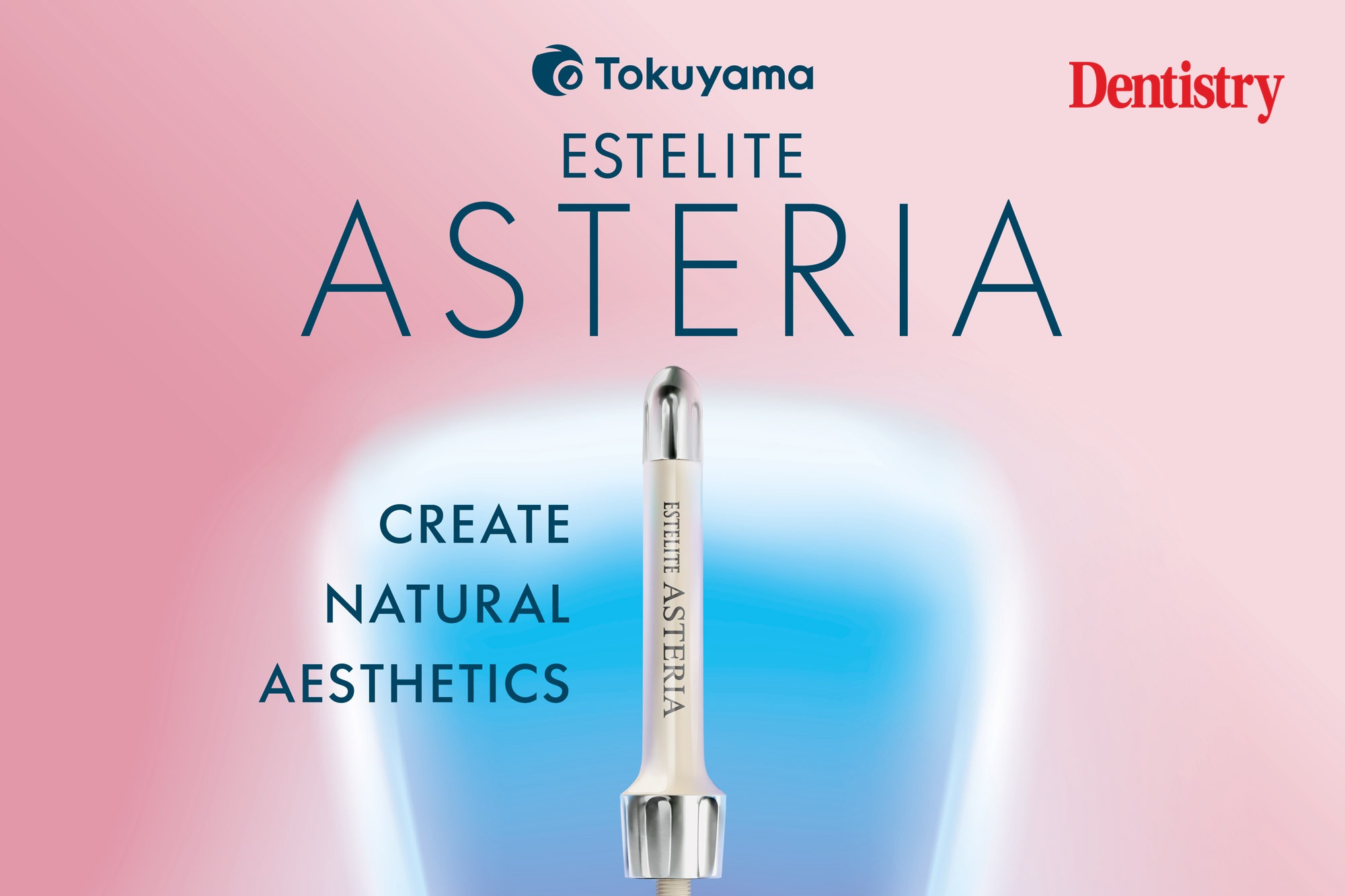
Reproducing the optical characteristics of natural teeth is one of the key challenges in direct restorative dentistry. ESTELITE ASTERIA by TOKUYAMA DENTAL combines spherical sub-micron fillers, a coordinated shade system and efficient handling.
Spherical sub-micron fillers at the heart of the material
The shape and size of filler particles play an important role in the optical and surface characteristics of restorative composites. ESTELITE ASTERIA uses spherical silica-zirconia fillers produced using TOKUYAMA DENTAL’s patented Sol-Gel method. With a particle size of 0.2 micrometres, these spherical sub-micron fillers contribute to the material’s optical properties and polishing characteristics.
The controlled shape and size of the fillers contribute to light diffusion, helping to create a chameleon effect that allows the restoration to blend with the surrounding tooth structure. They also support good polishability and gloss retention, contributing to a smooth, natural-looking surface.
Natural teeth vary in colour, opacity and translucency, both between patients and across different areas of an individual tooth. Reproducing these characteristics with direct composite requires careful shade selection and an understanding of how the material interacts with light. ESTELITE ASTERIA combines its filler technology with a coordinated shade system to support natural-looking colour integration while allowing clinicians to retain control over their layering technique.
A coordinated shade system for efficient layering
The ESTELITE ASTERIA shade system comprises seven Body shades and five Enamel shades, designed to work together in a flexible layering approach.
Body shades provide the desired opacity, while Enamel shades help reproduce the translucency of natural enamel. By combining the two according to the clinical situation, dentists can tailor the optical appearance of the restoration without the need for unnecessarily complex layering.
This approach offers flexibility across a range of direct restorative procedures. Shade selection and layering can be adapted to the remaining tooth structure and the desired aesthetic result, allowing clinicians to choose a technique suited to the requirements of each case.
From placement to polishing
The performance of a restorative composite depends on more than its optical properties. Handling, working time, curing and finishing all contribute to the clinical workflow and the final appearance of the restoration.
ESTELITE ASTERIA incorporates TOKUYAMA DENTAL’s RAP-Technology (radical-amplified photopolymerisation), enabling light curing in 10 seconds under the specified curing conditions. This can help streamline the curing stage of restorative procedures.
The material also offers a working time of up to 90 seconds, even under bright ambient light. This gives clinicians time to adapt and shape the composite before curing, supporting precise contouring and the reproduction of anatomical detail.
The spherical sub-micron fillers also contribute to the material’s polishing characteristics. Their controlled size and shape support the achievement of a smooth surface and a natural-looking lustre. Combined with appropriate finishing and polishing techniques, this helps clinicians achieve the desired surface quality and maintain gloss over time.
Combining material science with clinical efficiency
ESTELITE ASTERIA brings together spherical sub-micron filler technology, a coordinated Body and Enamel shade system, efficient light curing and favourable polishing characteristics in one restorative composite. It is designed for clinicians seeking to balance aesthetic requirements with the practical demands of everyday restorative dentistry.
Dentists interested in evaluating the material in their own clinical setting can request a free sample from TOKUYAMA DENTAL.
Interested in ESTELITE ASTERIA?
Request a free sample and explore its potential in your own restorative practice.
This article is sponsored by Tokuyama Dental.


