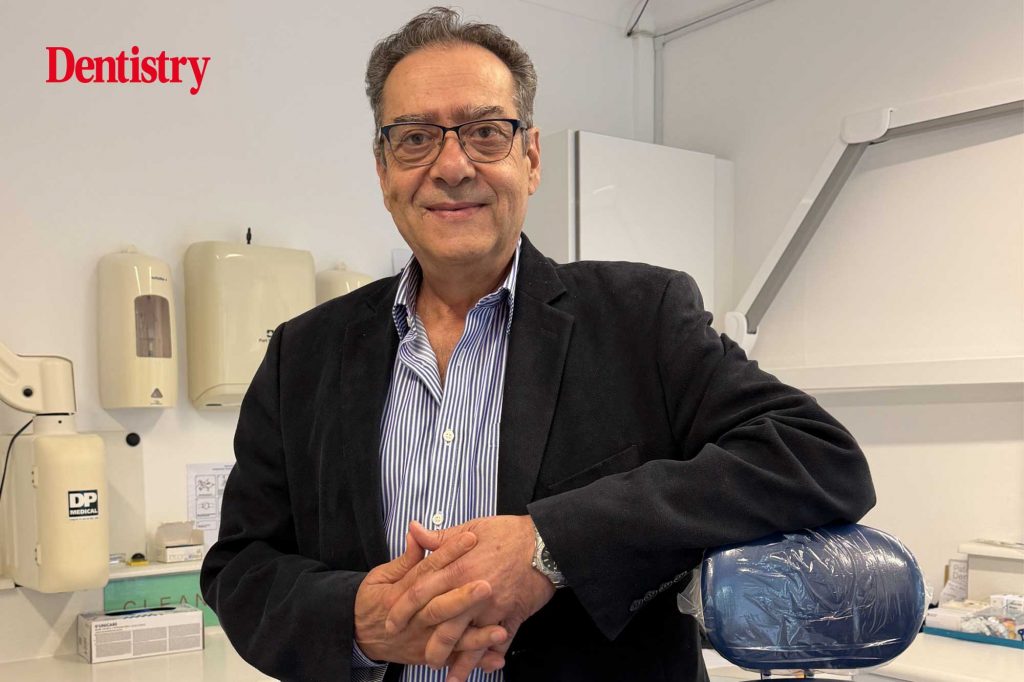
George Billis explains how joining DeNovo Dental Partners gave him a way to plan for succession, reduce personal risk and remain involved in the future of his practice through a partnership model rather than a traditional corporate acquisition.
The question of what comes next is one that many practice principals eventually face. The practice they have built represents years of clinical work, team development, and patient relationships that feel deeply personal. The idea of handing all of this over to a traditional corporate, with the cultural and operational changes that often follow, can feel like more than just a compromise. Yet remaining independent indefinitely also brings its own pressures: the responsibility of sole ownership, personal financial risk, and the absence of a clear succession plan.
It was this balance that led experienced practice principal Dr George Billis to explore alternative options and, ultimately, join DeNovo Dental Partners.
‘I initially assumed it would be similar to a traditional corporate or group acquisition model,’ he recalls. ‘I was pleasantly surprised that it felt more partnership-based and long-term.’
That first impression, formed early in conversations with the DeNovo team, set the tone for what followed.
‘The idea that I could remain involved and aligned with the future of the practice, rather than simply selling and stepping away – that was the moment I wanted to explore further,’ Dr Billis says.
Rather than viewing the decision as an exit, he saw it as a transition into a different kind of ownership – one that allowed him to remain connected to both the clinical and strategic future of the practice he had spent years building.
A compelling model
As discussions progressed, several aspects of the DeNovo model stood out. The shared ownership model offered a meaningful stake in the future of the business and aligned Dr Billis’ interests with those of the wider group.
‘My main concerns were maintaining the practice culture, protecting the team, and keeping clinical standards high. These were addressed through the partnership approach and the ongoing role I continue to have.
‘I was surprised by the emphasis on culture, continuity, and partnership rather than just acquisition,’ he says. ‘The focus on working together after completion and maintaining the identity and values of the practice was what reassured me most that this was a genuine partnership.’
Dr Billis had considered a range of alternatives, ‘including remaining independent, internal succession, and more traditional group models’.
While some of those options may have offered a simpler exit, they did not provide what he was ultimately looking for.
‘None of them offered the same sense of long-term alignment and partnership,’ he says.
Addressing concerns
No significant decision comes without careful consideration.
‘The balance between securing the future of the practice and allowing me to remain involved clinically and strategically was the single most important factor when joining DeNovo,’ he explains. ‘It supported my aim to maintain the practice’s reputation, culture, and patient care while creating a sensible succession pathway.’
Since joining
Since becoming a DeNovo partner, Dr Billis says the experience has reinforced his decision.
‘The continued communication, collaborative approach, and ongoing interest in the practice have reinforced my decision,’ he says. “’If I had to explain it to a fellow principal in a sentence or two: DeNovo allowed me to reduce personal risk and plan succession without feeling that I was handing the practice to a traditional corporate. It felt more like joining an aligned group of partners.’
DeNovo Dental Partners works with practice principals across the UK to build long-term partnerships founded on shared ownership, aligned interests, and the preservation of each practice’s identity. If you’d like to explore what the future of your practice could look like, get in touch for a confidential, no-obligation conversation.
This article is sponsored by DeNovo Dental Partners.