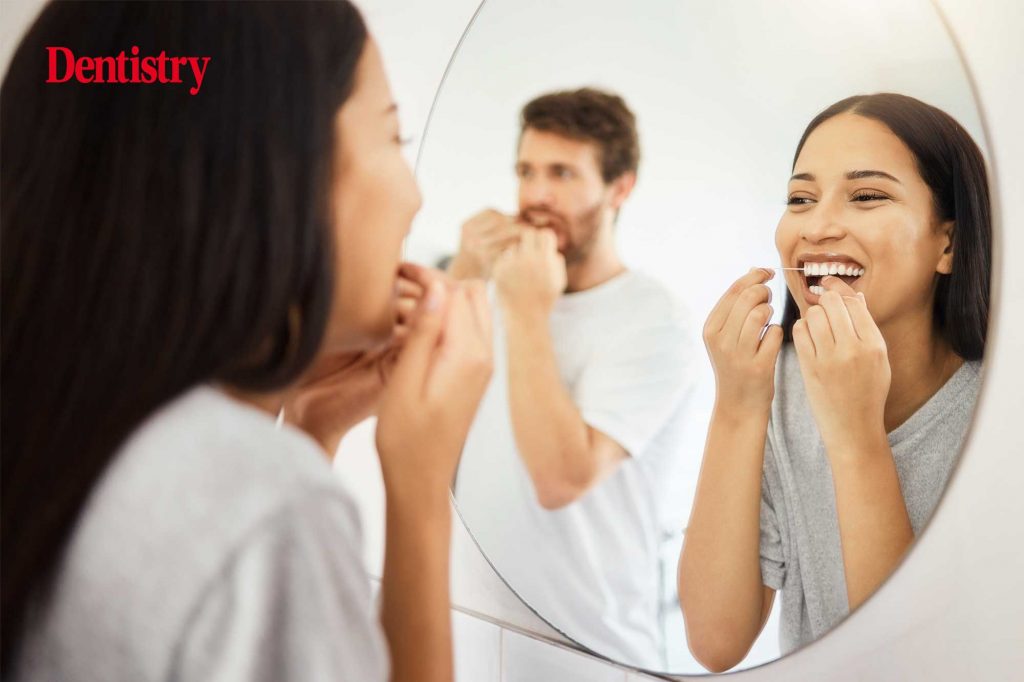
Listerine explores whether brushing and flossing are sufficient for maintaining optimal oral health and the adjunctive therapies that can help.
Toothbrushing and interdental cleaning are fundamental components of daily oral hygiene and are consistently recommended within preventive care guidance. Mechanical plaque removal remains the cornerstone of biofilm control and is central to maintaining oral health.
However, evidence from clinical trials and preventive care guidelines indicates that patient-delivered brushing and flossing alone frequently fail to achieve sustained plaque control in real-world settings (Chapple et al, 2015; Serrano et al, 2015; Bosma et al, 2024).
Recognising the limitations of mechanical plaque removal helps explain why adjunctive strategies are increasingly considered within contemporary preventive care pathways, particularly where long-term plaque control is the primary objective.
Limitations of patient-performed mechanical plaque control
Preventive care guidance highlights that the effectiveness of mechanical plaque removal is highly dependent on patient behaviour, technique and long-term adherence. Chapple et al (2015) noted that even when patients are motivated and appropriately instructed, plaque removal is often suboptimal in everyday practice. These limitations reflect behavioural and practical challenges rather than shortcomings of brushing or interdental cleaning themselves.
Access further constrains mechanical cleaning, with preventive care literature recognising that plaque commonly persists at interproximal and posterior sites, where brushing effectiveness is reduced and interdental cleaning can be difficult to perform correctly and consistently (Chapple et al, 2015; Sanz et al, 2020).
Chapple et al (2015) emphasise that these challenges contribute to ongoing plaque accumulation at a population level, despite widespread awareness of recommended oral hygiene behaviours.
Evidence from clinical trials
Clinical trial data reinforce these observations. In a 12-week examiner-blind randomised controlled trial, Bosma et al (2024) compared multiple oral hygiene regimens, including brushing alone, brushing with flossing, and combinations incorporating an adjunctive mouth rinse. The study demonstrated that brushing alone resulted in the smallest reductions in supragingival plaque over the study period.
Notably, the addition of flossing to brushing did not result in statistically significant sustained reductions in supragingival plaque compared with brushing alone at later time points. While flossing may offer benefits in specific contexts, its impact on long-term plaque reduction was limited when used without an adjunctive chemotherapeutic agent.
These findings illustrate the difficulty of achieving consistent plaque control through mechanical methods alone, even under supervised conditions.
Evidence from systematic reviews
Systematic reviews further support these findings. Serrano et al (2015) reported that mechanical plaque control alone often fails to achieve sufficient plaque reduction, particularly when assessed over extended periods. Their analysis showed that the addition of adjunctive anti-plaque agents significantly enhanced plaque reduction compared with mechanical methods alone.
Similarly, Figuero et al (2019) found that adjunctive chemical plaque control strategies ranked highly for plaque reduction outcomes. Together, these data indicate that while brushing and flossing remain essential, they are frequently insufficient on their own to deliver sustained plaque control for many individuals.
Alignment with S3-level preventive care guidance
The European Federation of Periodontology S3-level clinical practice guideline and its implementation in UK practice place effective supragingival plaque control at the centre of periodontal prevention and long-term stability (Sanz et al, 2020; West et al, 2021).
Importantly, the guideline recognises the limitations of patient-delivered mechanical plaque control and supports the use of adjunctive strategies where appropriate to help patients achieve and maintain low plaque levels.
Within this stepwise approach, adjunctive plaque control measures are positioned as complementary to brushing and interdental cleaning, supporting more achievable and sustainable preventive care in everyday practice.
Reframing prevention beyond mechanical cleaning
Brushing and flossing remain essential elements of daily oral hygiene. However, evidence from clinical trials, systematic reviews and preventive care guidelines consistently shows that mechanical cleaning alone often fails to achieve sustained plaque control. Behavioural factors, access challenges and limitations in long-term adherence all contribute to this gap.
Recognising the limitations of mechanical plaque control alone allows preventive care strategies to evolve in line with contemporary evidence. Within this context, adjunctive plaque control measures, such as the appropriate use of mouth rinses, may support patients in achieving more consistent plaque control as part of daily oral hygiene routines.
For access to the latest evidence, visit the Listerine Oral Hygiene Roadshow today.
References
- Bosma ML et al (2024) Efficacy of flossing and mouth rinsing regimens on plaque and gingivitis: a randomized clinical trial. BMC Oral Health; 24: 178
- Chapple ILC et al (2015) Primary prevention of periodontitis: managing gingivitis. J Clin Periodontol; 42(Suppl 16): S71-S76
- Figuero E et al (2019) Efficacy of adjunctive anti-plaque chemical agents in managing gingivitis: a systematic review and network meta-analysis. J Clin Periodontol; 46: 723-739
- Sanz M et al (2020) Treatment of stage I–III periodontitis: the EFP S3 level clinical practice guideline. J Clin Periodontol; 47(Suppl 22): 4-60
- Serrano J et al (2015) Efficacy of adjunctive anti-plaque chemical agents in managing gingivitis: a systematic review and meta-analysis. J Clin Periodontol; 42(Suppl 16): S106-S138
- West NX et al (2021) BSP implementation of the European S3-level evidence-based treatment guidelines for stage I–III periodontitis in UK clinical practice. J Dent; 106: 103562
This article is sponsored by Listerine.