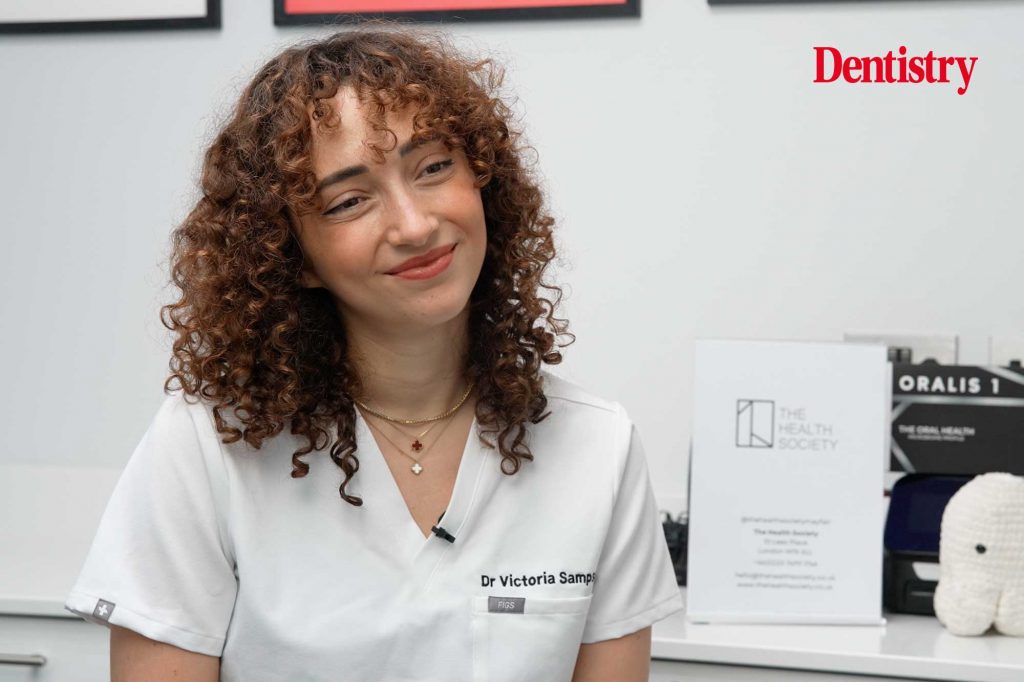
Victoria Sampson explores developments in diagnostic testing in dentistry and how they are revolutionising the modern approach to holistic dental care.
For decades, dentistry has treated the mouth as separate from the rest of the body. Teeth are drilled, gums are cleaned, and disease is treated, while the wider systemic picture has largely been left to medicine.
But that separation is now being challenged – and it’s a change that dentistry can no longer afford to ignore. According to Victoria Sampson, patients themselves are increasingly driving a shift towards more connected, preventive healthcare.
‘The oral microbiome is associated with over 50 systemic conditions,’ she says. ‘And yet for a very long time – centuries, really – we’ve behaved as though what happens in the mouth has no impact anywhere else.’
Patient demand, she adds, is already reshaping how progressive practices operate. ‘We’ve done no marketing at all, but we have patients flying in from around the world because they want answers. They want to understand why they have the problems they have and how their mouth connects to the rest of their health.’
Victoria, co-founder of The Health Society in Mayfair, is at the forefront of a growing movement pushing dentistry towards a more integrated, diagnostic-led and preventive future. Her work centres on salivary diagnostics and the oral microbiome – but the implications of her ethos stretch far beyond testing alone. At its heart is a simple but disruptive argument: that dentistry could be one of the most effective entry points to personalised healthcare.
From reactive treatment to proactive care
Victoria’s frustrations are pointed at a system that has historically rewarded reaction rather than prevention.
‘For years, dentistry has been paid to treat disease – not to stop it happening,’ she says. ‘At the same time, we’re expected to educate patients on prevention. Those two things don’t align.’
The result, she argues, is a profession that often defaults to ‘drill and fill’ thinking, even as the evidence base shifts beneath its feet. Periodontal disease, now understood as a complex inflammatory condition rather than a simple bacterial problem, affects more than half the population. Yet outcomes remain stubbornly variable.
‘What we’re learning is that it’s not just about the bacteria,’ Victoria explains. ‘It’s about how the body responds to that bacteria – genetics, inflammatory markers, vitamin levels, lifestyle factors. Two patients can look clinically identical and respond completely differently to the same treatment.’
Enter diagnostics: not as a replacement for conventional care, but as a way of understanding risk, response and prognosis before the handpiece is ever picked up.
Making the invisible visible
Victoria is clear that salivary and other modes of testing are not about inventing new treatments. Rather, their value lies in education, motivation and communication.
‘We’re trying to make the invisible visible,’ she explains. ‘Dentistry has traditionally been very qualitative – probing depths, bleeding scores, things patients don’t intuitively understand. Diagnostics turn that into something quantitative. High, low, good, bad. Patients get it.’
At The Health Society, these diagnostics range from simple point-of-care tests – pH strips, nitric oxide testing, vitamin D and blood glucose checks –through to in-depth microbiome analysis using shotgun metagenomics. The latter examines hundreds of bacterial species, zooming in on those most strongly associated with caries and periodontal disease, alongside genetic markers that influence inflammatory response.
If just reading this list makes you feel overwhelmed, Victoria stresses that practices don’t need to adopt everything at once.
‘Baby steps,’ she says. ‘Start with blood pressure checks. Then maybe vitamin D testing for periodontal patients. Build a toolbox gradually, so the whole team understands when to use what, and why.’
The front door to personalised healthcare
One of the more significant shifts Victoria anticipates is a re-evaluation of the hygienist and therapist role.
‘I really dislike the term “scale and polish”,’ she says. ‘It completely undersells what’s actually happening.’
In a preventive, microbiome-aware model, hygiene becomes biofilm disruption, inflammation control and disease risk management. It’s foundational work with systemic implications.
‘I think dental hygienists and dental therapists are going to become health champions within practices,’ Victoria predicts. ‘What they do is the foundation of dentistry. Over the next five to ten years, that’s going to be recognised much more clearly.’
That mindset sets the scene for the most ambitious part of Victoria’s vision of the future of dentistry: the potential for it to play a role beyond the mouth altogether.
‘We see patients far more frequently than our medical colleagues,’ she says. ‘That puts us in a prime position for early screening.’
The ideas explored here – diagnostics, prevention and dentistry’s role in personalised healthcare – are increasingly shaping the future direction of the profession. At the North of England Dentistry Show, Victoria Sampson will be continuing this conversation, joining a wider panel examining how diagnostic-led dentistry could redefine patient care, practice models and professional identity.
At The Health Society, routine appointments may include blood pressure checks, vitamin testing and metabolic screening. In some cases, abnormal results are picked up long before a patient would otherwise have engaged with primary medical care.
‘The number of patients we’ve identified with undiagnosed hypertension or severe vitamin deficiencies is incredible,’ she says. ‘Being able to flag that early – and refer appropriately – can genuinely change health outcomes.’
Diagnostics also provide a shared language between dental and medical professionals.
‘Medicine is very quantitative,’ Victoria explains. ‘Blood tests, scans, numbers. Dentistry hasn’t traditionally worked that way. Salivary and blood diagnostics give us a bridge. Suddenly, we’re speaking the same language.’
That shift has had practical consequences for her business. Victoria now receives a significant proportion of referrals from oncologists, rheumatologists and gastroenterologists – clinicians who see value in dentistry that looks beyond teeth alone.
Rethinking the model of dentistry
A preventive, diagnostic-led approach also forces an uncomfortable but necessary conversation about revenue.
‘If the best treatment is no treatment, we have to rethink how practices generate income,’ Victoria says. ‘That doesn’t mean earning less – it means earning differently.’
Rather than infrequent, high-cost interventions, her model is built around regular reviews, screening, monitoring and risk-based maintenance. Lower-ticket services delivered more consistently, often structured into ongoing care plans.
‘I think we’ll see more subscription-style models,’ she predicts. ‘Patients allocated into risk categories, with care pathways built around prevention rather than repair.’
For Victoria, the irony is that this shift may ultimately make dentistry more professionally rewarding.
‘When I started doing diagnostics, it reignited my passion for dentistry,’ she says. ‘Every patient became a project. You start connecting dots, collaborating with other clinicians, seeing real systemic improvements, and not just nicer X-rays.’
For Victoria, this is the gateway revelation for a profession that can all too often be its own biggest barrier to change.
‘We sometimes hold ourselves back,’ she says candidly. ‘There are still clinicians who think periodontal disease is “just gum disease”. It’s not. It’s a chronic inflammatory condition with systemic consequences.’
And with younger generations experiencing fewer cavities and less overt disease, she argues that dentistry must evolve – or risk becoming obsolete.
‘Either we keep doing what we’ve always done and slowly work ourselves out of relevance,’ she says.
‘Or we redefine dentistry as preventive healthcare. Screening, diagnostics, education – and being reimbursed for keeping people well.’
Follow Dentistry.co.uk on Instagram to keep up with all the latest dental news and trends.