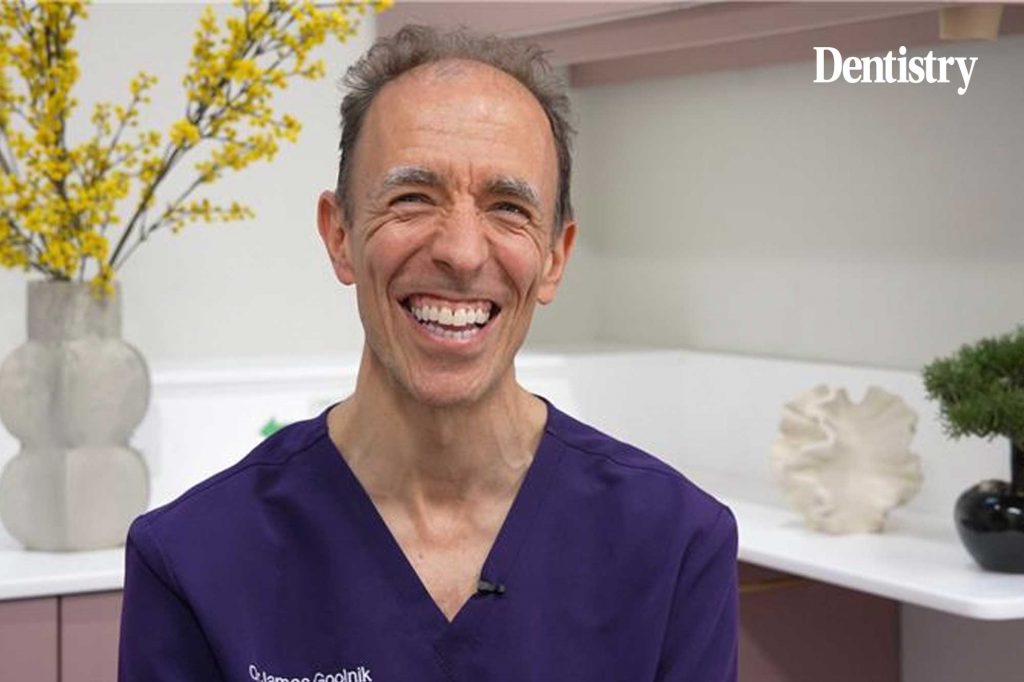
‘Is personalised healthcare the future of dentistry? It’s already here,’ says James Goolnik – and diagnostics, he argues, are the key to unlocking it.
For more than three decades, James Goolnik has watched dentistry evolve in waves: the rise of adhesive dentistry, the whitening boom, the veneer revolution, digital scanning, the slow integration of sleep medicine and now AI. But nothing, he argues, has the potential to reshape the profession as profoundly as diagnostics.
For James, this isn’t simply the next trend on dentistry’s innovation conveyor belt – it is the gateway to a different kind of practice altogether.
He speaks with the relaxed certainty of someone who has tested a theory on himself first. After selling his long-established practice and launching a squat, he has rebuilt his approach from the ground up.
‘Optimal dental health,’ he explains, ‘is about understanding how the mouth affects the entire body – and how the rest of the body shapes what we see in the mouth.’
That conviction underpins his work. It also places him among a small but growing group of clinicians who believe dentistry’s future lies not in procedures, but in personalised care built on better data. James’ profile means his voice carries weight, but he is clear he is one of many pushing in this direction.
Understanding personalised diagnostics in dentistry
Personalised diagnostics refers to the growing suite of tools that give clinicians a more detailed, individualised understanding of a patient’s oral and systemic health. Rather than relying solely on visual examination or traditional radiographs, these technologies create a clearer, earlier or more comprehensive picture – allowing care to be tailored to each patient’s biology, behaviour and risk profile.
Common examples include:
- Saliva microbiome analysis – assessing bacterial profiles linked to caries, periodontal risk or systemic inflammation
- Phase-contrast microscopy – showing live biofilm activity to help patients visualise disease processes
- AI-assisted radiography – highlighting early demineralisation, bone changes or caries patterns not always easily visible to the human eye
- Digital scanning and 3D imaging – providing detailed baselines against which change can be monitored over time
- Simple in-practice biomarker tests – such as vitamin D finger-prick tests or HBA1c checks that support treatment planning and flag wider health concerns.
Individually, each tool offers incremental benefit. Together, they form a personalised health profile that can improve communication, refine treatment decisions and help patients take greater ownership of their wellbeing.
From symptoms to systems
James’ starting point is simple: traditional practice models rely heavily on what patients tell you or what you can see. ‘Most people still come in wanting pain fixed or a smile improved,’ he says. ‘But if they’re exhausted, stressed, not sleeping, or living with chronic disease, that context matters. Dentistry can influence all of it.’
He is bullish about this shift – and unapologetically so. For him, dentistry has spent too long treating symptoms in isolation. The emerging science of microbiomes, inflammation, stress physiology and vitamin D pathways, he argues, gives dentistry a bigger role than it has historically claimed.
He concedes that not every dentist will agree with every detail, but the direction of travel is becoming impossible to ignore. ‘Patients already expect personalised health,’ he says. ‘They track their sleep, their heart rate, their glucose. They’re used to metrics. They want the same in dentistry.’
It is here that diagnostics become essential. They do not replace clinical judgement, but they change the conversation – often dramatically.
Metrics that motivate
James returns repeatedly to the power of showing patients their own data. Some want photos; others prefer a clear explanation. But for many, he says, seeing live microscopy clips of their own biofilm or receiving a clear numerical score for inflammation or demineralisation is transformative.
‘People don’t get excited about brushing,’ he laughs. ‘But they do get excited about progress. They want to see where they are now and whether they’ve improved.’
Phase-contrast microscopy, AI-assisted radiographs, saliva diagnostics and digital scanning all feed into this. Individually, they are useful; collectively, they create a personalised baseline – a starting point from which change becomes measurable.
James frames this not only as good patient communication, but as essential motivation. ‘If someone spits blood in the sink every day, they think it’s normal. When they see it under the microscope or see a bleeding score in black and white, it stops being normal.’
The impact, he says, is tangible. Better adherence. Longer-term engagement. And a meaningful dent in the revolving door of recurring decay, chronic gingivitis and parafunction.
Learn more about personalised diagnostics
The North of England Dentistry Show will take place on 13 February at AO Arena in Manchester.
A practice builder – not a gimmick
Critics of diagnostic-heavy practice often raise the same question: will the treatment really change? James is pragmatic here. Some tests are too expensive for the outcome they influence. But when diagnostics meaningfully improve patient buy-in, refine treatment pathways or reduce uncertainty, their value becomes clear.
Salivary analysis, for instance, can help identify high-risk patients who cannot snack frequently; and AI-assisted radiographs can reveal early demineralisation that can be reversed with targeted remineralisation protocols rather than a drill. In addition, implant patients could benefit from vitamin D testing – something he insists is well supported by evidence – and HBA1c checks can help identify pre-diabetic patients who may never have connected oral symptoms with systemic disease.
James knows these views won’t be universal, and he’s quick to acknowledge that some tools are, in his words, ‘marketing BS’. But separating the useful from the flashy is part of the journey. And for general practice, he believes the benefits are clear: improved outcomes, stronger patient loyalty and a unique selling point in an increasingly crowded marketplace.
The mindset shift
Behind every example James gives lies a bigger argument: dentistry is changing because the people dentistry serves are changing.
Patients are already living in the era of personalised health – and dentistry, he believes, risks becoming the weak link if it fails to adapt. ‘People come in asking about microbiome tests, creatine, sleep data, or supplementation,’ he says. ‘If we dismiss it outright, we sound out of touch.’
For James, this shift begins with clinicians themselves. He talks about dentists wearing wearables, monitoring their own biomarkers or exploring sleep pathways – not because it is fashionable, but because understanding your own data builds empathy and confidence. From there, it expands naturally into teams: healthier, more resilient staff; fewer absences; stronger shared purpose.
And then, inevitably, it flows outwards to patients.
‘It’s very hard to help someone on a health journey if you’re not on one yourself,’ he says. The personal and professional are intertwined – a theme that resonates strongly throughout the North of England Dentistry Show.
Collaboration over isolation
One message James returns to repeatedly is that dentists do not need to become experts in everything. Instead, they need networks.
A holistic practice does not pretend to be a sleep clinic, a nutrition centre or a mental health service. But it does acknowledge where oral and systemic health intersect – and builds relationships accordingly.
Sleep physicians. Osteopaths and chiropractors. Nutritionists. Functional medicine doctors. Physiotherapists. Even GPs who take an interest in metabolic health. These collaborations, he says, are not a niche curiosity but a practical necessity. They enhance patient care, drive referrals in both directions and reinforce dentistry’s position within wider healthcare rather than on the fringes of it.
‘We are part of the health team,’ he says. ‘If we see chronic inflammation, stress, sleep issues or nutritional red flags, we should be guiding patients toward answers – not just giving them a mouthguard and hoping for the best.’
A profession at a crossroads
James believes that dentistry is entering a new era. Not every practice will move at the same pace, but the fundamentals are shifting:
- Patients expect personalised care
- Diagnostics are becoming cheaper, faster and more accessible
- AI is changing both treatment planning and communication
- Evidence linking oral and systemic health continues to grow.
In this context, he argues, diagnostics are not optional extras. They are the bridge between dentistry as a technical service and dentistry as an essential component of whole-body healthcare.
‘This isn’t the future,’ he says. ‘It’s happening already. The only question is whether we adapt early or play catch-up.’
Follow Dentistry.co.uk on Instagram to keep up with all the latest dental news and trends.