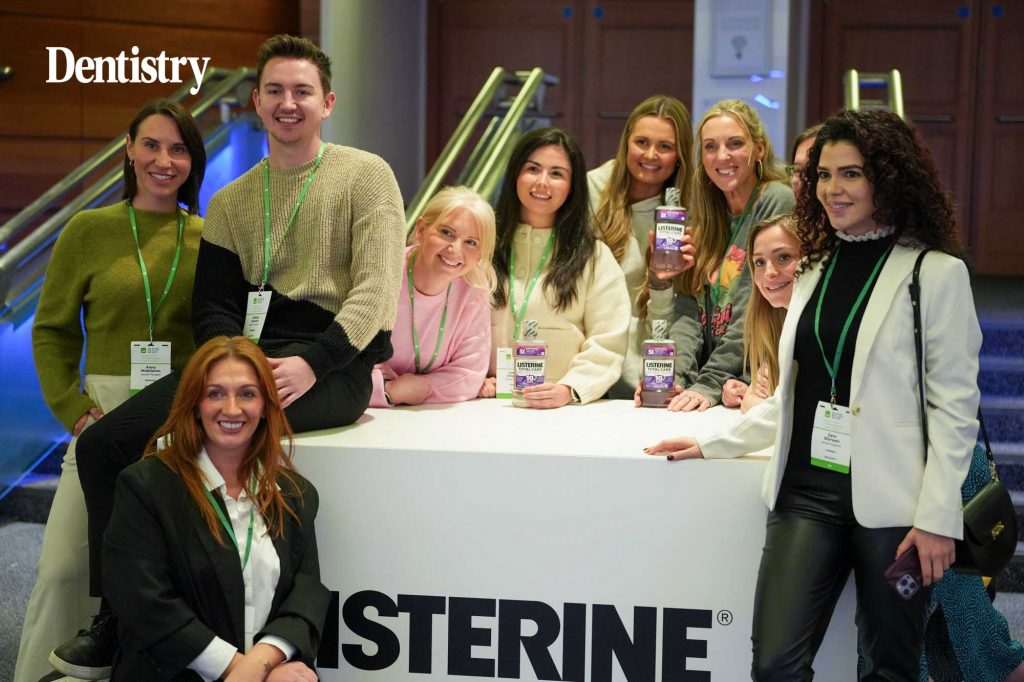
As platinum sponsor of the Oral Health Summit 2025, LISTERINE played a central role in a landmark meeting that brought together the BSDHT, the BSP and global experts to advance prevention across the oral health spectrum.
Over two packed days in Edinburgh, LISTERINE delivered a series of evidence-led sessions that highlighted the science behind daily-use, essential oil containing mouthwash as an adjunct to mechanical plaque biofilm control, while creating space for meaningful discussion, practical learning and international collaboration.
The flagship moment came during Thursday’s symposium, Why Mouthwash? Rethinking Oral Hygiene for Better Patient Outcomes, which linked the Summit live with the SEPA AGM in Barcelona. This first-of-its-kind international conversation underscored the global burden of periodontal disease and the need for aligned action.
Oral Health Summit programme
Across the afternoon, delegates heard from world-leading researchers including Professors Iain Chapple, Elena Figuero, Paula Matesanz and Philip Preshaw. The discussion reinforced the significant body of evidence supporting chemical plaque control in specific circumstances.
As Professor Figuero explained:‘We know that mechanical biofilm control is the gold standard, but sometimes this is not enough. So, in those cases, the adjunctive use of antiseptics will really become a clear target.’
This message echoed the findings from large systematic reviews and the BSP S3-level treatment guideline presented during the session, which emphasises evidence-based adjuncts as part of personalised care.
Delegates also gained rare insight into the formulation science behind LISTERINE, with the Kenvue research and development team demonstrating how the fixed combination of essential oils works to penetrate biofilm and support plaque reduction.
The session closed with practical guidance from UK dental therapists, Laura Bailey and Benjamin Tighe, whose real-world strategies helped translate the science into confident chairside recommendations.
‘We’re actually doing our patients injustice by not recommending these adjuncts’
For many attendees, the impact was immediate. Dental therapist Gemma Cowen reflected: ‘We’re actually doing our patients injustice by not recommending these adjuncts. I really feel like today I’m going to walk away feeling more empowered.’
Momentum continued into Friday, with LISTERINE hosting a fast-paced Oral Hygiene Masterclass led by Laura Bailey and Benjamin Tighe, who used case examples, myth-busting discussion and guideline-aligned advice to help clinicians strengthen home-care conversations.
After the event, dental hygienist Emma Fletcher reflected: ‘Today has been mind-blowing. The key message is the whole spit don’t rinse [with water].’ This message aligns with the Delivering Better Oral Health toolkit (2021), which clarifies that rinsing with water after brushing reduces fluoride retention.
The presence of LISTERINE at the Summit reaffirmed its commitment to supporting dental professionals with robust evidence, practical education and global collaboration to improve oral health outcomes.
Visit kenvuepro.com for more information.
References
- Delivering Better Oral Health: an evidence-based toolkit for prevention. Version 4. London: Department of Health and Social Care 2021. Available at: https://www.gov.uk/government/publications/delivering-better-oral-health-an-evidence-based-toolkit-for-prevention (accessed December 2025)
- Duckworth RM et al (2009a) Effect of rinsing with mouthwashes after brushing with a fluoridated toothpaste on salivary fluoride concentration. Caries Research 43(5): 391-396
- Duckworth RM et al (2009b) Effects of flossing and rinsing with a fluoridated mouthwash after brushing with a fluoridated toothpaste on salivary fluoride clearance. Caries Research 43(5): 387-390.
This article is sponsored by LISTERINE.