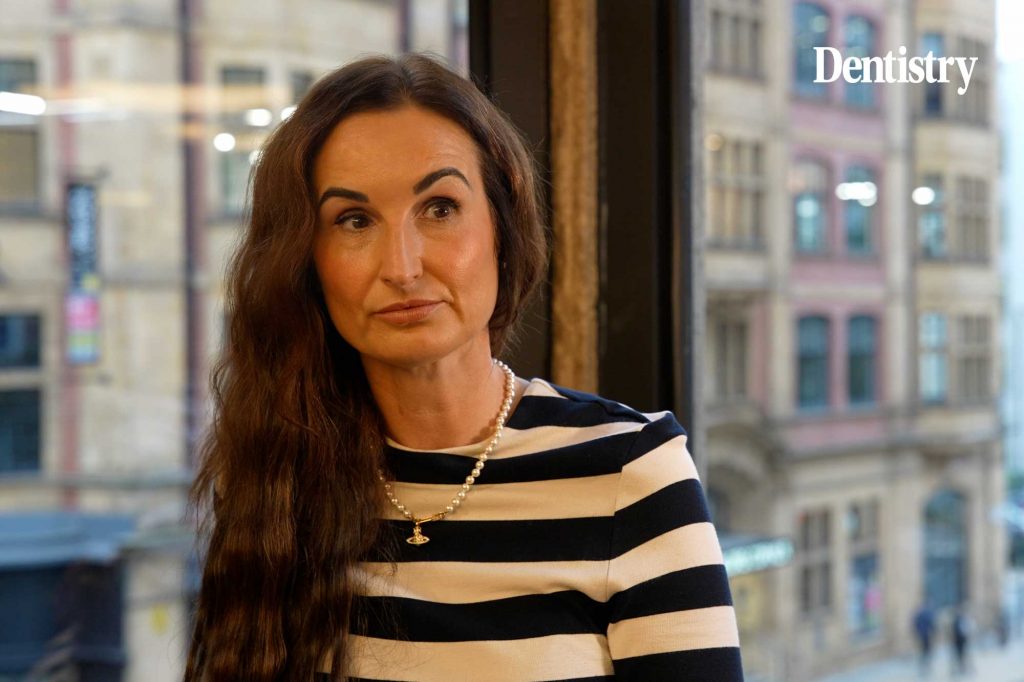
Martina Hodgson speaks to Guy Hiscott about how digital dentistry is transforming patient trust, team engagement and practice efficiency.
For Yorkshire dentist Martina Hodgson, digital dentistry isn’t a technical upgrade – it’s a fundamental rethink of how a practice functions.
A general dentist with a strong orthodontic focus, Martina runs two practices in Wakefield and Leeds. She describes digital workflows as central to the way she delivers care.
‘For me, digital dentistry is a way to elevate the patient journey,’ she explains. ‘It enhances communication, speeds up treatment, increases revenue, and engages the team. It’s not just a way of taking impressions – it’s a game changer in how the practice runs and how dentistry is delivered.’
Moving past the fear factor
Despite the benefits, Martina still sees hesitance across the profession.
‘People are scared to invest. They’re scared to step out of their comfort zones,’ she says. ‘And I’m not going to lie – the learning curve can be steep. You’re investing money, but you’re also investing time and effort.’
But for her, the returns speak for themselves.
‘Digital dentistry gives you the most powerful communication tool we’ve ever had. When you show a patient a scan in full 3D colour, it builds instant trust. Years ago, we were trying to explain cracked teeth or recession with mirrors and clunky little cameras. Now they can see exactly what’s happening for themselves.’
That clarity changes conversations – and decisions.
‘If all it did was improve relationships and create that instant trust, it would be worth it. But you’re also upskilling your team, involving them in the patient journey, and increasing revenue because patients understand their problems and ask how to fix them.’
Ready to see how digital can transform everyday workflows?
Find out how at the North of England Dentistry Show on 13 February at AO Arena, Manchester, where Martina will be sharing steps that any practice can adopt to elevate patient communication, improve efficiency and upskill the team.
The most common mistake
Martina’s bluntest observation is that most practices fail to get full value from the tech they already own.
‘The biggest mistake is under-utilising the scanner,’ she says. ‘People spend tens of thousands of pounds on a piece of kit and then use it like a glorified impression machine. It sits in a corner gathering dust.’
In her practices, the scanner is a core clinical tool – used for every new patient and at every check-up. ‘A scan should be an education tool and a communication tool. There’s nothing more powerful than a patient seeing their mouth in 3D for the first time.’
It also reframes treatment discussions. ‘If you say they need a filling or that a tooth is broken, they can see it instantly,’ she says. ‘It means you can ethically explain treatment options, and they’re far more likely to take them up because they understand the consequences of doing nothing.’
Unlocking digital efficiency
For practices looking to get more from digital – or finally dust the scanner off – Martina suggests three practical steps:
- Upskill your team. ‘The first thing you need to do is train your team,’ she says. ‘Your dental nurses and treatment coordinators should be able to scan. It’s great for them – and it frees you up’
- Make scanning routine. ‘Most patients have never seen anything like it. The trust, understanding and engagement you get from scanning every patient is unbelievable. It’s a big shift, but absolutely worth the effort’
- Bring production in-house. Explore in-house workflows in a controlled, progressive way. ‘Once you’re scanning properly, think about whether making certain items in-house could be more efficient and more profitable. Start small – a simple 3D printer for models, Essex retainers or bleaching trays is enough.’
Strengthening the human side of care
For Martina, the most important point is that digital dentistry doesn’t replace the human element – it enhances it.
‘Sometimes it feels like AI is taking things away from us. I don’t feel that at all. Digital dentistry elevates how we educate and communicate with patients. And it involves the whole team in delivering care.’
She sees it as fundamentally inclusive. ‘When I fit a retainer or 3D-printed veneers that my dental nurse has printed and glazed, I tell the patient: “Katie did this”. They think it’s incredible. It brings everyone closer together.’
As far as Martina is concerned, digital dentistry fulfils the reason most clinicians entered the profession in the first place.
‘It allows us to elevate the human involvement in dentistry – not replace it.’
Follow Dentistry.co.uk on Instagram to keep up with all the latest dental news and trends.