
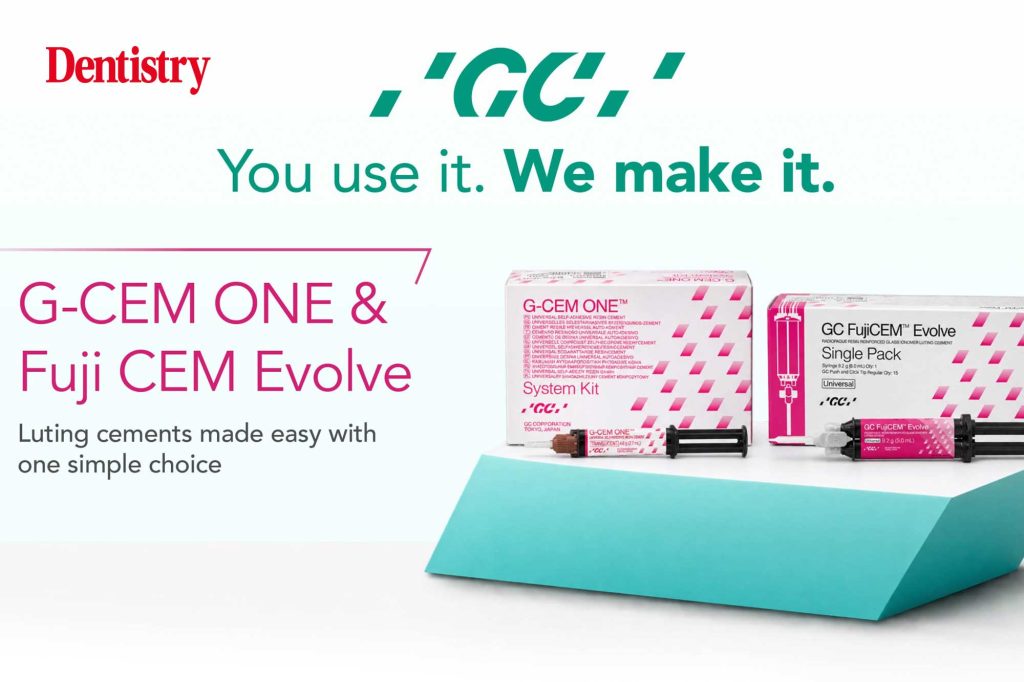
GC explores how luting cements can support conservative adhesive procedures and routine crown and bridge work, with complementary options for different restorative needs.
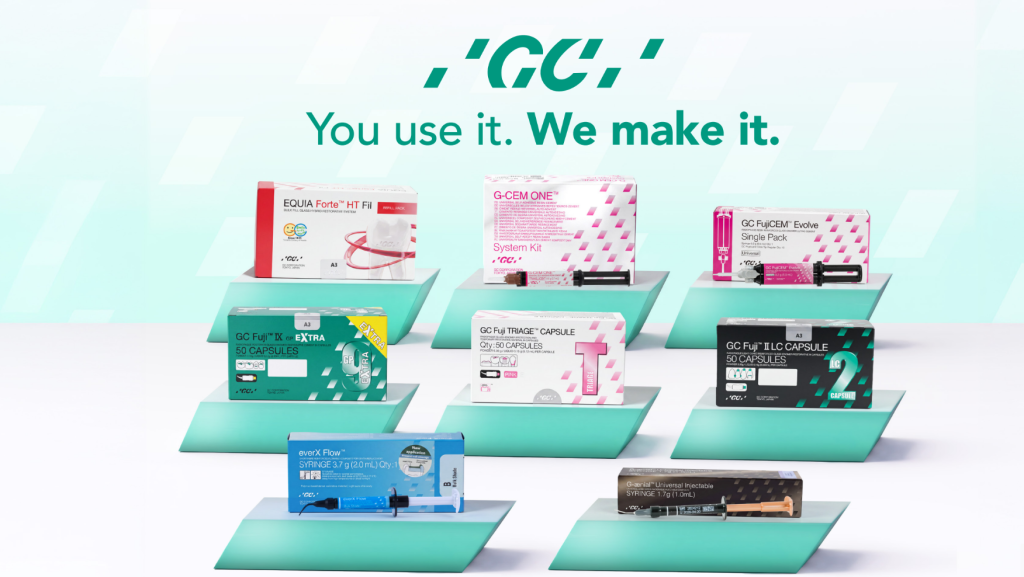
GC has a long history of developing the materials that become part of everyday dentistry. Many of the products you already know and trust have grown from GC’s pioneering expertise including the long-established Fuji range, built on GC’s innovations in glass ionomer technology. It continues to innovate with fibre-reinforced composites, high-strength injectable composite materials, glass hybrid restoratives and reliable luting cements.
Luting cements
The demands placed on luting cements have evolved alongside restorative dentistry. Secure retention and an effective marginal seal remain essential, but clinicians must also consider preservation of tooth tissue, increasingly diverse restorative materials, aesthetic expectations and the practical demands of everyday treatment. Cement selection is therefore part of treatment planning from the outset. The chosen material must suit the restoration, the remaining tooth structure and the conditions under which cementation will take place.
Reliable luting cements are a particularly relevant example of how GC’s expertise supports the changing needs of everyday clinical practice, including minimally invasive dentistry and the simplification of inventories at this time of increased clinical activity.
Clinicians therefore need cementation options that support both conservative adhesive treatments as well as routine crown and bridge work. Two complementary materials within GC’s portfolio meet these needs:
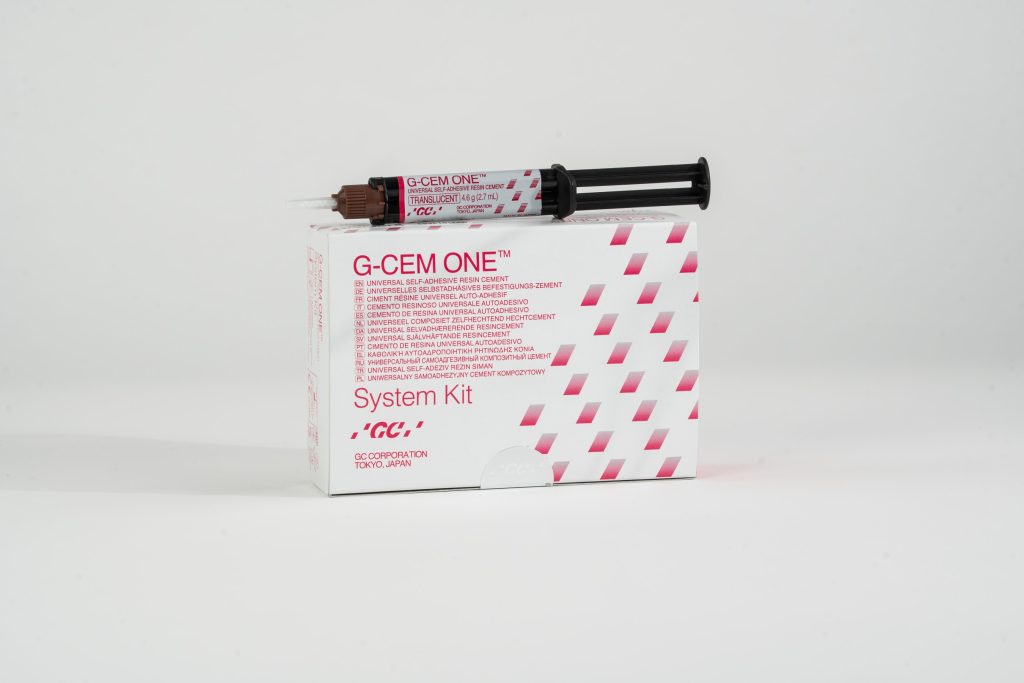
- G-CEM ONE, a universal self-adhesive resin cement
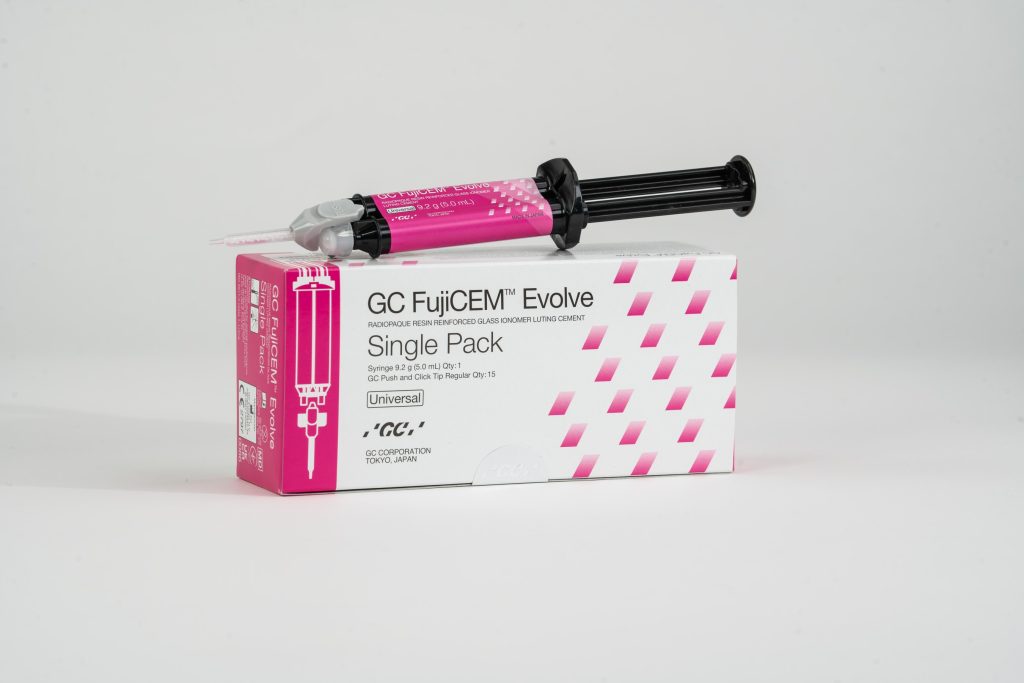
- GC FujiCEM Evolve, a resin-modified glass ionomer cement.
The move towards minimally invasive dentistry has also increased the importance of adhesive luting. Where clinically appropriate, bonded partial-coverage restorations allow dentists to preserve tooth tissue that might otherwise be removed to accommodate a full crown. In these cases, the cement and bonding protocol form an integral part of the restorative design.
GC’s G-CEM ONE
GC’s G-CEM ONE system accommodates both retentive preparations and situations requiring additional adhesion, including veneers and onlays, when used with the appropriate protocol.
GC G-CEM ONE is a dual-cure, universal self-adhesive resin cement. Its clinical appeal lies in the flexibility to use a simplified self-adhesive approach for suitable cases, and with GC G-CEM ONE Adhesive Enhancing Primer or G-Premio BOND when additional adhesion is required.
This allows clinicians to work with a familiar cement system across a broad range of indirect procedures. Its self-curing capability is particularly relevant beneath restorations that restrict light transmission, while its colour stability and wear-resistant margins support aesthetic applications.
This versatility depends on following the protocol for each indication:
- For veneers and onlays, enamel etch and then follow with G-CEM ONE Adhesive Enhancing Primer or G-Premio BOND
- Restoration surfaces would also require preparation appropriate to their material.
Understanding these distinctions enables clinicians to make effective use of a universal system while retaining the steps needed for dependable adhesion.
GC FujiCEM Evolve
Alongside adhesive resin cementation, resin-modified glass ionomer cements continue to meet important clinical needs. Their development combines the chemical adhesion and moisture tolerance associated with glass ionomer technology with the contribution of a resin matrix to improve mechanical performance.
GC FujiCEM Evolve brings this approach to contemporary crown and bridge work, with relevance to suitably retentive metal-based and zirconia restorations.
For the dental team, FujiCEM Evolve’s benefits are tangible with paste-to-paste delivery, a choice of hand mixing or auto mixing, and a tack-cure option to facilitate excess removal.
Its moisture tolerance is useful where isolation is challenging, although contamination control remains necessary.
In suitable cases, cementation without separate tooth etching and bonding provides a straightforward workflow. These characteristics make it a practical option for routine indirect restorative care.
Relevance to modern dentistry
The relationship between these two materials is particularly relevant to modern dentistry. A conservative restoration that depends on adhesion calls for an appropriate resin cement protocol.
A zirconia crown with adequate retention and resistance may be well suited to a resin-modified glass ionomer cement. FujiCEM Evolve’s contribution is therefore different from that of adhesive resin cement: it provides a practical cementation option where the preparation and restoration already support conventional luting.
For patients, the outcomes that matter are preservation of natural teeth, comfort, appearance and lasting function.
For clinicians, achieving those aims requires materials that combine appropriate performance with manageable clinical procedures.
By offering adhesive flexibility through G-CEM ONE and convenient resin-modified glass ionomer cement through FujiCEM Evolve, GC provides clinicians with one simple choice of two reliable and complementary ways to meet all their luting needs whilst supporting simplifying practice inventories.
This article is sponsored by GC.


