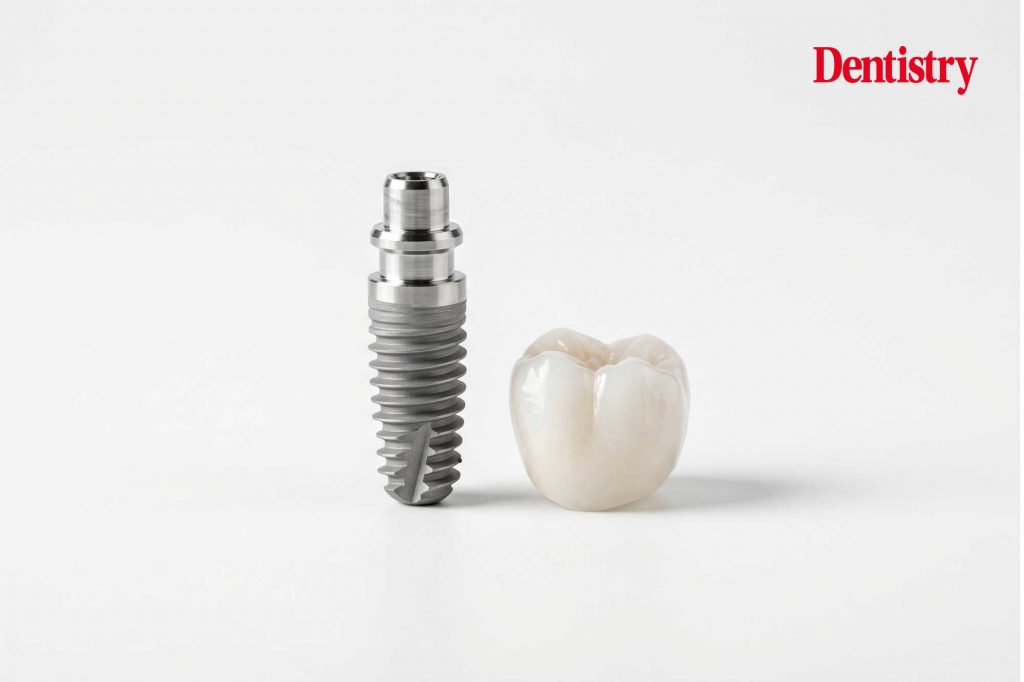
Pretam Gharat explores the evolution of immediate full-arch implant rehabilitation and introduces the PATZi protocol, a systematic approach designed to improve planning, stability and predictability when treating patients with severely atrophic maxillae.
Professor Per-Ingvar Brånemark discovered osseointegration in 1952. He treated the first human patient with a full-arch fixed dental prosthesis supported by titanium fixtures in 1965. This breakthrough shifted modern implantology away from removable dentures toward fixed, bone-anchored full-mouth rehabilitation (Kim, 2014; Nevins and Janson, 2015; Kochar et al, 2022; Brånemark, 1961).
In the early 1990s, Prof Paulo Malo started exploring immediate load full-arch implant dentistry.
By 1998, he had perfected a protocol, which is now known as the all-on-four approach in full-arch implant rehabilitations.
The all-on-four method differs from classical Brånemark protocols by using fewer implants, tilting the posterior fixtures, avoiding bone grafts, and loading the prosthesis immediately.
What facilitated immediate function
- Shift to primary stability over time: clinicians observed that if an implant is anchored into the bone with high insertion torques (typically ≥ 35–45 Ncm), it eliminates microscopic movements. Primary mechanical stability effectively protects the biological process of osseointegration during the initial healing phase (Muthaiyan et al, 2025; Cheng et al, 2025)
- Macromedial and surface engineering: smooth, machined titanium surfaces (common in original Brånemark implants) evolved into rough, oxidised, or acid-etched surfaces (such as Nobel Biocare’s TiUnite texture). These micro-rough surfaces accelerated blood clot attachment and bone apposition. Tapered implant designs also increased bone compression upon insertion (Chiapasco et al, 1997; Brånemark et al, 1999; Glauser et al, 2001)
- The splinting effect: For full-arch cases, connecting multiple implants together immediately with a rigid temporary bridge acts like an internal orthopaedic cast. The individual forces are distributed across the entire arch, preventing any single implant from overloading or moving (Maló et al, 2003).
Legg et al (2023) demonstrated that IFAL (Immediate Full Arch Loading) significantly improves tooth related quality of life.
Introducing the PATZi protocol
A standard configuration all-on-four approach to restore full-arch maxillary fixed implant prostheses is not without its pitfalls. Intraoperative challenges such as bone quality and quantity, may sometimes not allow for execution of the original treatment plan. Extensive maxillary sinus pneumatisation directly limits the available vertical bone height in the posterior maxilla, forcing dental implants to be placed further forward (anteriorly), compromising the A-P spread. This anatomical constraint triggers a cascade of biomechanical challenges when planning full-arch or multi-unit implant restoration and leads to a shortened dental arch or excessive cantilever forces.
The PATZi protocol is a systematised algorithm for maxillary full-arch implant treatment planning that addresses such intraoperative surprises and achieves full arch length in the planned prosthesis. PATZi also assigns a numbering classification to each implant configuration, which leads to uniform communication and grading of surgical difficulty, as well as predictable planning for developing future salvage plans. By using the PATZi protocol as a guideline, the surgeon may improve composite torque value and anteroposterior (AP) spread, eliminate distal cantilever forces, and ultimately improve the predictability of the prosthetic treatment plan (Ponnusamy et al, 2023).
PATZi protocol workflow
- P – Pterygoid implants for dense posterior remote anchorage
- A – Anterior implants (axial, nasopalatine, or transnasal)
- T – Tilted or angled implants in the mid-maxillary region
- Z – Zygomatic implants utilised if P, A, and T sites prove insufficient
- I – Immediate loading of the prosthesis (if insertion torque and stability allow).
The concept
PATZi employs immediate loading and remote anchorage concepts developed over the past 35+ years to produce a near infinite combination of dental implant setups to accommodate nearly any situation that may present in atrophic maxillae. PATZi starts with attempted placement of pterygoid implants to employ their numerous benefits of cantilever elimination, additional support, maximising anterior-posterior spread and increasing composite torque value (Holtzclaw, 2018; Holtzclaw, 2020; Holtzclaw, 2023).
If pterygoid implants are successfully placed, the algorithm then proceeds anteriorly. Anterior prosthetic support may be attained with standard axial, nasopalatine, piriform rim, or transnasal fixtures (Maló et al, 2003; Urban et al, 2015; Lorean et al, 2014; Camargo et al, 2019).
If anterior support can be achieved, PATZi then proceeds to achieve mid-maxillary support via tilted implants which may be of either traditional or trans-sinus varieties (Ponnusamy et al, 2023; Jensen et al, 2012). If pterygoid or mid-maxillary tilted implants are not successful, PATZi calls for placement of a posteroinferior zygomatic implant. Alternatively, failure to achieve placement of an anterior implant necessitates placement of an anterosuperior zygomatic implant.
In the event that multiple zygomatic implants are required in a single malar process, the presence or absence of a pterygoid implant will influence the configuration of the zygomatic fixtures: parallel versus ‘A-frame’ (Holtzclaw, 2023).
If a pterygoid implant is present, the zygomatic implants can be placed in a parallel configuration. Parallel zygomatic implants will result in a smaller A-P spread, which is a disadvantage. However, they have the benefit of more superior malar real estate for the placement of a second zygomatic implant and eliminate the possibility for collision with the anterosuperior zygomatic fixture. The disadvantage of a posteriorly located posteroinferior zygomatic implant is offset by the pterygoid implant which maximises AP spread and eliminates the prosthetic cantilever. If a pterygoid implant is not successfully placed, zygomatic implants are placed in an A-frame setup with the posteroinferior fixture placed in a more posterior position. Placement in this manner distalises the prosthetic platform of the posteroinferior zygomatic implant, shortening the resultant cantilever of the restoration.
Alternatively, the A-frame setup brings the posteroinferior zygomatic implant apex closer to the orbit, thus reducing available real estate for the anterosuperior zygomatic fixture and increases the risk of implant collision.
The application of the PATZi protocol is done independently to the left and right sides of the maxilla.
Conclusion
Successful full arch maxillary rehabilitation begins from preliminary planning of the case. Specifically, in atrophic maxillae, the PATZi protocol; combining Pterygoid, Anterior, Tilted, and Zygomatic Implants has emerged as a systematic approach to address these challenging cases.
Advantages of the PATZi protocol
- Avoids major grafting procedures
- Improves AP spread and prosthetic stability
- Reduces stress on anterior implants
- Assists with immediate full-arch loading – a very important outcome from an oral health quality of life perspective (Legg et al, 2023)
- Standardises communication and planning between surgical and prosthetic teams.
References
- A tribute to Dr. Per-Ingvar Brånemark. Kim TI. J Periodontal Implant Sci. 2014;44:265. doi: 10.5051/jpis.2014.44.6.265.
- Editorial: reminiscences of the late Professor Per-Ingvar Brånemark May 3, 1929-December 20, 2014. Nevins M, Janson T. https://pubmed.ncbi.nlm.nih.gov/27078890/ Int J Periodontics Restorative Dent. 2016;36:7.
- The etiology and management of dental implant failure: a review. Kochar SP, Reche A, Paul P. Cureus. 2022;14:0. doi: 10.7759/cureus.30455.
- Experimental investigation of microcirculation in bone marrow. Brånemark PI. Angiology. 1961;12:293–305.
- Muthaiyan V, et al. J Indian Soc Periodontol. . 2025;29:14. doi: 10.4103/jisp.jisp_445_23.
- Cheng Y, et al. Front Dent Med. . 2025;6:1563641. doi: 10.3389/fdmed.2025.1563641.
- Chiapasco M, Gatti C, Rossi E, Haefliger W, Markwalder TH. Implant-retained mandibular overdentures with immediate loading: a retrospective multicenter study on 226 consecutive cases. Clin Oral Implants Res 1997; 8: 48–57.
- Brånemark PI, Engstrand P, Öhrnell LO, et al. Brånemark Novum: a new treatment concept for rehabilitation of the edentulous mandible. Preliminary results from a prospective clinical follow-up study. Clin Implant Dent Relat Res 1999; 1: 2–16.
- Glauser R, Rée A, Lundgren AK, Gottlow J, Hämmerle CHF, Schärer P. Immediate occlusal loading of Brånemark implants applied in various jawbone regions: a prospective, 1-year clinical study. Clin Implant Dent Relat Res 2001; 3: 204–213.
- Maló P, Rangert B, Nobre M. “All-on-Four” immediate-function concept with Brånemark System implants for completely edentulous mandibles: a retrospective clinical study. Clin Implant Dent Relat Res. 2003;5 Suppl 1:2-9. doi: 10.1111/j.1708-8208.2003.tb00010.x. PMID: 12691645.
- Legg A, Hare K, Campbell C. Immediately loaded full arch implant rehabilitation and oral health-related quality of life: A retrospective cohort study from primary dental care. Clin Implant Dent Relat Res. 2023 Dec;25(6):1103-1111. doi: 10.1111/cid.13254. Epub 2023 Jul 31. PMID: 37524507.
- Ponnusamy S, Gonzalez J, Holtzclaw D. A Systematic Approach to Restoring Full Arch Length with Maxillary Fixed Implant Reconstruction: The PATZi Protocol. Int J Oral Maxillofac Implants. 2023 Oct 17;38(5):996-1004. doi: 10.11607/jomi.10153. PMID: 37847841.
- Holtzclaw D. Pterygoid Fixated Arch Stabilization Technique (PFAST): A Retrospective Study of Pterygoid Dental Implants used for Immediately Loaded Full Arch Prosthetics. J Implant Adv Clin Dent. 2018;10(7):6-17.
- Holtzclaw D. Pterygoid Dental Implants: The Art and Science. Austin, Texas: DIA Management Services; 2020.
- Holtzclaw D. Remote Anchorage Solutions for Severe Maxillary Atrophy: Zygomatic, Pterygoid, Transnasal, Nasal Rim, Piriform Rim, Nasopalatine, and Trans-Sinus Dental Implants. Austin, Texas: Zygoma Partners; 2023.
- Jensen OT, Adams MW, Butura C, Galindo DF. Maxillary V-4: Four implant treatment for maxillary atrophy with dental implants fixed apically at the vomer-nasal crest, lateral pyriform rim, and zygoma for immediate function. Report on 44 patients followed from 1 to 3 years. J Prosthet Dent. 2015 Dec;114(6):810-817.
- Urban I, Jovanovic SA, Buser D, Bornstein MM. Partial lateralization of the nasopalatine nerve at the incisive foramen for ridge augmentation in the anterior maxilla prior to placement of dental implants: a retrospective case series evaluating self-reported data and neurosensory testing. Int J Periodontics Restorative Dent. 2015 Mar-Apr;35(2):169-177.
- Lorean A, Mazor Z, Barbu H, Mijiritsky E, Levin L. Nasal floor elevation combined with dental implant placement: a long-term report of up to 86 months. Int J Oral Maxillofac Implants. 2014 May-Jun;29(3):705-708.
- Camargo VB, Baptista D, Manfro R. Implante transnasal (Técnica Vanderlim) como opção ao segundo implante zigomático. Coppedê A. Soluções clínicas para reabilitações totais sobre implantes sem enxertos ósseos. 2019:198–214. São Paulo: Quintessence.
- Jensen OT, Cottam J, Ringeman J, Adams M. Trans-sinus dental implants, bone morphogenetic protein 2, and immediate function for all-on-4 treatment of severe maxillary atrophy. J Oral Maxillofac Surg. 2012 Jan;70(1):141-148.
- https://www.implantdentistrytoronto.ca/blog/full-arch-implant-planning-the-patzi-protocol – Accessed on 23.08.2026 10:47GMT
- Image reference Visualization of the PATZi workflow algorithm https://implantpracticeus.com/ce-articles/primary-stability-an-overview-of-options-for-the-full-arch-implantologist/ Accessed on 23.08.2026 10:54GMT
This article is sponsored by Dr Pretam Gharat.