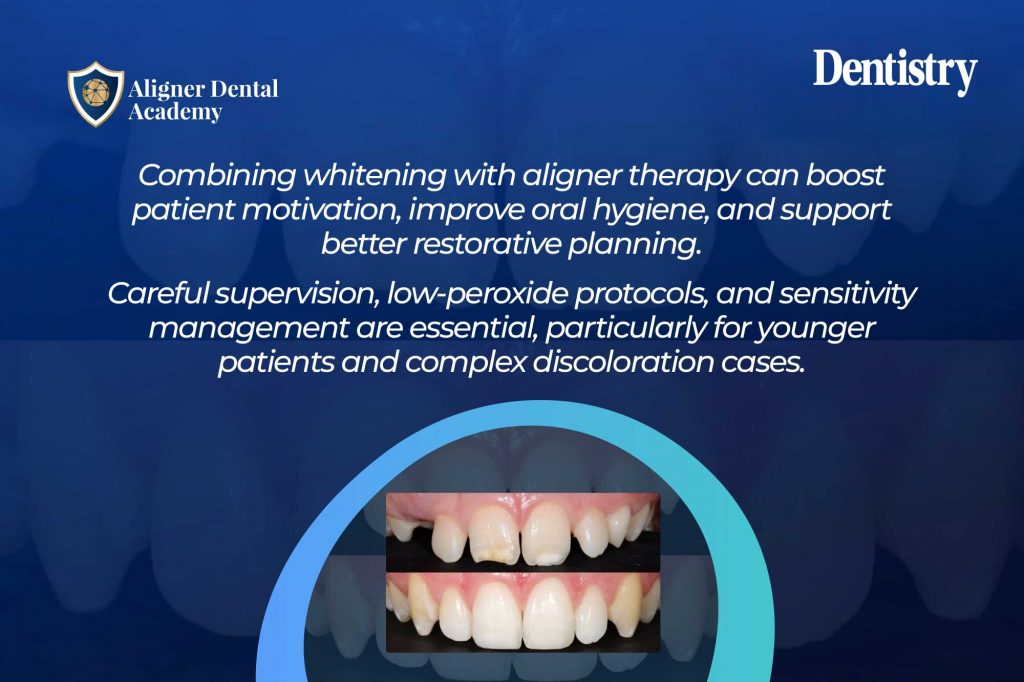
The rise of minimally invasive cosmetic dentistry has transformed patient expectations, particularly among adults seeking Invisalign and tooth whitening.
Invisalign and other clear aligner systems have become increasingly popular because they offer discreet, removable, and digitally planned orthodontic solutions. At the same time, tooth whitening remains one of the most requested aesthetic procedures worldwide.
Traditionally, clinicians delayed whitening until orthodontic treatment was completed due to concerns that aligner attachments could interfere with peroxide penetration, create uneven bleaching, increase sensitivity, or compromise treatment outcomes. However, recent evidence suggests that whitening during Invisalign therapy can be both safe and effective when carefully supervised (Silva et al, 2022).
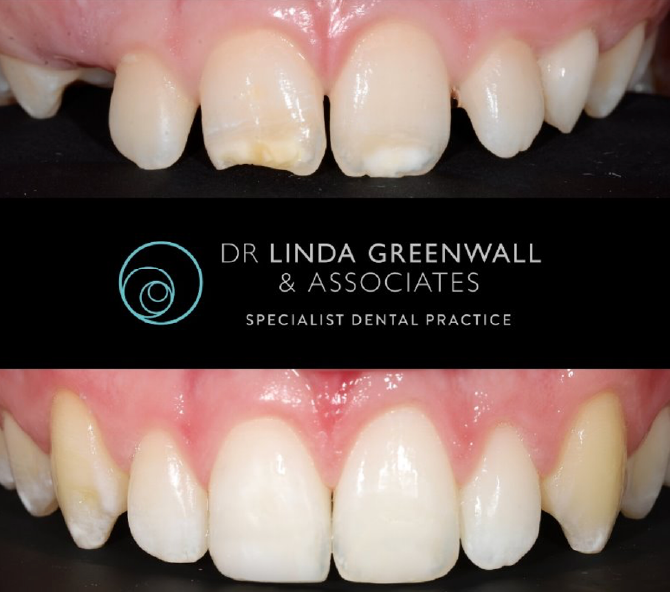
Why whitening works during aligner therapy
Tooth whitening relies on hydrogen peroxide or carbamide peroxide gels that penetrate enamel and dentin to break down chromogenic molecules responsible for discoloration (Joiner, 2006). Because peroxide diffuses beyond the direct contact area, whitening is not simply a surface phenomenon.
This explains why Invisalign attachments generally do not prevent effective bleaching. Clinical studies by Levrini et al demonstrated that whitening outcomes using clear aligners were comparable to traditional whitening trays, even without customised reservoirs. Clinical observations also show that any minor shade discrepancies usually resolve after attachments are removed.
Additionally, a 2023 study evaluating 10% carbamide peroxide found no significant negative effect on Invisalign material properties, suggesting that supervised whitening protocols do not compromise aligner performance.
Clinical benefits of simultaneous whitening
Integrating whitening during aligner treatment offers several clinical and psychological advantages.
Increased patient motivation
Patients who observe visible shade improvement during treatment are often more motivated to comply with aligner wear and oral hygiene instructions. Early aesthetic improvement may enhance patient engagement throughout lengthy orthodontic treatment plans.
Improved oral hygiene awareness
Whitening protocols frequently encourage better plaque control and cleaner aligner maintenance. Peroxide-based agents may also provide mild antimicrobial effects that contribute to improved gingival health.
Better restorative planning
Whitening before definitive restorative procedures such as composite bonding or veneers allows clinicians to achieve more predictable shade matching. However, because residual oxygen from bleaching agents may temporarily reduce resin bond strength, most clinicians recommend delaying adhesive procedures for approximately two weeks after whitening.
A report published in the Journal of Clinical Orthodontics also highlighted improved patient satisfaction when whitening was incorporated into clear aligner therapy.
Recommended whitening protocols
Contemporary protocols favour a gradual and carefully monitored approach to aligner-based whitening. A commonly recommended protocol includes whitening the upper arch for two weeks using overnight bleaching, reviewing sensitivity and shade response, then whitening both arches for an additional two weeks with regular monitoring.
Lower peroxide concentrations, particularly 5-6% hydrogen peroxide systems, are often preferred because they provide effective whitening while reducing sensitivity risk.
Managing tooth sensitivity
Sensitivity remains the most common adverse effect associated with bleaching treatment. Patients with gingival recession, exposed dentin, enamel defects, or a history of sensitivity are more likely to experience discomfort.
Management strategies may include reducing application frequency, temporarily discontinuing whitening, prescribing fluoride or desensitising toothpastes, and using potassium nitrate gels. Potassium nitrate is particularly beneficial because it reduces pulpal nerve activity and improves patient comfort during bleaching treatment.
Considerations for younger and complex cases
Whitening in adolescent Invisalign patients requires additional caution. Therapeutic whitening may be useful in cases involving fluorosis, trauma-related discoloration, molar-incisor hypomineralisation (MIH), developmental enamel defects, or post-orthodontic white spot lesions. Because younger patients are generally more prone to sensitivity, lower peroxide concentrations and gradual protocols are recommended.
Not all forms of discoloration respond equally to conventional whitening. Intrinsic staining, enamel hypoplasia, tetracycline staining, and non-vital teeth may require prolonged treatment or interdisciplinary management. Some patients may ultimately require resin infiltration, composite bonding, veneers, or endodontic treatment to achieve optimal aesthetic outcomes.
Conclusion
Modern evidence increasingly supports whitening during Invisalign treatment as a predictable and effective component of comprehensive aesthetic dentistry. Contrary to previous assumptions, attachments do not appear to significantly interfere with whitening outcomes, and clear aligners can successfully function as bleaching trays (Levrini et al; Silva et al, 2022). When professionally supervised, simultaneous whitening may improve patient motivation, enhance oral hygiene awareness, support restorative planning, and deliver highly satisfactory aesthetic outcomes.
References
- Joiner A. The Bleaching of Teeth: A Review of the Literature. Journal of Dentistry. 2006
- Levrini L, et al. Dental Bleaching during Orthodontic Treatment with Aligners
- Silva A, et al. The Effectiveness of Dental Bleaching during Orthodontic Treatment with Clear Aligners: A Systematic Review. Applied Sciences. 2022
- Alhendi A, et al. Effect of 10% Carbamide Peroxide on Invisalign Aligners. 2023
- Tooth Whitening in Association with Clear Aligner Treatment. Journal of Clinical Orthodontics.
For more articles like this please visit the Aligner Dental Academy’s resource hub.
Or to find out about membership click here.
This article is sponsored by Aligner Dental Academy.