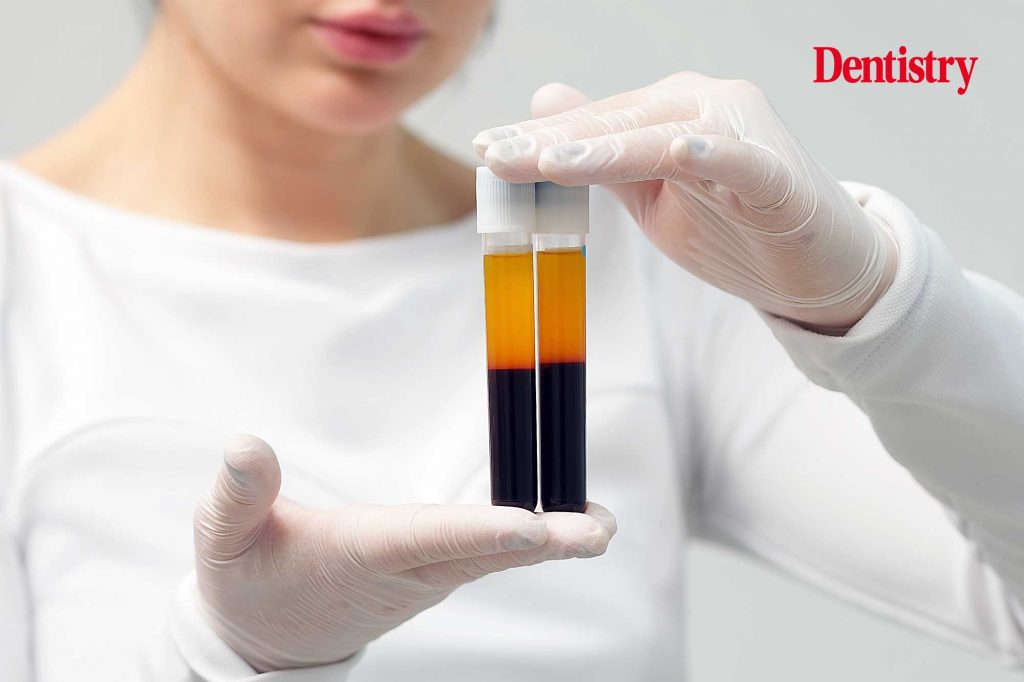
Ahead of her Dentistry Show London 2026 presentation, Emily Lu discusses the growing role of platelet-rich fibrin (PRF) in everyday clinical practice.
Platelet-rich fibrin (PRF) has attracted considerable interest in recent years. What has driven that momentum, and why is it becoming increasingly relevant in everyday clinical practice?
I think it has been driven by a combination of biological appeal, clinical practicality and a growing evidence base. PRF is prepared chairside from the patient’s own blood and provides a fibrin scaffold containing platelets, immune cells and signalling molecules that can support the natural wound-healing process.
It is also relatively straightforward and cost-effective to prepare, which makes it more accessible for everyday practice. However, its growing popularity should not lead us to overstate what it can achieve. PRF is most valuable when used as a biological adjunct in carefully selected cases, alongside sound treatment planning and meticulous surgical technique.
The evidence base for PRF continues to evolve. Where do you think the evidence is strongest today, and where is more research still needed?
Our understanding has become more nuanced. Earlier discussions often focused on the presence of growth factors, whereas we now appreciate that PRF is a three-dimensional fibrin matrix that can support cell migration, angiogenesis and the gradual release of biological mediators.
Clinically, some of the most consistent evidence relates to improved early soft tissue healing and reduced postoperative discomfort, particularly following extractions. There is also encouraging evidence for its adjunctive use in periodontal intrabony defects, ridge preservation and ridge reconstruction procedures, where it may support wound healing and be combined with grafting materials to enhance their handling and biological environment.
However, the evidence is less consistent for some implant-related applications, peri-implantitis and predictable long-term hard tissue gains following ridge preservation or reconstruction. Protocol heterogeneity also remains an important limitation.
We therefore need to distinguish between promising biological mechanisms, improved early healing and evidence of predictable long-term regeneration.
Which patients and clinical situations are most likely to benefit from PRF, and how do you decide when it is the right option?
I tend to think about the clinical indication before thinking about the material. PRF may be particularly helpful when supporting soft tissue healing is a priority, for example following extraction or oral surgery, and as an adjunct in appropriately selected periodontal intrabony defects and regenerative procedures.
The decision depends on the defect anatomy, the patient’s plaque control, smoking status, systemic health, healing capacity and ability to maintain the result. I would also consider whether the patient is comfortable with venepuncture and whether there are relevant medical or haematological considerations.
Most importantly, PRF cannot overcome uncontrolled disease, poor plaque control, unsuitable defect anatomy or inadequate surgical technique. Patient and site selection remain fundamental.
What practical advice would you give clinicians who are considering introducing PRF into practice?
Start with a clearly defined clinical indication rather than purchasing a centrifuge and then looking for situations in which to use it. Undertake appropriate training in venepuncture, preparation and handling, and use a validated protocol consistently.
The whole dental team should understand the workflow. Blood collection, centrifugation, preparation of the clot or membrane and delivery to the surgical site are all time-sensitive. It is helpful to establish a written protocol covering equipment checks, infection control, consent, documentation and the management of complications.
I would begin with straightforward, well-selected cases, record outcomes carefully and avoid changing several protocol variables at once. Consistency is essential if clinicians want PRF to become a predictable part of their workflow.
Your session at Dentistry Show London is titled ‘PRF chairside: translating biology into everyday practice’. Without giving too much away, what practical insights can delegates expect to take back to practice?
The practical message is simple: start with the patient and the clinical problem, ensure the fundamentals of disease control and surgical technique are in place, and then ask whether PRF offers a biological and evidence-based benefit in that particular situation. If delegates can apply that reasoning the next day, rather than seeing PRF as a universal solution, the session will have achieved its purpose.
Want to learn more?
Dr Emily Lu will be joined by Dr Triantafyllio Zafeiri and Dr Aiste Volkyte for ‘PRF chairside: translating biology into everyday practice’ in the Specialty Interest Theatre at 11:15 on Saturday 10 October during Dentistry Show London 2026. Register free of charge at london.dentistryshow.co.uk.
This article is sponsored by Closerstill.