
Cheap handpieces can be deceptive – Trigiene explores the unexpected costs that can occur in the lifecycle of a dental handpiece.
Dental handpieces are the workhorses of every dental practice. Used continuously throughout the day, subjected to intensive decontamination cycles, and expected to perform with precision every time, they are fundamental to both clinical outcomes and patient experience.
Yet despite their importance, many practices struggle to answer some basic but critical questions:
- How much has this handpiece actually cost us over its lifetime?
- At what point does repair become more expensive than replacement?
- Where can we access a complete service history for each asset?
- How are warranty periods and service intervals being tracked?
The reality is that the true cost of ownership for dental handpieces is often hidden within fragmented records, paper-based systems, and reactive maintenance processes.
The challenge of tracking lifetime costs
While the purchase price of a handpiece is easy to identify, the ongoing costs associated with servicing and repairs are often much harder to measure.
Over several years, a handpiece may require multiple turbine replacements, gear set repairs, fibre-optic replacements and preventative maintenance. Individually, these costs appear manageable. Collectively, however, they can exceed the original purchase price several times over.
Without a centralised system linking every repair to a specific serial number, practices have little visibility of the true financial performance of each asset. As a result, repair decisions are often made based solely on the latest quotation rather than the cumulative investment already made in that handpiece.
When does repair become a false economy?
One of the most common questions practice managers face is: ‘Should we repair it or replace it?’
There is no universal answer. A premium handpiece from a leading manufacturer may justify several repairs if the core body remains in good condition. Conversely, repeated repairs on an ageing handpiece may indicate that replacement is the more economical option.
Many industries use a repair threshold model, replacing assets once repair costs reach a predetermined percentage of the replacement value. However, this approach relies on accurate historical data.
Without access to previous repair costs and service records, practices are often making decisions without seeing the complete financial picture.
The quality of repairs matters
Reducing lifecycle costs is not simply about finding the cheapest repair option. The quality of the repair can significantly impact future reliability and performance.
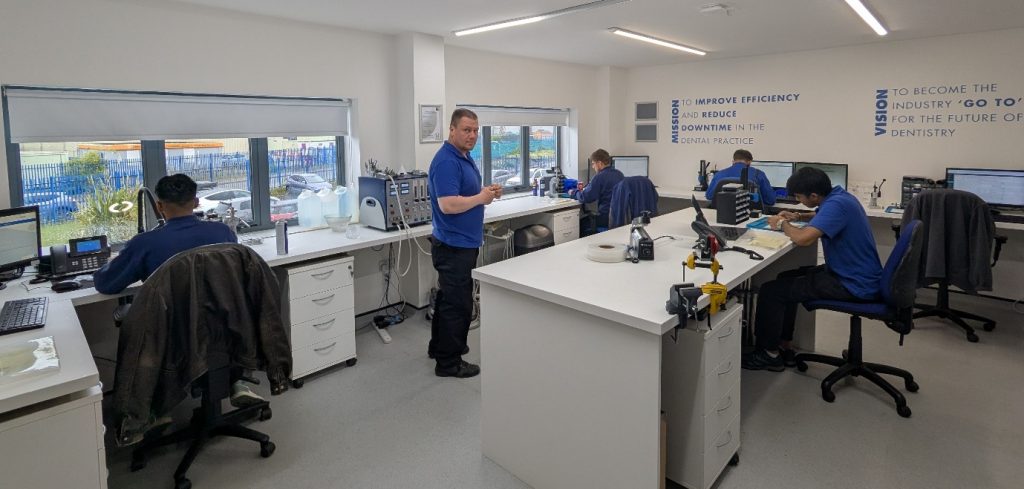
Practices should consider three key factors when selecting a repair provider:
- Membership of recognised industry bodies such as the BDIA
- Quality control certification such as ISO9001
- Manufacturer-trained engineers with specialist knowledge of specific handpiece brands
- The use of genuine OEM parts wherever possible.
While non-genuine components may reduce the immediate repair cost, they can increase the risk of premature failure, reduced performance and additional repairs in the future. In many cases, the cheapest repair becomes the most expensive over the lifetime of the asset.
Preventative maintenance reduces long-term costs
Many avoidable repairs stem from poor maintenance procedures.
Correct lubrication, cleaning and sterilisation processes are essential to maximise handpiece lifespan. Practices should ensure reprocessing teams are properly trained and follow consistent procedures, including:
- Using manufacturer-approved lubricants
- Using the correct oiling adaptors
- Completing full sterilisation drying cycles
- Storing handpieces correctly after processing
- Undertaking regular refresher training.
Simple improvements in maintenance procedures can significantly reduce repair frequency and improve equipment longevity.
The hidden administrative burden
The cost of maintaining handpieces extends beyond repair invoices.
Tracking warranties, service histories, maintenance schedules and repair records manually can be time-consuming and prone to error. For larger practices or DSOs operating across multiple sites, maintaining visibility becomes even more challenging.
When service records are spread across emails, spreadsheets and filing cabinets, answering basic questions about an asset can take considerable time and effort.
In an increasingly regulated environment, maintaining accurate equipment records is also an important compliance requirement.
A smarter approach with the Trigiene Handpiece Repair Tracking Portal
To help practices gain greater control over their equipment, Trigiene has developed the Handpiece Repair Tracking Portal.
The portal provides a centralised digital asset register where practices can record, manage and monitor their handpiece inventory throughout its entire lifecycle.
Instead of relying on disconnected paperwork and historical invoices, practices gain instant access to a complete asset history in one location.
Key benefits include:
- Register and manage all handpiece assets by serial number
- Book free repair collections online in seconds
- Track repair progress in real time
- Access complete service and repair histories
- Monitor cumulative repair expenditure against individual assets
- Record warranty expiry dates and service intervals
- Generate management reports to support budgeting and replacement decisions
- Identify recurring faults and equipment performance trends.
By creating a complete lifecycle record for every handpiece, the portal enables practices to make informed decisions about whether to repair, replace or retire equipment.
The result is greater visibility, improved compliance, reduced administration and better control of maintenance budgets.
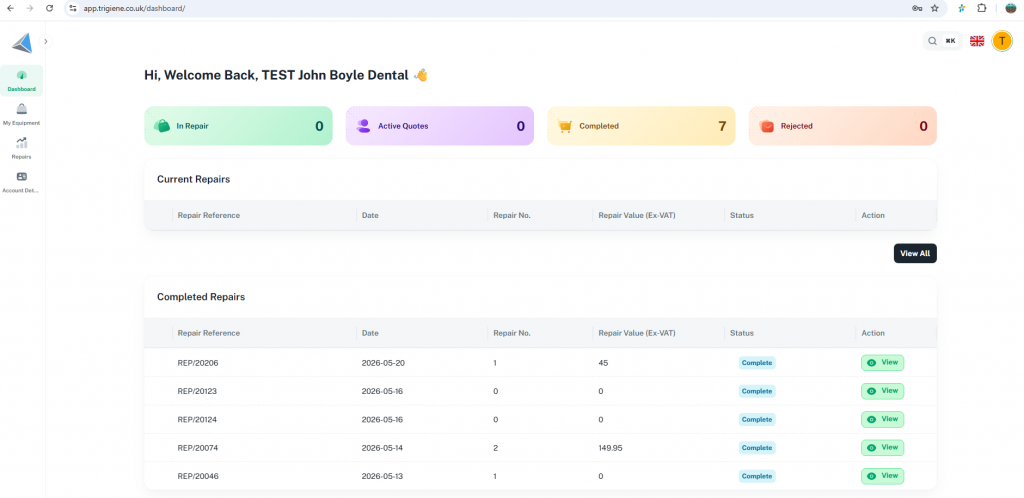
From reactive repairs to strategic asset management
As dental practices face increasing pressure to improve efficiency, profitability and compliance, managing equipment through spreadsheets and paper records is no longer sufficient.
The Trigiene Handpiece Repair Tracking Portal provides the data needed to understand the true cost of ownership of every handpiece within the practice. It transforms maintenance from a reactive process into a strategic asset management function, helping practices maximise equipment lifespan while controlling costs.
Ultimately, the question is no longer whether a handpiece can be repaired. The real question is whether it should be repaired.
With accurate lifecycle data at your fingertips, that decision becomes significantly easier.

Matthew Evershed
Managing director, Trigiene Ltd
For more information about the Trigiene Handpiece Repair Tracking Portal, contact the team on 01642 442910 or [email protected].
This article is sponsored by Trigiene.