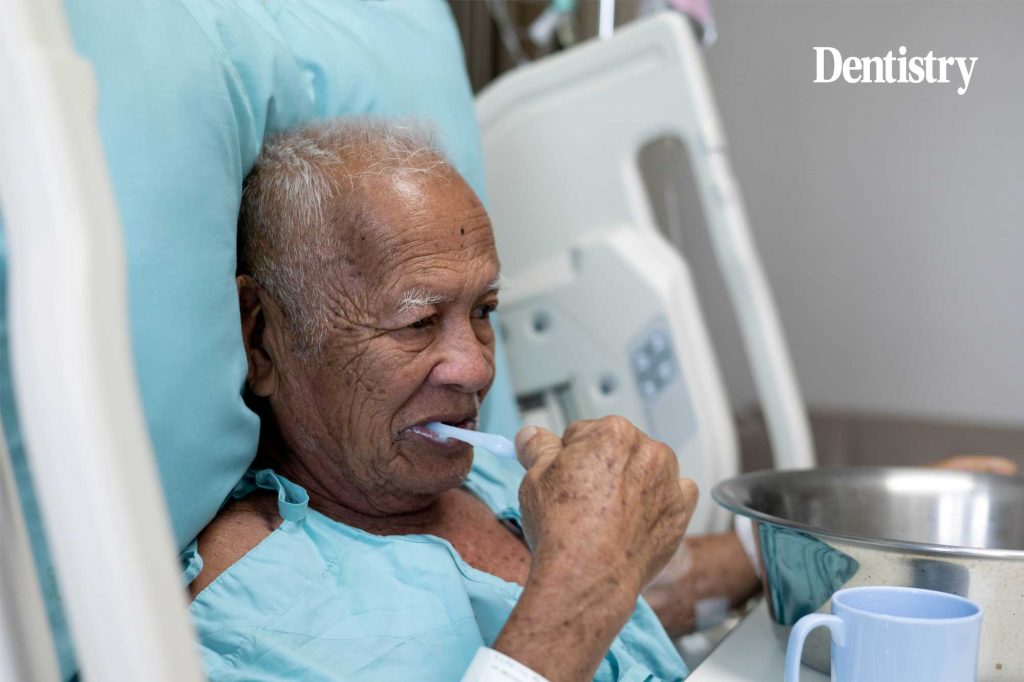
Improving oral care habits has been found to significantly reduce the likelihood of developing hospital-acquired pneumonia by a new study.
The Hospital Acquired Pneumonia Prevention (HAPPEN) study saw patients provided with a toothbrush, toothpaste, educational materials and access to additional online resources when admitted to hospital. Healthcare workers also received onsite training, access to online resources and practical support to deliver oral care more effectively.
The proportion of patients receiving oral care in hospital increased from just under 16% to 61.5% during the programme. On average, oral care was carried out 1.5 times per day.
During the study, researchers observed that instances of non-ventilator-associated hospital-acquired pneumonia (NV-HAP) reduced from one case per 100 admission days to just 0.41. This represents approximately a 60% reduction.
How does toothbrushing reduce pneumonia risk?
Lead study author Professor Brett Mitchell’s research focuses on microbial resistance and emerging infections across healthcare settings in the UK and Australia. He suggested that most pneumonia cases result from bacteria already present in patients’ bodies rather than from person-to-person transmission.
He said: ‘Typically, NV-HAP is the result of fluids from the mouth or throat entering the lungs, with hospital-associated respiratory pathogens more frequently detected in patients who are unable to clear oral secretions.
‘Improving oral hygiene helps reduce these pathogens in the mouth, potentially lowering the risk of subsequent infection.’
Reducing barriers to oral care
The study included a total of 8,870 patients in Australian hospitals over a 12-month period. Professor Mitchell said: ‘One of the most encouraging findings from this study was the scale of improvement we were able to achieve.’
Previous barriers to oral care in hospital settings were identified as limited access to suitable products, low awareness of the link with pneumonia and competing clinical priorities. Professor Mitchell hoped the new research would help prompt action to relieve some of these barriers.
He concluded: ‘Guidelines already recognise the role of oral care in preventing NV-HAP, but the evidence supporting these recommendations has been limited. Our study now provides robust evidence from a hospital setting. The next step is to better understand how structured programmes can be effectively implemented and sustained across hospital wards.’
Follow Dentistry.co.uk on Instagram to keep up with all the latest dental news and trends.