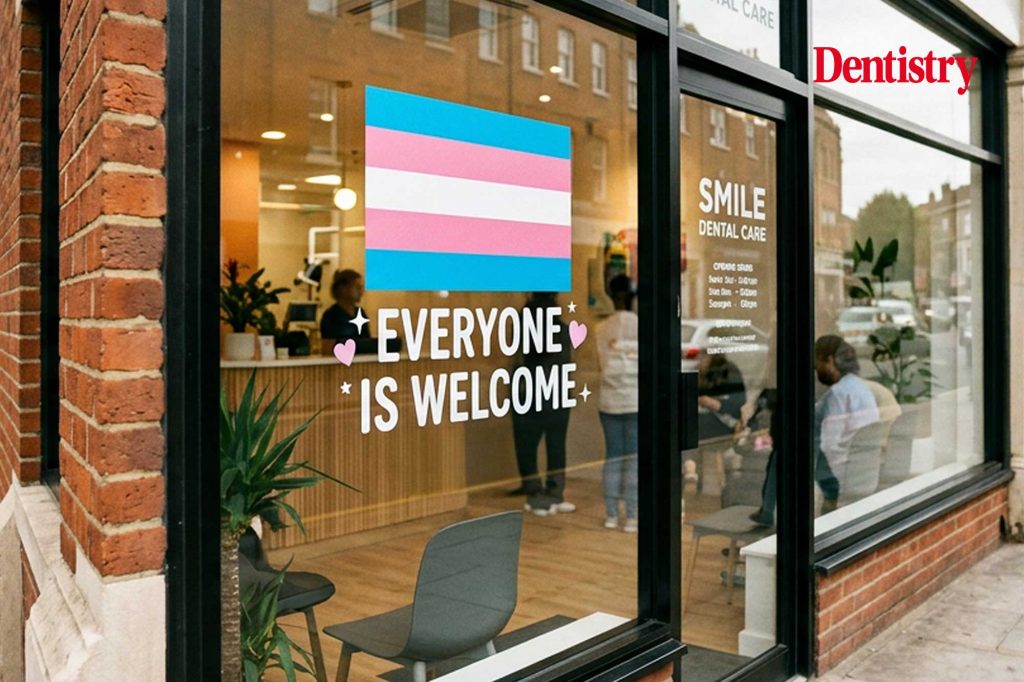
Around 42% of transgender (trans) people said they had avoided accessing dental care in a report on trans experiences of the UK.
A notable reason for the hesitancy to access healthcare was issues with changing ID, patient records, or legal name.
In addition to dental care, many of the transgender people who were surveyed had avoided accessing other types of healthcare:
- Visiting a general practitioner (GP) – 64%
- Going to a sexual health clinic – 42%
- Calling NHS 111 or speaking to a pharmacist for non-emergency care – 38%
- Going to accident and emergency (A&E) for urgent care – 37%.
Under the trans bracket, several sub-groups were particularly likely to have avoided accessing dentistry. Transgender people of colour, those with disabilities and trans men were all more likely on average to have avoided dental care. The highest levels of avoidance were seen in intersex respondents, at 58%.
Only 3% of the transgender people surveyed were confident that healthcare professionals could meet their needs all the time, while 8% were never confident.
When asked how hopeful they felt about the future compared to 2023, six in 10 (58%) said they were less hopeful. This is compared to just 23% who said they were more hopeful.
‘Government should be working to support trans people’s inclusion in society’
Published on 3 March, the Trans Lives 2025: Continuing To Endure The Hostile Environment report was produced by trans advocacy group Transactual UK.
The group called for the Equality and Human Rights Commission (EHRC) and the UK government to produce guidance that supports providers to include trans people in facilities and services in line with their gender. This would aim to ensure ‘everyone is able to access facilities and services in dignity, free from invasive questioning and harassment’.
Transactual UK said: ‘Both the EHRC and government should be working to support trans people’s inclusion in society.’
The report also lays out six recommendations specifically designed to improve healthcare access and services for trans people:
- Work with trans organisations to develop an action plan that aims to reduce the health inequalities experienced by transgender people
- Fund, and make mandatory, training for healthcare staff that is anti racist, intersex inclusive, inclusive of disabled people and explicitly trans-affirmative
- Support training providers to embed trans inclusion within curricula, professional skills frameworks, and core competencies
- Empower GPs to initiate and maintain hormone prescriptions for transgender people, providing the funding and training needed
- Explore ending the centralised and medicalised system of gender clinics, moving towards a model of locally provisioned gender services operating on the basis of informed consent
- Fund research into the healthcare experiences of transgender people, with specific focus on those who are multiply marginalised.
Follow Dentistry on Instagram to keep up with all the latest dental news and trends.