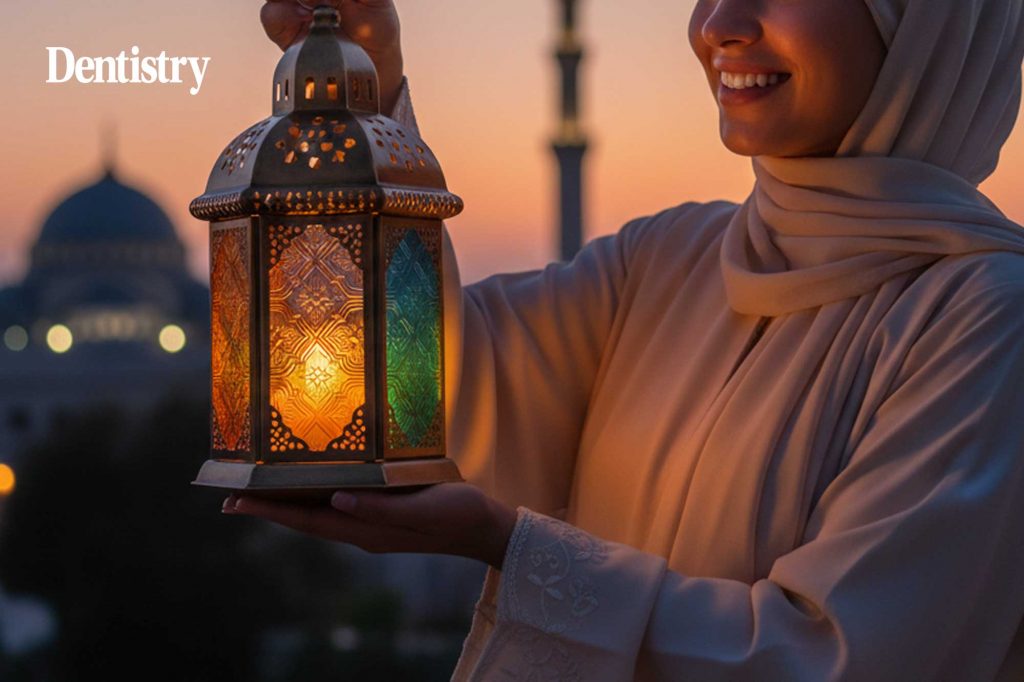
Sakina Syed discusses the potential oral health impacts of fasting during Ramadan and how dental professionals can help their patients combat them.
Ramadan is a significant religious period that involves daily fasting from dawn (suhoor) until sunset (iftar) for approximately one lunar month. During this time, individuals refrain from eating food and drinks between these times.
As dental professionals, an understanding of the physiological and metabolic effects of fasting, particularly on blood glucose regulation, energy metabolism, and hydration, is essential to providing safe, effective, and culturally acceptable care.
Those who are pregnant or medically compromised are exempt from fasting. Fasting alters normal daily routines, which can have both systemic and oral health implications relevant to dental treatment.
Can fasting impact oral health?
Sign in to continue reading
Free access to our premium content:
- Clinical content
- In-depth analysis
- Features, reports, videos and more
By joining, you’re helping to support independent, quality journalism that keeps dental professionals informed and empowered – and allowing us to keep delivering the insights you value most.