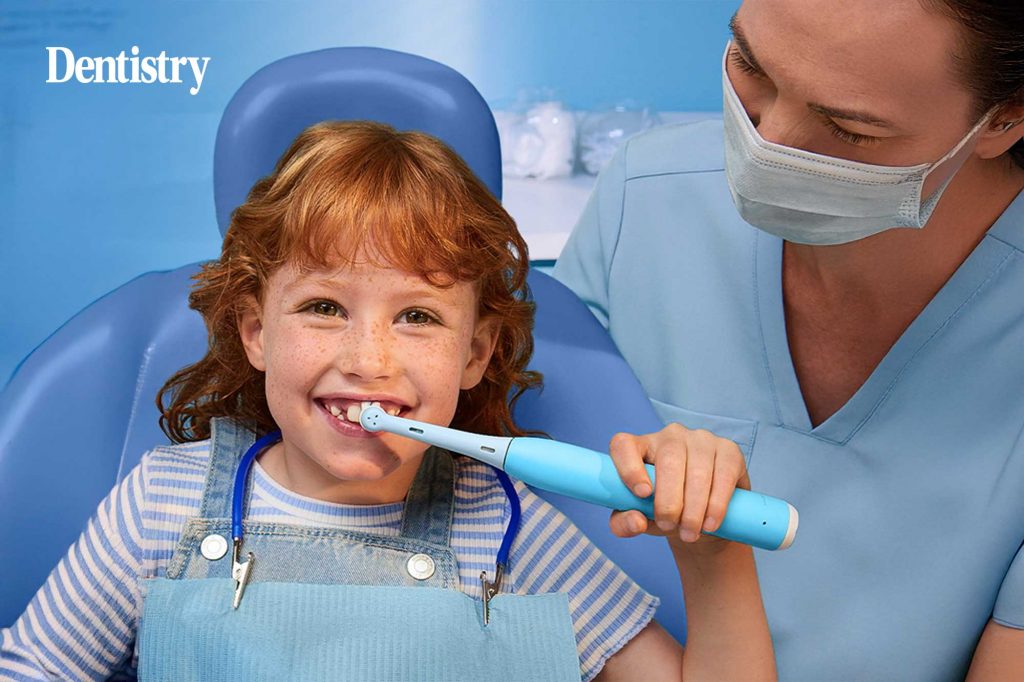
Oral-B explores how dental professionals can drive transformation to help achieve healthier smiles for children.
For many years, UK statistics on children’s oral health have made for a disheartening read. The link to socioeconomic status is especially significant, with the cost-of-living crisis (BDA, 2023) and poor access to NHS dentists intensifying the challenges. Put simply, many children in low-income households lack a dental home.
The stark disparities between different groups highlight the urgent need for targeted action. Poor dental health can cause pain, disrupt sleep and make it difficult to eat. For children, this has long-term implications for their confidence, mental health, academic performance and overall wellbeing.
With a government pledge to rebuild dentistry, is that tide about to turn?
Cautious optimism
The Oral health survey of five-year-old schoolchildren 2024 revealed that those in the most deprived areas of England were more than twice as likely to have experienced dentinal decay (32.2%) as those living in the least deprived areas (13.6%) (Office for Health Improvement and Disparities, 2025). While inequalities in the prevalence of dentinal decay in five-year-olds significantly decreased from 2008 to 2015, there has been little change in inequalities since then. Commenting at the time, Dr Charlotte Eckhardt, dean of the Faculty of Dental Surgery at the Royal College of Surgeons, said that whilst the numbers were ‘still too high’, supervised toothbrushing programmes offered ‘a glimmer of hope’.
Evidence-based interventions and patient education, both at national and local levels, are crucial in addressing the issues. The Welsh government’s flagship Designed to Smile programme, launched in 2009 to tackle significant inequalities in childhood tooth decay among disadvantaged communities, served as an inspiration for the UK government’s own initiative last year.
Launching a fully funded national voluntary programme in March 2025, it is targeting early years settings in the most deprived areas. Early analysis by the Child of the North initiative has offered further grounds for ‘cautious optimism’ – although its authors stressed the need for schemes to be scaled up and strengthened if they are to meet needs (N8, 2025).
Caregiver involvement
However, for clinicians providing dental care in primary care settings, what steps can they take to help address oral health inequalities? And what tools are available to support their efforts?
Caregiver involvement remains crucial to the effort, with daily habits entrenched early, making a significant difference to long-term oral health status. According to the authors of one study: ‘Caregivers must be placed in the epicentre of efforts to promote optimal oral health behaviours, including early preventive dental visits’ (Divaris et al, 2014). While another showed that collaborative efforts are essential in promoting effective oral health practices among young populations (Wang et al, 2024).
Case study
A recent small but significant feasibility study also highlights the essential role they play in supporting children’s oral health. The study examined the Oral-B iO Kids 6+, a child-friendly electric toothbrush that uses clinically proven oscillating-rotating technology. Its purpose was to evaluate its practicality and effectiveness in real-world settings.
Participants were recruited from an NHS dental practice in north Wales that caters to a high-need paediatric population. Children aged six to 10 years without contraindications were invited to try out the electric toothbrush. Caregivers were instructed on how often to use it, ideally twice daily – in the morning and at night – and shown how to monitor brushing duration and pressure using a mouth model. They were asked to use the toothbrush regularly for four weeks, maintaining their usual oral care routines without making any other changes.
Caregivers maintained logs to monitor compliance and participated in follow-up interviews, while the children completed questionnaires.
Although the sample size was small (four participants), which limits the ability to generalise findings, strong engagement and caregiver satisfaction were evident. Trends indicated overall improvement in plaque and gingival health after four weeks. Notably, three out of four children consistently achieved the recommended two or more brushing sessions per day.
Changing the status quo
It is this collaborative approach to children’s oral hygiene that Dr Fiona Sandom believes is fundamental to changing the status quo on child oral health statistics.

Fiona Sandom
A dental hygienist and dental therapist, Fiona was awarded an MBE in the King’s Birthday Honours List 2025 for her outstanding services to dental therapy and the NHS in Wales. She now works part-time in a busy NHS practice, serving as the DPSU lead and north Wales regional lead for Health Education and Improvement Wales (HEIW).
She explains: ‘Health inequalities remain a major concern for oral health. Ensuring there is enough food on the table and getting children to school on time are usually the priorities for many families – and they often lack the time or energy to supervise their children’s toothbrushing. Yet, it is often those same individuals who need our help the most. Promoting equity within the home environment is therefore crucial. Many programmes already effectively tackle these inequalities by offering access to toothbrushes, fluoride toothpaste and educating children in schools, for example.’
She adds: ‘However, we all have a part to play in supporting these initiatives at a local level. For those of us in primary care dental settings, we can utilise tooth models to educate parents on proper toothbrushing habits (using an electric toothbrush if possible), reinforce healthy food and drink choices and provide tailored support with clear guidance – all key aspects of preventive care. Additionally, the Oral-B Professional website offers numerous resources for distribution. I suggest visiting www.oralbprofessional.co.uk for more information.’
Improved quality of life
Many believe that only by completely eradicating childhood poverty will children’s dental health and wellbeing be reflected positively in the UK’s health statistics. In the meantime, the dental profession bears a responsibility to reduce oral health inequalities.
Equipping carers with the correct knowledge, skills and tools is therefore highly beneficial. Promoting a collaborative approach, where carers understand the significance of oral health and know how to support their children, can lead to healthier smiles and an improved quality of life for young patients.
This article is sponsored by Oral-B.