
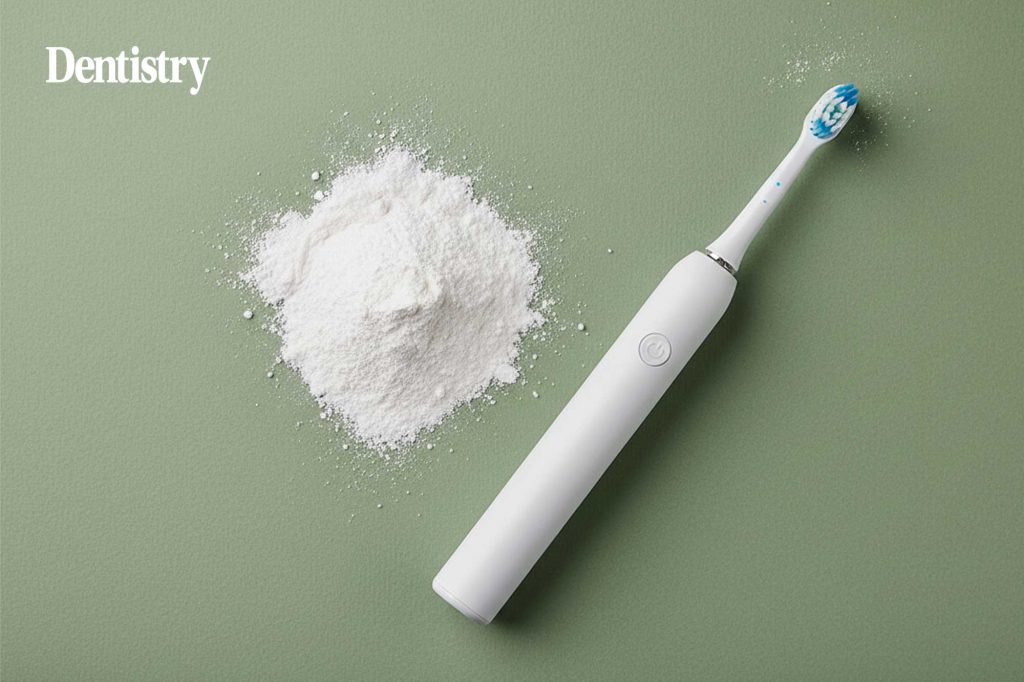
A newly-developed powder activated by electric toothbrush vibrations is described as an ‘effective, at-home treatment’ for tooth whitening.
Researchers developed the prototype whitening powder aiming to improve the appearance of tooth staining without the potential damage of chemical whiteners. Peroxide-based bleaching with strips, gels and mouth rinses may result in enamel damage, which could cause re-staining or other dental problems.
When vibrated, the powder generates a small electric field which produces compounds that break apart stain-causing molecules. In lab demonstrations, the powder both brightened and protected teeth.
Researchers combined strontium and calcium ions with barium titanate in a solution, then heated and formed it into a ceramic powder called BSCT.
Min Xing, first author on the study, said: ‘This work offers a safe, at-home teeth whitening strategy integrating whitening, enamel repair and microbiome balance for long-term oral health.’
How was the powder tested on teeth?
The study authors artificially stained human teeth with tea and coffee, then brushed them with the powder and toothbrushes. After four hours of brushing, stain reduction was visible. After 12 hours, treated teeth were almost 50% whiter than the control group stained in the same way and brushed with only saline.
For teeth with damaged enamel and dentin, brushing with the powder had a regenerative effect because the strontium, calcium and barium ions formed deposits on the tooth surface.
The researchers then tested the powder on rats with a higher sugar diet. Brushing with the powder for one minute over four weeks improved the rats’ oral microbiome, reducing periodontitis-causing Porphyromonas gingivalis and Staphylococcus aureus bacteria and reducing inflammation.
The next stage in the research would be to incorporate the powder into a toothpaste formula. However, the study’s authors said it was already a step towards a new effective, at-home treatment for safely whitening teeth and promoting oral health.
The study was published in the ACS Nano journal.


