Halfway through her Dentistry’s Next Top Digital Dentist journey, winner Sheena Tanna reflects on how it has already transformed her clinical workflow and what’s to come over the next six months.
Last year, Dentistry revealed Dr Sheena Tanna as the winner of its Next Top Digital Dentist competition – a brand-new initiative created to champion dentists embracing a digital transformation.
Run in collaboration with Align Technology, the programme offers a unique opportunity to embark on a year-long journey of mentoring, coaching and access to cutting-edge digital tools designed to drive clinical excellence and practice growth.
With Align’s support shaping the experience, the initiative helps one dentist unlock the full potential of digital workflows.
Here, Sheena details how the first half of her journey has gone so far, including her stand-out moments, pain points, and unexpected lessons…
Looking back, how would you describe your journey in the competition so far?
The journey has been demanding, fast-paced, and genuinely eye-opening. When I entered in September, I thought the competition would mainly be about showcasing digital dentistry. What it has actually done is highlight every part of my clinical workflow, leadership style, and team culture – in a very positive way.
It hasn’t been a smooth upward curve. It’s been iterative, thought-provoking and incredibly real. I’ve moved from early momentum, to reflection, and then to clarity. Ultimately, it’s pushed me to move from using digital dentistry to embedding it properly across a busy, multi-clinician practice.
What have been the stand-out moments for you?
The iTero Lumina bootcamp early on was a pivotal moment. It highlighted not just how powerful the scanner is, but how easily its full diagnostic potential can be underused without a clear, repeatable workflow. That experience shifted how I approach scanning – moving it from a technical step to a central part of diagnosis and patient communication.
Media appearances were also defining, particularly BBC Essex and Heart FM. Explaining digital dentistry and AI to the general public forced me to focus on what truly matters: reducing anxiety, improving understanding, and helping patients feel involved in their care rather than overwhelmed by technology.
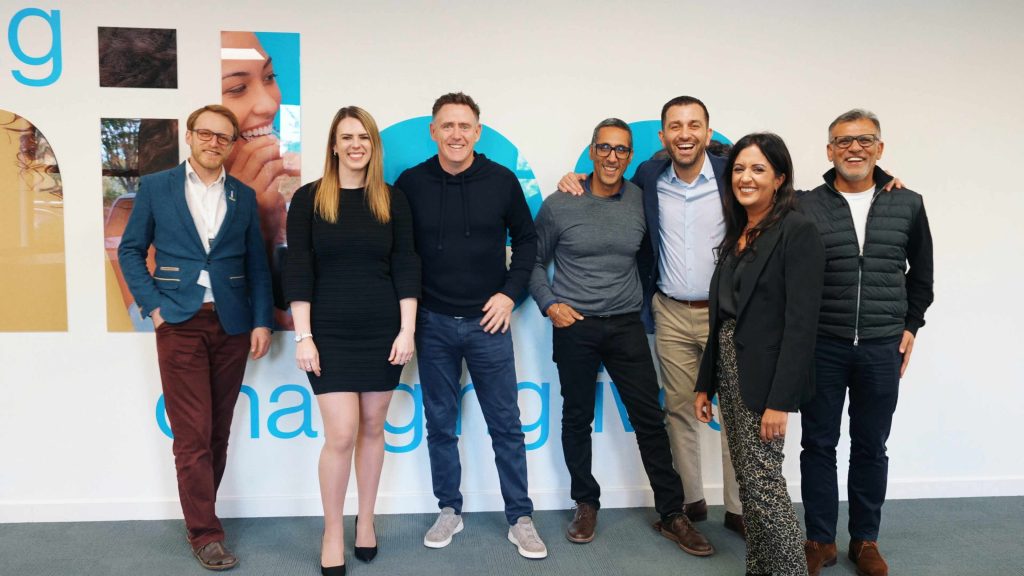
Another key moment was working with the Aligner Dental Academy (ADA) and spending time at Align HQ with mentors and judges. This provided valuable insight into how Align Technology supports the integration of digital workflows into everyday clinical practice. It also reinforced the importance of embedding digital systems across a multi-clinician practice, rather than centring them on one individual.
It reaffirmed the value of consistency – ensuring associates feel confident using scanners diagnostically, not just for aligner records. ADA has supported this by sending Bhavin and Michael into the practice to train our associates, helping build confidence with scanning and reinforcing its role as a meaningful diagnostic tool.
That insight has directly influenced how we train, support, and phase the rollout of digital workflows so adoption is sustainable, team-led, and not reliant on a single clinician. While this is still very much an ongoing journey, it has already been incredibly valuable and has reinforced the importance of implementing digital dentistry in a structured, supportive way.
How has this competition changed your clinical workflow day to day?
My workflow is now far more intentional. Scanning is used as a considered part of the diagnostic process, where it adds genuine clinical and communication value rather than functioning as a tick-box exercise. It supports clearer diagnosis and helps patients better understand what’s happening in their mouth.
I remain closely involved in key consultations, particularly for Invisalign treatments and restorative cases, working alongside our TCO to ensure clinical clarity and continuity. While I have always been confident in these conversations, the competition has helped refine how we structure them as a team, improving consistency, patient confidence, and the flow from diagnosis through to treatment acceptance.
Crucially, I’ve reinforced that systems don’t implement themselves. Introducing scanning required clear structure, team involvement, and tracking to ensure consistency. It underlines that digital dentistry is most effective when it is measurable, supported, and embedded across the entire practice – with strong foundations now in place and a clear direction for continued rollout.
Have there been any unexpected insights or lessons learned along the way?
The biggest lesson has been that technology alone doesn’t change behaviour – leadership does. While it’s easy to assume that understanding the benefits of scanning and AI tools naturally leads to adoption, in practice too much change at once can slow progress.
Breaking implementation into small, achievable steps – such as focusing on a limited number of scans each day, reviewing outcomes, and then gradually layering complexity – has proven far more effective. That insight has reshaped how I now introduce any innovation across the practice.
The competition has also reinforced something I’ve long believed: digital dentistry is less about speed and more about clarity. When patients can clearly see and understand what’s happening, trust builds naturally and conversations become far more meaningful.
What challenges or pain points have you encountered, and how did you overcome them?
One of the key challenges has been ensuring consistent team engagement while introducing new digital workflows. Even with training and access to excellent tools, it became clear that adoption doesn’t happen automatically in a busy clinical environment.
With support from mentors, I recognised that the issue wasn’t reluctance, but cognitive overload. Addressing this meant simplifying expectations, introducing changes in clearly defined phases, and focusing on removing barriers rather than adding pressure. That approach has allowed confidence and consistency to build more naturally across the team.
Another challenge has been balancing ambition with practicality. The competition opens up so many opportunities that it’s tempting to progress everything at once. Developing a clear, phased plan helped maintain focus, prioritise what would deliver the most impact, and ensure momentum was sustainable rather than rushed.
Mentorship and coaching
- Kick-off meeting at Align Technology HQ
- Quarterly mentor check-ins
- 12-month programme of digital workflow coaching
- 12-month Aligner Dental Academy membership
- 12-month loan of an iTero Lumina intraoral scanner.
Clinical development
- Digital mentoring on iTero Lumina
- Tickets to Invisalign Live 2026 and ADA training
- Postgraduate certification course
- Visit to Align’s manufacturing facility in Poland.
Practice growth
- Invisalign and iTero marketing assets
- Team training for an Invisalign coordinator
- MiSmile ‘Mastering Your Invisalign Business’ day
- Social media and communication coaching.
Media exposure
- Coverage in Dentistry magazine, Dentistry.co.uk and Dentistry’s social channels.
Looking ahead to the next six months, what are your main goals or priorities?
My priority over the next phase is consistency across the team, with a clear focus on sustainability. I’m fortunate to work with a team that is naturally engaged and digitally minded, which was one of the main reasons I entered the competition. With the foundations now firmly in place, the focus is on embedding behaviours so that digital workflows become instinctive, scalable, and fully integrated into everyday clinical practice.
Clinically, I want to continue refining how digital scanning informs restorative and orthodontic diagnosis, using it to enhance clinical judgement, predictability and patient understanding. From a leadership perspective, my focus is on developing associates who are confident and capable decision-makers with digital tools, using technology thoughtfully and consistently.
I’m also keen to use data more intelligently – analysing refinements, treatment outcomes and growth trends – so that the practice continues to evolve through insight, with decisions that are increasingly evidence-led, strategic, and future-focused.
Looking toward 2026, what are you most excited about?
As I look toward 2026, I’m excited about two key opportunities that form part of the prize: attending Invisalign live events and visiting the Align manufacturing facility in Poland. As part of the prize, the support and access provided by Align Technology – including these opportunities – has been instrumental in deepening my understanding of how digital workflows operate at every level, from clinical planning through to how appliances are engineered and delivered at scale. That insight will directly strengthen how we communicate, plan and deliver treatment for patients at Billericay Dental Care.
I’m also excited about developing the wider team alongside me. One of the most meaningful aspects of this journey has been ensuring that digital dentistry is embedded across a multi-clinician practice, rather than centred on one individual. I’m very grateful to Dr Sandeep Kumar and MiSmile for supporting this by enabling our social media manager to attend a social media course and one of our nurses, who aspires to become a treatment coordinator (TCO), to attend TCO training. Investing in people in this way is what makes digital dentistry truly effective – technology only creates impact when the whole team can use it confidently and consistently.
Ultimately, this competition has reinforced my belief that while every smile may be a masterpiece, the best outcomes are achieved when people, systems, and technology move forward together – with patients firmly at the centre of it all.