Matt Everatt details what dental 3D printing, artificial intelligence and platform models tell us about the next three to five years in the lab sector.
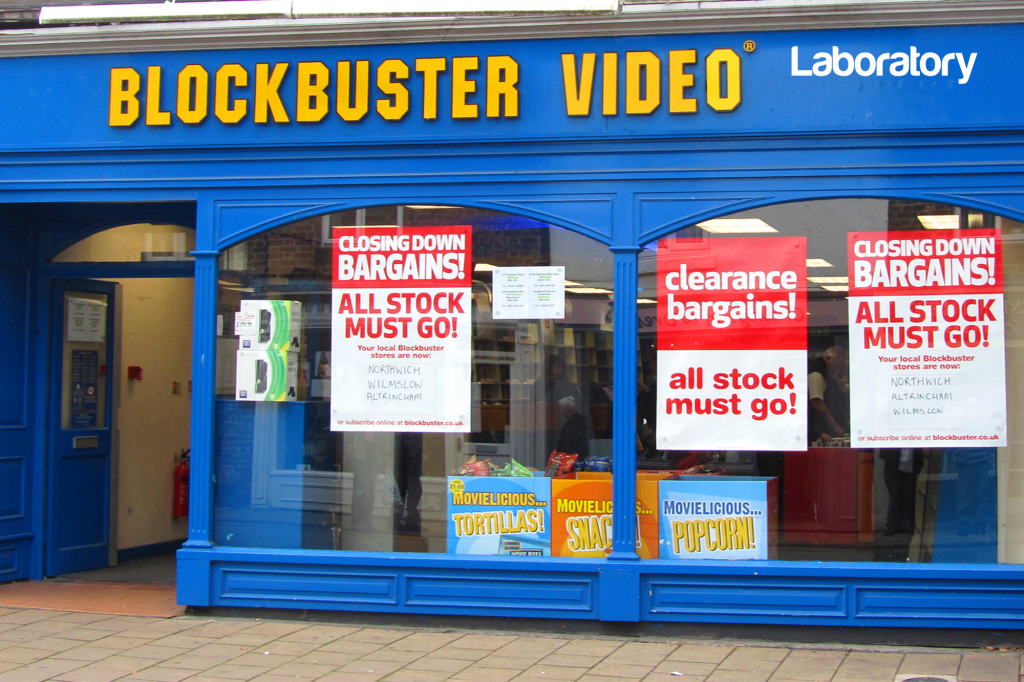
We all know the Blockbuster story, or we think we do. The market leader, nine thousand stores, a brand so dominant that ‘renting a film’ and ‘going to Blockbuster’ were the same sentence. They were offered the chance to buy a small upstart called Netflix for an insignificant amount and showed it the door. Only to end up bankrupt within a few years.
The usual moral is ‘adapt or die’, and it’s true, on the whole, dental labs are agile. This is perhaps the least interesting part of the story, nobody in this profession thinks they’re Blockbuster. The useful lessons are in the other two companies.
Let us start with the one we forget. Before most of us had heard of Netflix, Britain had LoveFilm. Founded here in 2002, it grew into the biggest DVD-rental service in Europe. The ‘Netflix of Europe’, with well over a million UK subscribers.
Crucially, LoveFilm was not asleep, it was a pioneer. It saw streaming coming and was offering films online from 2010, two years before Netflix even arrived on these shores. It had the right model, the right timing and a commanding lead in its home market.
It no longer exists. Amazon took full control in 2011, folded the streaming side into what became Prime Video by 2014, and quietly closed the DVD-by-post business in 2017. LoveFilm did almost everything right and still vanished, not because it failed to adapt, but because a far bigger platform with deeper pockets simply absorbed it. Being early and being right were not enough. It lacked the scale to stay standing on its own.
So, we have three fates, not two. Blockbuster, who didn’t see it. Netflix, who changed the model and won on scale and LoveFilm, who saw it perfectly, moved early, and was swallowed anyway. Every lab in the country is somewhere on that triangle right now, whether the lab owners have noticed or not.
What is happening in the current market?
Let me be specific about what I mean, because vague talk of ‘disruption’ or a ‘disruptor’ is easy to nod along to and ignore.
The first wave is chairside.
Same-day milled crowns have been a reality in dental practices for many years. 3D printing is now doing the same but much cheaper, with high-quality results and it is now moving over to the appliance manufacturing element. A practice with an intra-oral scanner, design software and a desktop resin printer can produce a growing list of items in-surgery. Models, retainers, occlusal splints, sports mouthguards, and increasingly the trickier flexible work too. Every item a practice makes in-house is an item that never reaches a lab. This is not ‘the future’. It is here, and it is getting cheaper and better by the day.
The second wave is the platform.
A fully-digital, venture-backed laboratory has now set up in the UK on a model that should make every lab owner sit up. The business model is to give practices a scanner and software for nothing, in exchange for a committed monthly volume of work down its own pipe. Read that as an owner, not a technician. It is not competing on the quality of a single unit. It is removing the moment a dentist chooses a lab at all. Once the scanner, the software and the workflow belong to the platform, the relationship you spent many years building is controlled by someone else.
The third wave is agentic AI.
This is the accelerant under the other two. An AI ‘agent’ is not a chatbot that answers a question, it takes a goal, plans the steps, acts across software, and only escalates to a human at the exceptions. Companies such as Movix are building exactly this for our part of the dental profession. Agents to run the workflow from scan to manufacture, openly aimed at the shortage of skilled technicians. On the practice side, diagnostic and treatment-planning AI is moving the same way. The destination is a stack where software flags the problem, proposes the plan, and routes the work and whoever owns that software owns the order flow.
Why this is a three to five-year conversation, not a 10-year one
I sat in a meeting recently where the working assumption was that something we were making would still be current in ten years. Ten years! In a market where a disruptor can incorporate a whole new business in November 2025 and be on the exhibition floor by spring 2026, where the hardware costs are falling, and where the technology and AI capability improves daily.
Blockbuster assumed it had ten years too. It had about three before the curve turned, and by the time the threat was real, the decisions that would have saved it were no longer available to make. Disruption is slow, and then it’s sudden. The window to act is always before it’s obvious, which is exactly why it gets missed, acting early always feels like overreacting or being dramatic.
My honest read is that the lab arena has three to five years before this changes in earnest. Not the end of the profession but a reordering of who does what, and who gets paid for it.
Don’t be LoveFilm
Here is the part that matters, and it’s why the third company belongs in this article. Avoiding Blockbuster’s fate is the easy bit, buy a printer, sign up to the software, go digital. My thoughts are that plenty of labs will do exactly that and still not survive, going digital is not a strategy anymore, it’s the bare minimum any dental lab has to do. LoveFilm was digital. LoveFilm was early. LoveFilm is gone.
What protects a lab is not whether it adopts the technology, but whether it owns something the profession and platform want or can take. Three things decide that.
The first is the relationship. The whole strategy of the platform is to get between you and the clinician. The labs that survive will be the ones the dentist won’t let go of, not a supplier of units, but a clinical partner whose judgement is part of how that practice works. The closer you are to the chair, the harder you are to cut out. I believe this is where the UK will be harder to crack as rapport and those close ‘sticky’ relationships have a value, we are a much smaller profession in the UK and familiarity is a big part of the culture.
The second is the work that doesn’t commoditise. Simple, printable, high-volume items are the first to go in-surgery or onto a pipeline. The complex clinical, the full-arch and top end aesthetic work, anything where finishing quality and the cost of getting it wrong are real, is far more defensible. As the routine work falls away, that work becomes more valuable, not less. The trap is staying on the commodity treadmill and trying to out-price a machine or cheap outsourcing.
The third is honesty about scale. LoveFilm’s lesson is that being good is not the same as being safe. If your defensible position is genuine craft and relationships, build the lab around that and price it properly. If your game is volume, understand that you are in a ‘capital and automation’ race against people with more of both, and plan accordingly. The fatal position is the middle, too big to be a craftsman, too small to win on scale.
The question worth asking
Blockbuster didn’t fail because it couldn’t see Netflix. It saw it perfectly well and chose to believe its model was still relevant and that its size was such that it was too big to be shaken. LoveFilm failed the opposite way: it saw everything, did everything right, and still got swallowed because it wasn’t built to stand alone.
The profession isn’t going to disappear. Teeth will break, appliances will be needed, and skilled hands will always have a place. But the shape of who provides it, and who captures the value, is going to change inside the next five years.
The lab shelves still look full today. The order book still looks healthy. That is precisely the moment to decide which of the three companies you intend to be, while you still have the years to choose. Do you become the lab the future dental market needs, or do you settle for running a very good video shop?
Follow Dentistry.co.uk on Instagram to keep up with all the latest dental news and trends.