Researchers at King’s College London’s Faculty of Dentistry, Oral and Craniofacial Sciences have developed a keratin-based membrane derived from wool that could offer a more structurally effective alternative to collagen in guided bone regeneration (GBR).
Collagen membranes are currently the gold standard barrier in GBR and guided tissue regeneration (GTR) procedures, preventing soft tissue ingrowth while allowing bone to regenerate. But they have well-documented limitations. Namely they can break down too quickly under load, lack mechanical strength, and are costly to extract and process.
The King’s team, led by Dr Sherif Elsharkawy, Academic Clinical Lecturer in Prosthodontics at the Faculty of Dentistry, Oral and Craniofacial Sciences, tested keratin membranes in animal models with skull defects large enough that they would not heal without intervention.
Promising results in animal models
While collagen membranes produced greater bone volume overall, the keratin scaffolds generated tissue that was more organised and structurally secure, with better-aligned fibres more closely resembling natural, healthy bone. The membranes integrated smoothly with surrounding tissue and remained stable throughout the healing period.
‘We are really excited to show for the first time how a wool-based material has been successfully tested in a living animal to repair bones,’ said Dr Elsharkawy.
From lab to living tissue
Prior to animal testing, the team validated the membranes against human bone cells in the laboratory, where the cells showed clear signs of healthy bone formation.
‘From a research perspective this is a major milestone,’ Dr Elsharkawy said. ‘It positions keratin as a potential new class of regenerative biomaterial that could challenge the long-standing reliance on collagen.’
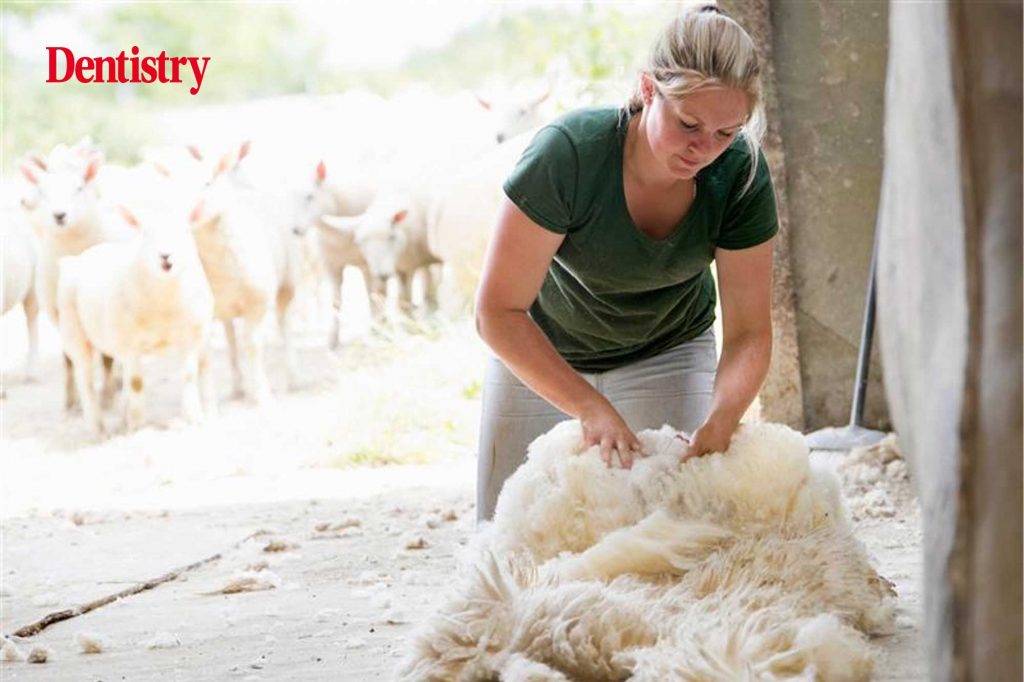
Beyond clinical performance, keratin carries a sustainability advantage. As a by-product of the farming industry, wool is renewable and widely available. Thus making keratin membranes potentially cheaper and easier to source than collagen at scale.
‘We’ve effectively demonstrated the technology in an animal model, which makes this much more than an early materials concept,’ Dr Elsharkawy added. ‘It shows that keratin can support bone regeneration in a living biological system, bringing the technology significantly closer to use in real patients.’
Follow Dentistry.co.uk on Instagram to keep up with all the latest dental news and trends.