

In England, dental practices delivered 4% more NHS treatments in 2024/2025 compared to the prior year, demonstrating that the demand for dental care is continuing to grow (NHS Business Services Authority, 2026).
However, with time pressures cited as the most common concern for dental professionals in The Trusted Partner Report from Henry Schein, how can dental practices realistically treat more patients when their time is already stretched?
By speeding up your existing daily workflows, you can begin to tackle the issue. But working faster should never mean compromising the quality of care.
We are increasingly seeing a shift from digital dentistry being a ‘nice to have’ to becoming an essential for many dental professionals – and the reasons go beyond simply saving time.
As digital workflows become more widespread, many dental professionals now state that digital advancements such as 3D printing are the most profitable part of their business (The Trusted Partner Report, Henry Schein).
But what is it about 3D printing in particular that dental professionals prefer?
The benefits of incorporating dental 3D printing
By introducing a 3D printer to the dental practice, you can reduce your reliance on labs to process patient impressions – saving you time and money, and improving patient experience through same-day dentistry and the delivery of precise, predictable results.
Faster workflows
Traditional impressions can take anywhere from days to weeks due to lab processing and shipping times, whereas the implementation of a 3D printer allows you to print in-house after you scan, making same-day turnaround possible.
This allows you to complete treatments in a timelier manner – and in a single appointment, in some cases – increasing your chair availability, and allowing you to treat more patients than before.
Improved outcomes
While traditional impressions can be subject to distortion, 3D printing is highly accurate, delivering precise, predictable results that can be repeated time and time again. Fewer remakes mean less time and materials wasted.
Better patient experience
Unsurprisingly, an overwhelming majority of dental professionals say that patients are the best part of their job (The Trusted Partner Report, Henry Schein), which is why delivering the best care possible for them is of the utmost importance.
With traditional impressions resulting in an unpleasant and uncomfortable patient experience, the use of an intraoral scanner in combination with a 3D printer allows for quicker, less invasive scanning, while also reducing chair time.
More cost effective
Ongoing lab fees, shipping costs, and material waste are commonplace when it comes to traditional impressions. And while 3D printers do require an upfront investment, this isn’t necessarily as high as you might expect – especially when you take advantage of the finance options and exclusive savings available through Henry Schein, for example.
Additionally, the cost-per-unit production expense is reduced, meaning 3D printers can save your practice money in the long run.
Expanded revenue opportunities
Aside from saving you money long term, 3D printing can also open your practice to more revenue opportunities by offering more than just models.
You can use your 3D printer to produce surgical guides, splints and night guards, aligner models, temporary restorations, and more, cementing your practice as a frontrunner amongst the competition.
Full traceability
With 3D printing as part of a complete digital workflow, there is no need for concern over lost models leading to repeated impression-taking: once you have scanned your patient, you can store, access, and share cases indefinitely and remotely, allowing easy duplication and modification, and supporting long-term treatment planning.
How to choose the right 3D printer for you
With 17% of dental professionals saying they are looking to implement 3D printing into their practice within the next 12 to 24 months (The Trusted Partner Report, Henry Schein), there has never been a better time to invest: not just to keep up with the competition, but to futureproof your dental practice too.
Establishing your practice’s needs and expectations is essential before purchasing your 3D printer.
If you are looking for speed above all else, a 3D printer such as the Shining 3D Accufab-CEL can offer incredible printing speeds and precision, achieving 35µm accuracy in as little as 11 minutes for crown and bridge.
For practices limited on space then compact 3D printers such as the Asiga Max 2 could be the perfect solution for you – featuring cutting-edge functionality, including Active Layer Monitoring and Smart Positioning System (SPS), to ensure unparalleled accuracy without sacrificing too much of your workspace.

Key questions to ask yourself when choosing your 3D printer include:
- What am I planning to use my chosen 3D printer for?
- Which 3D printer can meet the demands for a practice of my size?
- How easily will my chosen 3D printer integrate with my existing workflow?
- Will I be able to train staff quickly and efficiently to use my chosen 3D printer?
- What materials are compatible for use with my chosen 3D printer?
- What budget do I have for my 3D printer purchase?
- What additional support is available for my chosen 3D printer?
- Which 3D printer best aligns with my practice’s needs and goals?
If this feels daunting, or you need further guidance on your best option, speaking to an expert could be the answer.
3D printers at a glance
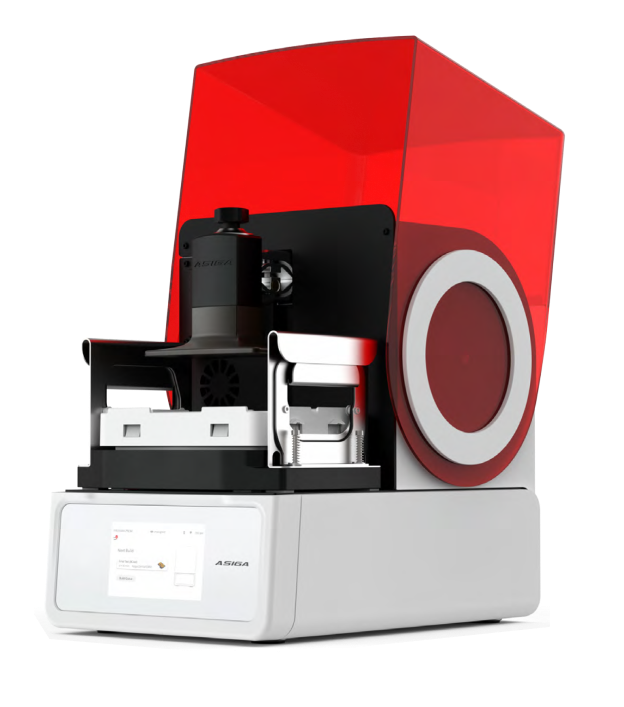
A compact yet powerful 3D printer, the Asiga Max 2 transforms dental workflows with precision and reliability.
Its cutting-edge features, like Active Layer Monitoring and Smart Positioning System (SPS), ensure unparalleled accuracy for producing crowns, bridges, aligners, and more.
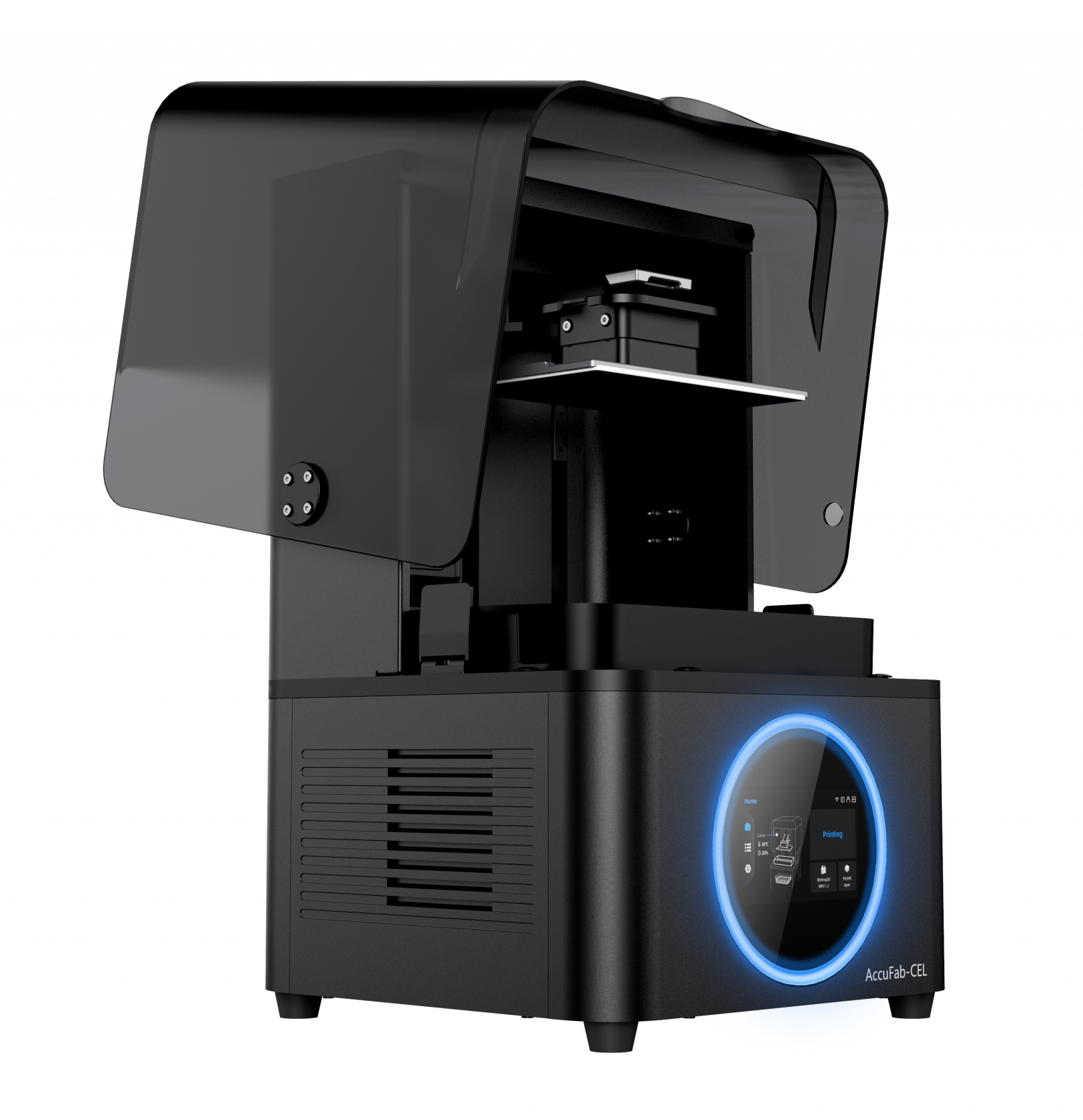
Delivering impressively fast printing speeds, particularly in full-platform printing, the Accufab-CEL offers a premium printing experience in a fraction of the time.
In addition to its superior printing speeds, this printer boasts a range of other features and benefits to provide results that inspire confidence.
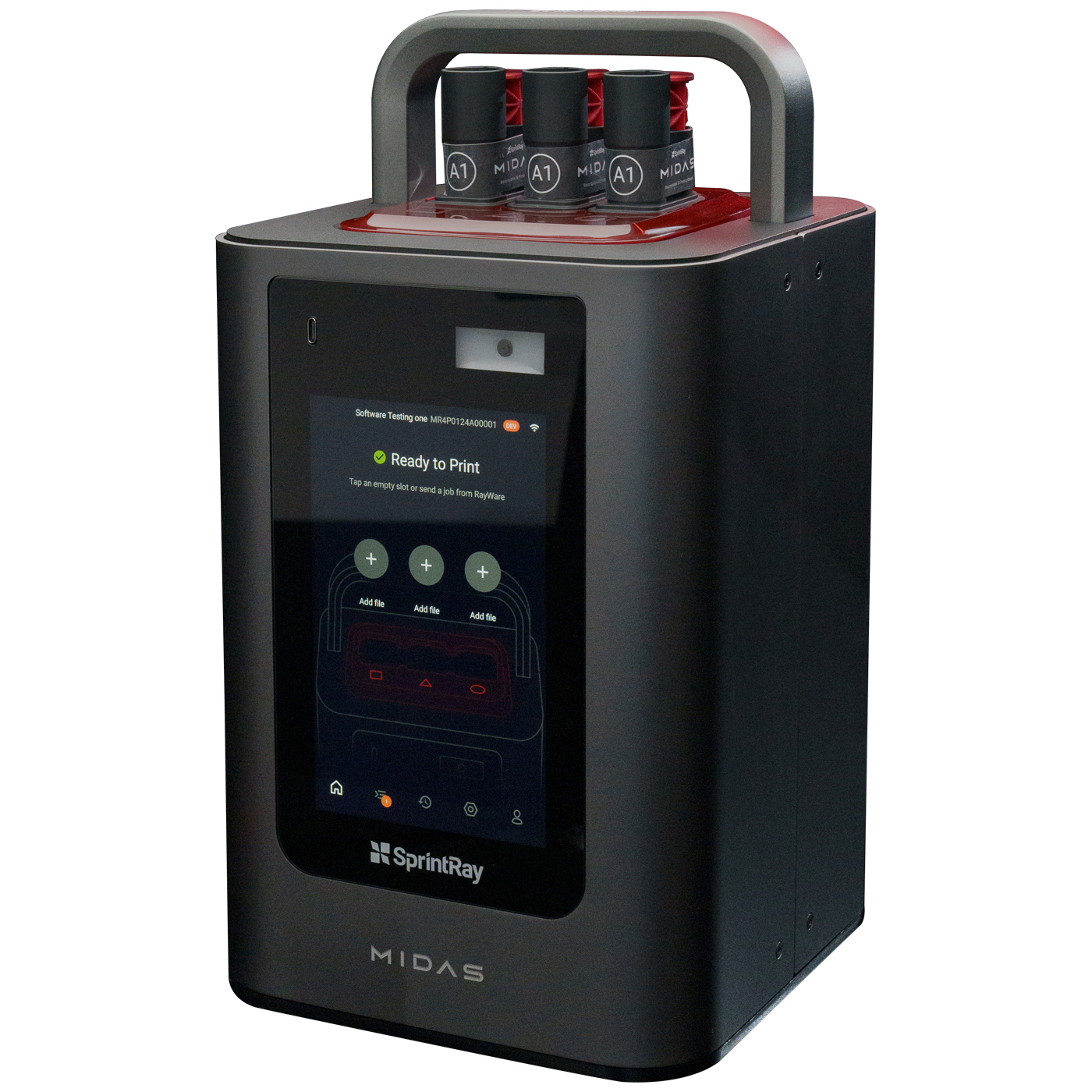
This digital press stereolithography (DPS) 3D printer is designed to make chairside restoration effortless, precise and cost-effective.
Midas redefines dental 3D printing with its resin capsule system – no messy tanks or bottles, no complex setup, just plug-and-print simplicity.
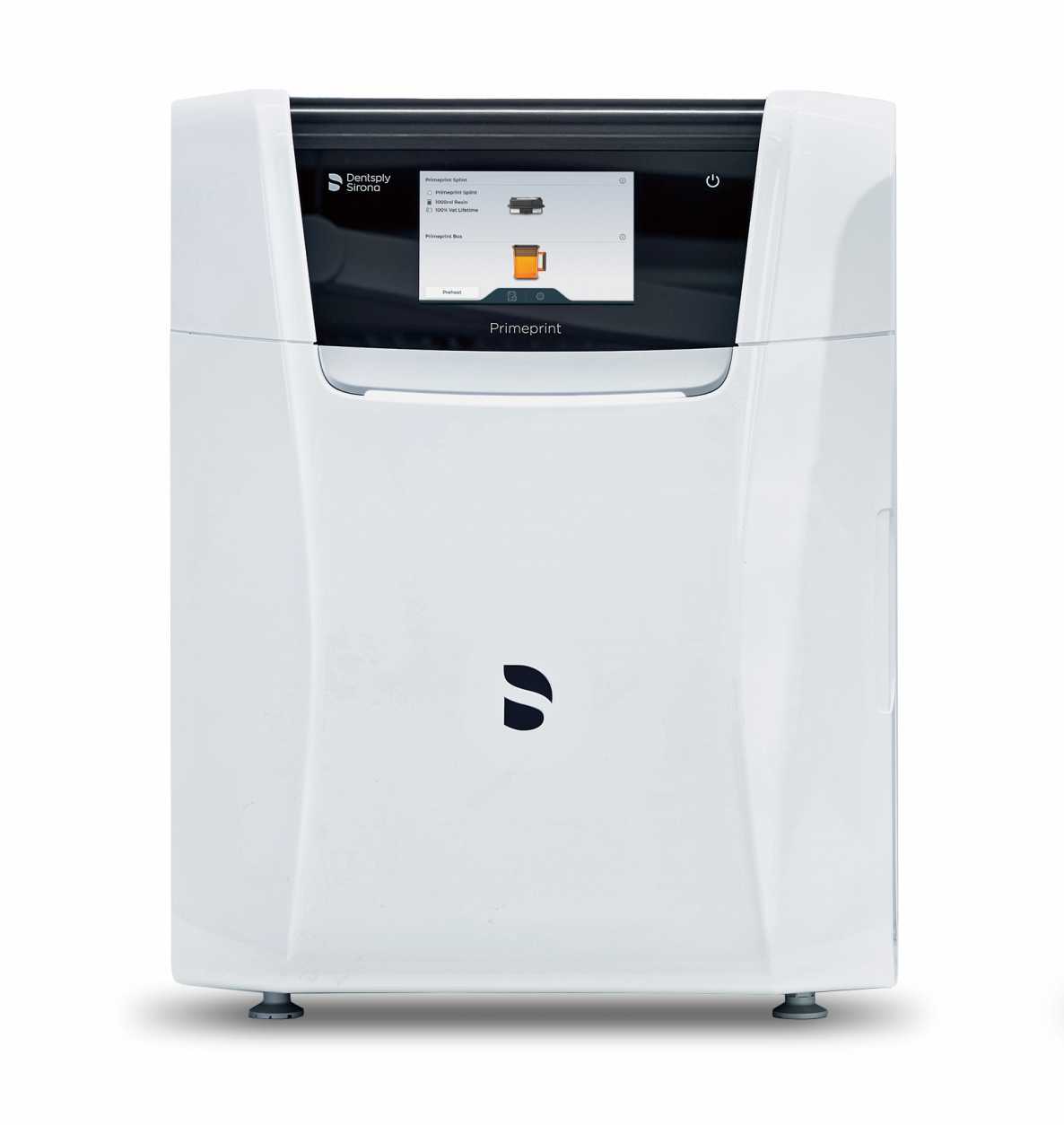
Designed for both dentists and dental technicians, the Primeprint is an end-to-end, medical grade 3D printing system, made specifically for dentistry.
The high level of automation reduces handling times, allows for delegation and boosts productivity.
Partnering with Henry Schein for your 3D printing needs
Henry Schein doesn’t just supply a range of state-of-art 3D printers and digital dentistry solutions – it provides you with a trusted partner that can support you throughout your dental career.
Henry Schein’s equipment specialists boast a wealth of knowledge on all things equipment, and are happy to discuss all available options with you to ensure your 3D printer delivers exactly what you need.
Purchasing your 3D printer doesn’t need to be intimidating. With Henry Schein’s expert guidance, you can find a solution that meets your practice demands and fits within your budget, while taking advantage of their range of dedicated equipment services to ensure your 3D printer’s servicing and maintenance needs are always met.
By only partnering with trusted, established suppliers, such as Asiga, Dentsply Sirona, Sprintray, and Shining 3D, you can be confident that Henry Schein has the perfect 3D printer for you.
Henry Schein equipment sales specialist, Mosin Aboobaker, explains: ‘At Henry Schein, we have a wide range of printers available to suit all needs, and we will speak with you extensively before your purchase to determine which printer is the right fit for your practice or lab.
‘We supply 3D printers from a variety of trusted brands, including Sprintray’s Midas printer which is extremely compact and ideal for chairside use. The Midas is a resin-based dental 3D printer that uses a novel method called digital press stereolithography (DPS), which is a patented printing method where the resin, tank, and build platform are replaced by a single-use resin capsule.
‘Because of this capsule design, Midas can handle highly filled, very viscous resins that would be difficult to print on conventional resin printers. It also offers an impressive output, with the ability to print up to three full crowns (or sets like six inlays/nine veneers) in under 10 minutes.
‘We also have plenty of options for dentists with a smaller budget, which are still highly popular due to their accurate results.’
Stay updated with relevant information about this webinar