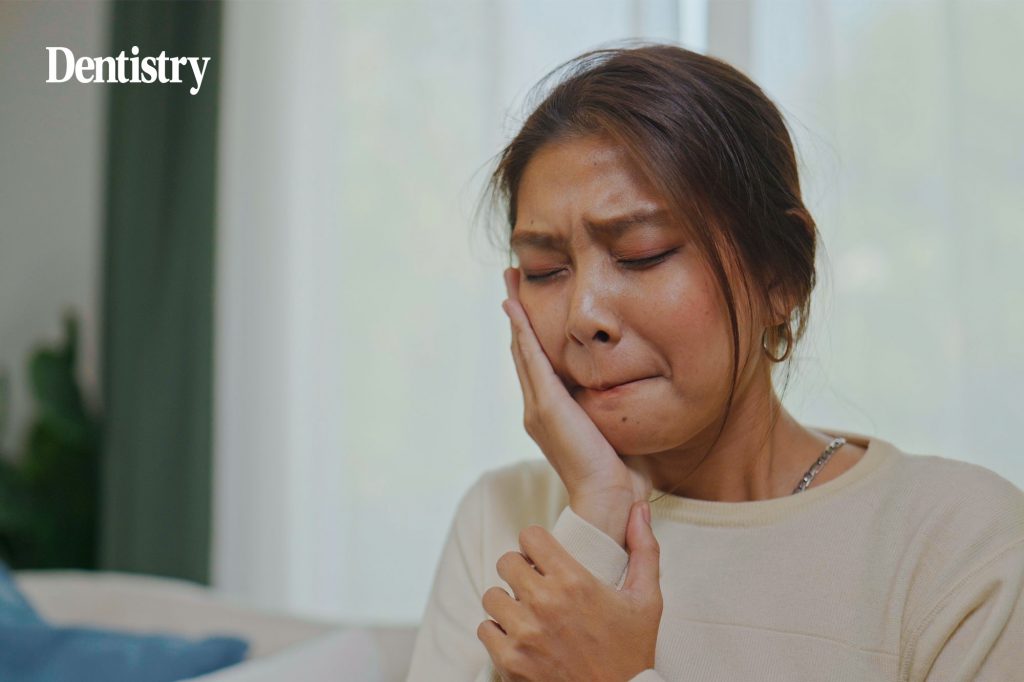
Following a recent advisory board convened by Kenvue that brought together leading experts to develop a consensus on the prevention of oral disease driven by dysbiotic dental plaque biofilm, Professor David Williams reflects on the scale of the challenge.
Oral disease is increasingly recognised as a major global public health challenge. How would you characterise the true scale of its burden today?
The burden of oral disease is enormous and there are marked inequalities both within and between countries. Oral diseases, principally caries and periodontal disease, affect nearly 3.5 billion people worldwide, far exceeding the global prevalence of diabetes or asthma (WHO, 2022; International Diabetes Federation, 2021; Vos, 2019). However, there remains a big mismatch between the importance we attach to oral disease and the other non-communicable diseases.
The prevalence of oral disease follows a clear social gradient, so the further down the gradient you go, the more prevalent the disease burden is and the worse the health outcomes are. This pattern is mirrored between countries, where the least well-developed nations have the least access to care. But pressures are not confined to lower-income settings.
In the UK, dental pain remains a common reason for calls to NHS 111 and attendance at emergency departments, while dental extractions under general anaesthetic are still among the most common reasons for hospital admission in children, reflecting the failure to manage what is essentially a preventable disease even within a health system typically viewed as well-developed (BDJ, 2024; UK Government, 2025).
Despite being largely preventable, oral diseases remain highly prevalent worldwide. What does this tell us about the limitations of current prevention models?
Prevention is largely based on access to fluoride and adopting a healthy diet, with emphasis on reducing sugar consumption. Access to care matters too, because the dental surgery is where education in prevention happens.
Prevention across the life course is vital. The earlier it starts, the more effective it will be. The biggest limitation of the current prevention models is that they depend heavily on messages delivered in the dental surgery. There needs to be a major shift to population level approaches to prevention.
The persistent burden of oral disease in large part reflects a failure to implement what we already know. It also reflects a failure to understand the significance of the social determinants of oral disease and an over-reliance on advice to adopt healthy behaviours. A behavioural approach alone will have limited impact and may even widen inequalities.
Oral diseases share risk factors with other major non-communicable diseases. How should this influence the way oral health is positioned within wider health policy?
In one word: integration. Although caries and periodontal disease are preventable non-communicable diseases, we continue to think about them in isolation. They share the same common risk factors and social determinants with the other major non-communicable diseases. So, strategies to reduce the consumption of sugar, alcohol and tobacco will help to prevent not only the major non-communicable diseases, such as heart disease diabetes and cancer, but will lead to a reduction in the burden of oral diseases as well.
Recently there has also been a growing recognition of the importance of the commercial determinants of health, the private sector activities that affect people’s health, directly or indirectly, positively or negatively. All too often, corporate strategies promote products that are detrimental to health and these need to be challenged.
The limitations of current treatment-focused model of care are obvious, with health systems still geared towards intervention after the event rather than on prevention. Oral health must be taken out of its silo and seen as part of overall health. There needs to be greater awareness of the importance of good oral health, with clear evidence-based messaging and recognition of those shared risk factors which I have mentioned.
That shift also depends on improving oral health literacy, not only among the public but across all the caring professions, including doctors, pharmacists and community health workers. Oral health should be included within universal health coverage so that appropriate and affordable care is available without incurring catastrophic cost.
The consensus highlights the importance of population-level approaches. What are the most impactful upstream interventions we should be prioritising?
The most important prevention methods sit at the level of public policy. Water fluoridation is very powerful, although difficult to implement because of practical challenges and organised opposition. Nevertheless, at a population level, it remains one of the most effective measures.
Fluoridated toothpaste remains crucial and, in most well-developed countries, is widely available. However, there is increasing interest in fluoride-free products among those concerned about the harmful effects of fluoride, and there is a big lobby pushing that in the absence of strong evidence to support those claims.
Sugar levies are another important upstream intervention. There is evidence accumulating that sugar consumption reduces following the introduction of such levies (Scarborough et al 2020), as companies reformulate products to remain competitively priced in what is often a price-sensitive market.
How do social and commercial determinants shape oral health outcomes across different populations?
Social determinants shape the conditions in which people are born, live and ultimately die, and they have a direct bearing on oral health outcomes. Health follows a social gradient: the lower a person’s socioeconomic position, the worse their outcomes are likely to be. One response to that is proportionate universalism, investing more heavily in those at greatest risk to level up the population.
The adverse effects of the commercial determinants of health are increasingly being recognised, and understanding corporate strategies is essential if we are to counter the influence of what is often referred to as ‘big sugar’. At the same time, the profession must avoid parallel voices and instead build alliances within dentistry and across the wider health community.
The consensus highlights the importance of effective self-care. What role do public health systems play in enabling individuals to maintain these behaviours?
The way health systems are funded is critical. Oral health care is largely funded based on treatment delivered, which makes it difficult to prioritise prevention. What gets paid for gets done, so funding models must recognise and support preventive approaches.
Public health systems need to raise awareness of the importance of oral health, and the importance of self-care needs to be emphasised. As individuals we are co-producers of our health, in partnership with healthcare professionals. For this to be realised it is critical that levels of oral health literacy are raised across society in an appropriate fashion.
Oral disease accumulates over time, much like other major non-communicable diseases. If we want good oral health in older age, we need to have maintained it throughout life. A life course approach means embedding oral health at every stage, recognising that prevention must begin early and continue throughout life.
The Delivering Better Oral Health toolkit is a good example, setting out evidence-based interventions across different age groups and key moments, including early childhood (OHID, 2025). Community and school-based programmes demonstrate how this can be done effectively. Providing toothbrushes and toothpaste and embedding daily toothbrushing into routines can have a significant impact, aligning with WHO’s long-standing emphasis on essential, cost-effective oral care and affordable fluoride use in primary health settings (Petersen, 2003).
What role do interdisciplinary partnerships play in addressing oral health inequalities at scale?
They are essential. The United Nations Political Declaration on non-communicable diseases reinforced the need for collective action on common risk factors (United Nations, 2018). Acting on those shared determinants delivers benefits across the board. Building alliances with organisations such as the World Health Organization and the World Dental Federation (FDI) strengthens advocacy and reinforces the case for integration.
How do advisory boards and consensus statements like this one help translate evidence into meaningful action?
We are living in a world of evidence-based policy. Consensus statements matter because they distil the best available evidence and the considered judgement of experts into messages that can be taken to policymakers. Those messages must be clear and consistent.
If different groups present conflicting positions, policymakers will simply ask who they are supposed to believe and disengage from the debate. Effective advocacy therefore depends on experts aligning around strong, unequivocal evidence and communicating it with clarity and honesty. Without that alignment, progress is likely to be limited. With it, oral health is more likely to receive the political attention it needs.
References
- World Health Organization. Global oral health status report: towards universal health coverage for oral health by 2030. Geneva: WHO; 2022
- International Diabetes Federation. IDF Diabetes Atlas, 10th ed. Brussels: International Diabetes Federation; 2021
- Vos, T 2019 Diseases and Injuries Collaborators. Global burden of 369 diseases and injuries in 204 countries and territories, 1990-2019: a systematic analysis for the Global Burden of Disease Study 2019. Lancet 2020; 396: 1204-1222
- Record number of 111 calls for dental problems shows desperate state of NHS dentistry. Br Dent J In Pract 2024; 37: 151. https://doi.org/10.1038/s41404-024-2726-6
- GOV.UK. Hospital tooth extractions in 0 to 19 year olds: short statistical commentary 2023–24. London: UK Government; 2025. Available from: https://www.gov.uk/government/statistics/hospital-tooth-extractions-in-0-to-19-year-olds-2024. Accessed 3 March 2026
- Scarborough P et al. Impact of the announcement and implementation of the UK Soft Drinks Industry Levy on the soft drinks available to buy in the UK: a controlled interrupted time series analysis. PLoS Med 2020; 17(1): e1003025
- Delivering better oral health: an evidence-based toolkit for prevention. Office for Health Improvement and Disparities, Department of Health and Social Care, NHS England and NHS Improvement. London 2025, fourth edition. Available at: https://www.gov.uk/government/publications/delivering-better-oral-health-an-evidence-based-toolkit-for-prevention. Accessed 3 March 2026
- Petersen PE. The World Oral Health Report 2003: continuous improvement of oral health in the 21st century – the approach of the WHO Global Oral Health Programme. Community Dent Oral Epidemiol 2003; 31(Suppl 1): 3-24
- United Nations General Assembly. Political declaration of the third high-level meeting of the General Assembly on the prevention and control of non-communicable diseases. UN Doc A/RES/73/2. New York: United Nations; 2018. Available from: https://digitallibrary.un.org/record/1648984?v=pdf. Accessed 3 March 2026
This article is sponsored by Kenvue.