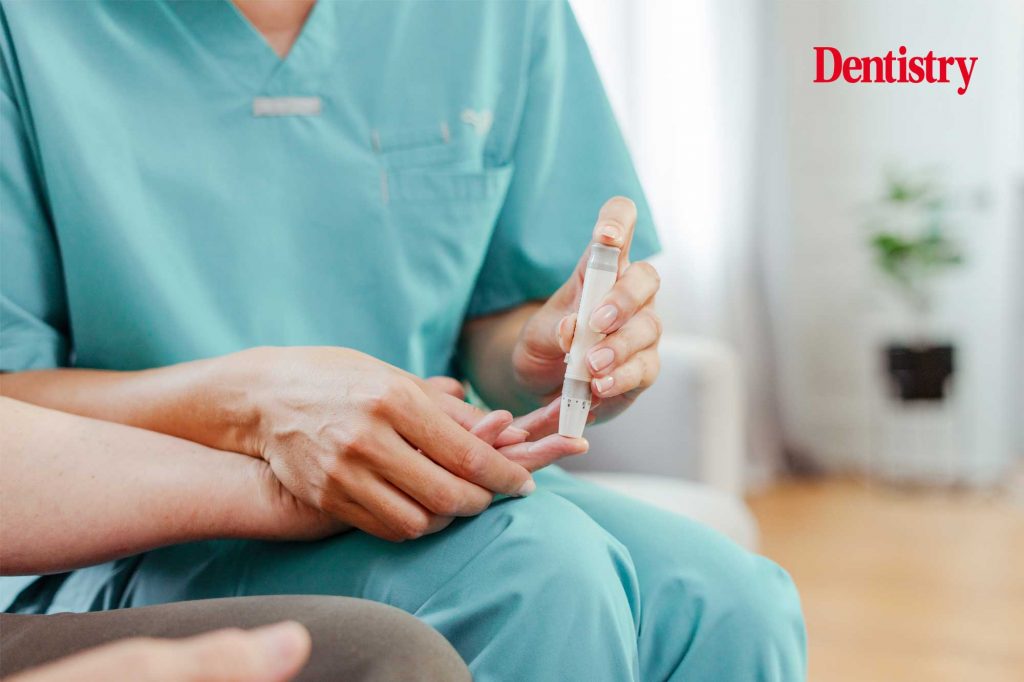
One third of people who are given a routine test during a dental appointment are diagnosed with diabetes or pre-diabetes, according to new research.
Researchers at King’s College London (KCL) were motivated to measure the impact that diabetes testing could have during dental appointments due to the ‘large overlap between gum disease and diabetes’.
In the study, 35% of patients who did not report any history of diabetes had higher than usual blood sugar levels typical of diabetes and pre-diabetes.
Co-author Giuseppe Mainas, specialist periodontist and research associate at KCL, said: ‘The findings suggest that dental visits may offer a valuable opportunity to identify those at risk of diabetes, particularly in older patients, those with higher BMI, and people with gum disease.’
Blood sugar was higher in patients with more severe gum disease, which the researchers said provides further evidence of the link between gum disease and diabetes.
Senior author Luigi Nibali, director of the periodontology department at KCL, said: ‘The relationship between gum disease and metabolic health is bidirectional since [it] impacts one another, as widely established by previous research. The inflammatory process can change the metabolic system, and the metabolic system impacts inflammation further. Gum disease can lead to complications of diabetes, and vice versa.’
How is diabetes testing carried out in the dental practice?
The patients’ blood sugar was measured using a chairside HbA1c blood test, which displays results within six minutes.
First author Professor Mark Ide, professor of periodontology at KCL, said: ‘When the test reveals high levels of HbA1c, patients can then see their GP to investigate further. This is something they might not have done without having the dental screening. Most of the patients in our study were surprised that they had elevated HbA1c levels and had no idea they might have pre-diabetes or diabetes.
‘The other benefit of the HbA1c test is not having to fast, which could increase risk of fainting in the dental chair.’
According to Diabetes UK, nearly 1.3 million people could be living with undiagnosed type 2 diabetes in the UK. The research team would now like to explore the use of the test around the UK and in broader healthcare settings.
Dr Mainas concluded: ‘We would also like to investigate how other lifestyle factors, such as diet, affect HbA1c and gum disease.’
Follow Dentistry.co.uk on Instagram to keep up with all the latest dental news and trends.