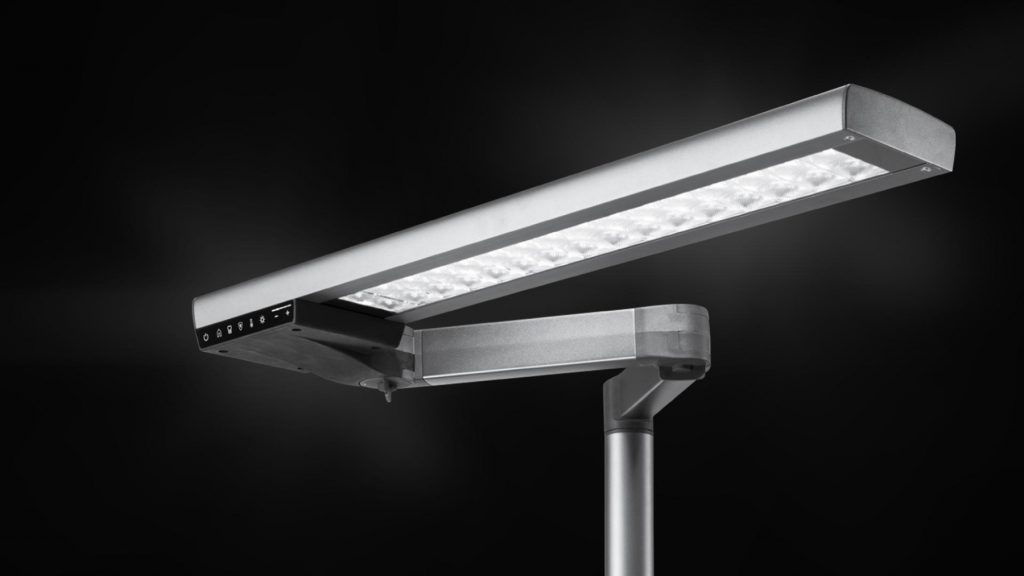
Annette von Hajmasy tested Renfert’s new LIGHT 1 dental light – and reveals how smart lighting perceptibly improves precision, colour fidelity and relaxation in everyday laboratory work. Special light modes turn a light into a real game changer for day-to-day precision work.
- Solution to the composite problem with LED dental lights: special mode
- Relaxed modelling with modern LED lighting: no more time pressure when layering
- Practical test passed: certified dental technician confirms noticeable improvement
- Making work easy: Renfert offers a solution to the LED challenge in dental laboratories.
Good light makes the difference between success and frustration
The ‘perfect’ work lighting is not just a matter of secondary importance in dental laboratories as it influences both precision and quality of every dental restoration produced. The mandatory introduction of LED lighting creates new challenges in the laboratory: premature curing of composites due to the high blue light ratio and altered colour perception make it more difficult to work. Is there a solution? Annette von Hajmasy, a certified dental technician with long experience, has intensively tested the new LIGHT 1 work light for dental laboratories – with convincing results.
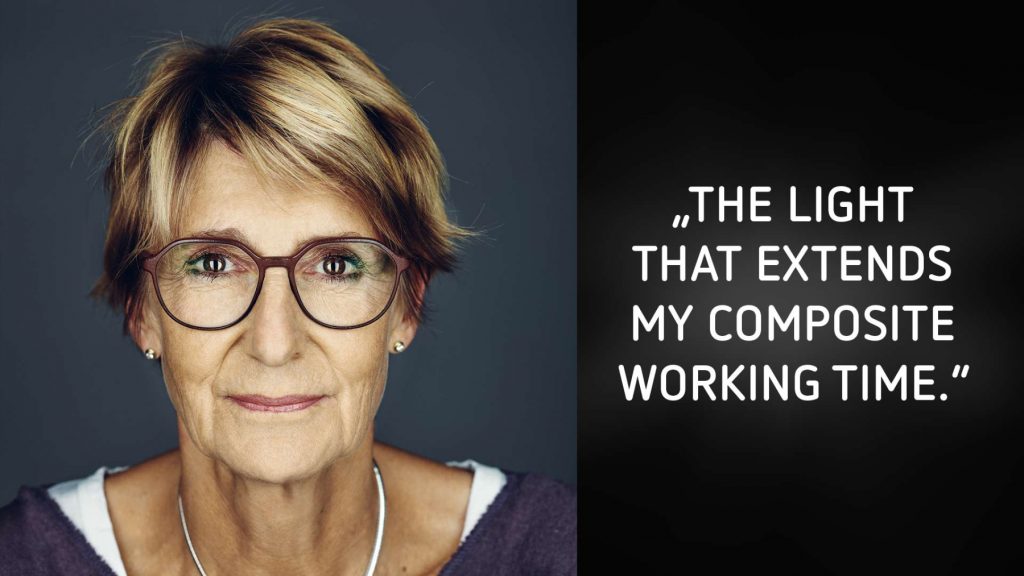
‘I can finally work more relaxed with composites!’
Many dental technicians are familiar with the problem: LED light with high blue ratio accelerates the composite curing process, which often begins much earlier than is good for the modeling. Von Hajmasy explains: ‘The materials cure much faster under LED light, and this complicates their processing. LIGHT 1 provides a smart solution: thanks to its special composite mode, it is possible to model for around 30 minutes without the material curing prematurely.’
The art of perfect modelling – light as a game changer
The challenge in dental technology
- LED light in the 400-500nm range activates photo-initiators in composites too fast
- Different materials react in different ways – which makes it difficult to work with precision
- Incorrect light falsifies color perception, thus compromising the layering technique.
Von Hajmasy’s findings: the solution lies in the right lighting mode
LIGHT 1 work light for dental technicians has been optimized for these challenges. By reducing the blue component, the composite processing time is longer – without affecting the optical appearance.
This is how precision work is achieved with the LIGHT 1 precision light
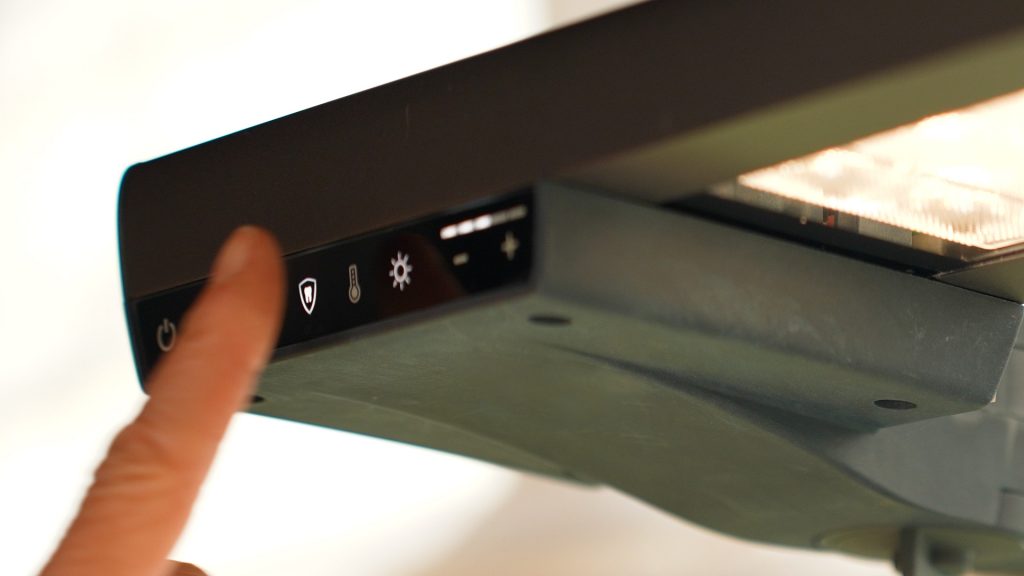
- Activate the composite mode – simply press the button to select the optimum light environment
- Elaborate detailed structures – no premature hardening, relaxed modelling
- Ensure colour fidelity – no optical alterations thanks to the perfect light temperature
- Optimise the details – in the fine work mode, the light enables precise finishing.
More than just light: benefits for day-to-day work
Von Hajmasy concludes: ‘LIGHT 1 changes the way we work.’
- Extended composite processing time thanks to customised light modes
- Fatigue-free working thanks to glare-free, flicker-free lighting
- Perfect colour recognition, which facilitates precise layering and modelling.
‘At the end of the day, I really feel the difference.’
Von Hajmasy provides an impressive description of how useful LIGHT 1 is in everyday working life: ‘I now even sit under the LED work light when I need to attach a button. The light is simply brilliant. And at the end of the day I notice that my eyes are much more relaxed.’
Tips for day-to-day lab work – from a master for practical purposes
- Work with the composite mode to prevent unwanted curing
- Use different light modes to create the best lighting environment for each work step
- Ensure colour fidelity to achieve precise and natural results.
Conclusion: a new light for dental technology
LIGHT 1 provides a solution to the LED challenge – a rather elegant and smart one. LIGHT 1 not only impresses with its functionality, but also with its streamlined design and outstanding versatility. Based on her own experience, Annette von Hajmasy confirms: ‘If you want to work with more precision, relaxation and accuracy, you need optimum light.
This article is sponsored by Renfert.