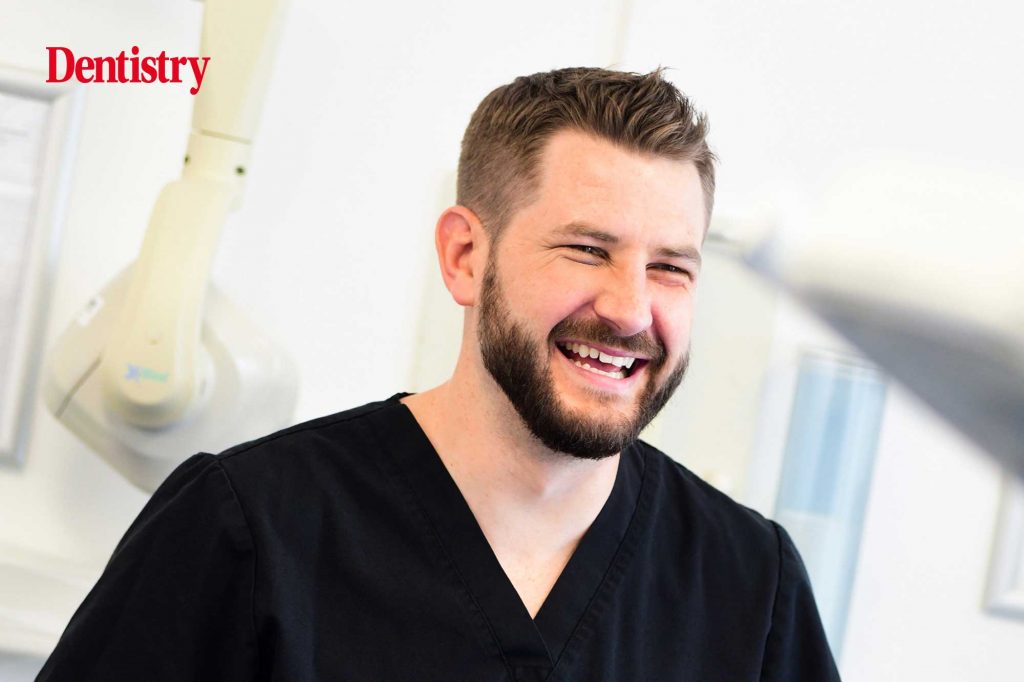
Three years on from a successful conversion from NHS to private dentistry, practice owner Ant Davies shares how he went from being on the brink of closure to now owning three thriving practices in west Cumbria.
Ant’s circumstances three years ago will be familiar to many practice owners across the UK. Still suffering from the effects of the pandemic and unable to recruit associates to help him deliver his large NHS contract, his business was struggling. Despite being on the edge of the Lake District and all its attractions, his vacancies went unfilled for so long that he faced having to close one of the two sites he had bought a few years earlier.
‘We weren’t really able to deliver the NHS contract anymore,’ Ant recalls. ‘It wasn’t working. We couldn’t recruit, especially rurally.’
Ant made the decision to convert both sites to private dentistry with support from his Practice Plan regional support manager (RSM), Jayne Gibson.
A leap of faith
However, converting to private practice wasn’t without risk. One site had long-standing associates, making the transition smoother. However, the other had three new dentists unfamiliar to patients.
‘It was a bit do or die really,’ Ant says. ‘We didn’t really have anything to lose at that point either.’
Despite everything, both practices successfully converted. ‘It was a bit of a leap of faith,’ he admits. ‘You’re trusting someone else’s advice, stepping into the unknown. But it worked out well.’
Ant attributes this in part to the shifting landscape of dentistry and patient expectations. His experience challenged the conventional wisdom that to be successful private conversions need well-established dentist-patient relationships. His success suggests that patients may be more open to change than previously thought, especially when NHS services are stretched thin and patients are unable to gain access to a dentist.
Growth and expansion
With two successful conversions under his belt, Ant was happy to consolidate and was not actively seeking to expand. However, when a practice located within a mile of his own came up for sale, he saw an opportunity.
‘It wasn’t part of a big master plan,’ he says. ‘It was more from a consideration as to how that sale might affect the other practices, rather than necessarily wanting to add another practice to the group,’ he explains. ‘It was more a case of if we don’t do it, then there may be other implications. But I don’t tend to shy away from opportunity.’
The third practice has brought new capabilities, including an in-house lab, a clinical dental technician (CDT) and specialist services like sedation and endodontics. This allowed Ant to begin integrating services across the group, offering patients more comprehensive care and creating internal referral pathways.
A new way of working
The shift to private dentistry has transformed the way Ant and his team operate. ‘We’re able to offer all treatments now,’ he explains. ‘There are no shackles on what we can provide.’
Dentists in the group have more time to apply advanced techniques, improve outcomes, and pursue areas of interest. Ant also ensures he makes better use of skill mix, allowing therapists and specialists to work to their full scope of practice.
Free from the restrictions of NHS dentistry the atmosphere in practice has changed for the better. ‘It’s completely different.’ Ant says.
‘I almost don’t remember that previous life, if that makes sense. It’s gone. It certainly is less stressful. There’s a freedom to it,’ he continues. ‘We’re not tied to targets or bureaucracy. We make our own decisions.’
The role of membership plans
One of the key pillars of Ant’s success has been the introduction of patient dental membership plans. The regular income from plan fees has helped give Ant a sense of financial security. ‘That consistent regular monthly income from plan patients is a game changer really.’
It also encourages regular attendance from patients, which is not always the case with fee-per-item models. ‘Plan patients are committed,’ Ant notes. ‘They come in regularly, which gives us consistent points of contact and financial security.’
Lessons learned
Ant’s experience of practice ownership has had its share of stress. From the pandemic to the pressures of ownership, he’s faced a number of challenges. Although it took a degree of courage to step away from the NHS, he feels perceptions of its security are misplaced.
‘NHS contracts are a funny thing really,’ he muses. ‘You’re told that there’s a lot of security in it but since leaving I disagree with it a lot. I think people get a little bit brainwashed into thinking that there’s this security that is false really. I don’t feel now that I have less security than I did when I had the NHS contract. I think if anything, I feel more secure in the fact that I know that I can do what I need to do for my business rather than being tied to something.’
He credits much of his success to the support of Practice Plan and his RSM, Jayne Gibson, who has remained a trusted advisor throughout. ‘She’s been incredibly valuable to the business from the start of the conversion to even now,’ he explains. ‘There are still times where I’ll pick up the phone and run something by her to get her feel for something or see how it would work alongside the plan. So, she’s very much still present. She’s almost part of the team now.’
Looking ahead
Ant’s focus now is on integrating the three practices, growing specialist services, and maintaining the personal, independent feel of each site while streamlining processes in the background. He has no desire to build a corporate empire and sees himself as more of an ‘accidental’ group owner!
He has no regrets about making the move away from NHS to private dentistry. ‘I wouldn’t change it for the world,’ he says. ‘We’re not just treading water anymore, we’re swimming.’
At the time Ant made the move, his conversion bucked the trend. However, three years on, stories such as his are becoming more common, but no less heartening. For dentists considering a move to private practice, Ant’s story is a powerful reminder that with the right support, strategic thinking, and a willingness to take risks, it’s possible to turn uncertainty into opportunity.
There’s never been a safer time to leave NHS dentistry. If you’re considering your options away from the NHS and are looking for a plan provider who will hold your hand through the process at a pace that’s right for you, you’re in safe hands with Practice Plan.
You can start the conversation today by calling 01691 684165 or booking your one-to-one NHS to private conversation at a date and time that suits you, just visit practiceplan.co.uk/nhsvirtual.
This article is sponsored by Practice Plan.
Ready to talk?
If you’re ready for a confidential discussion with Practice Plan about the next steps in converting to private dentistry, leave your details below.