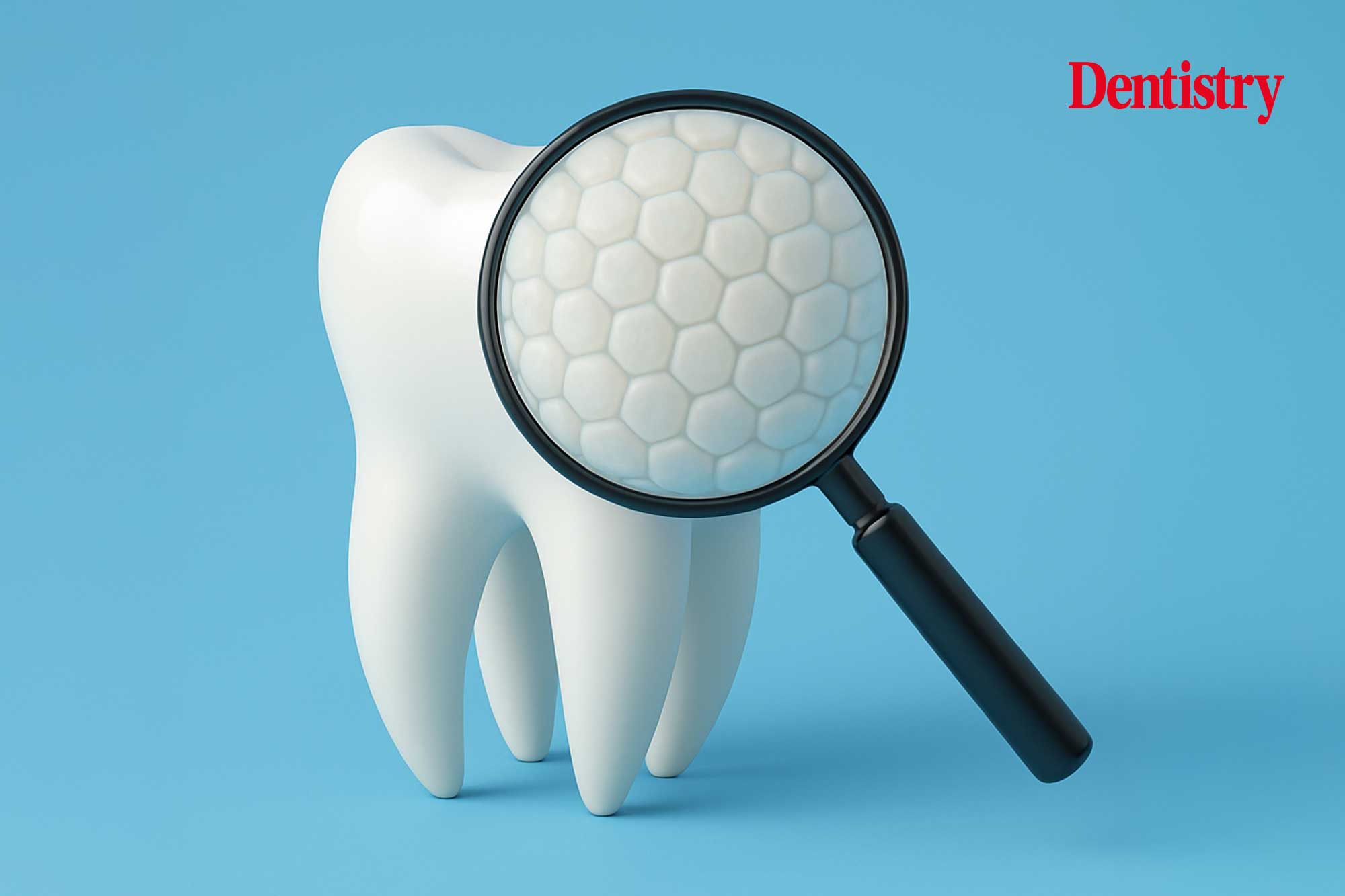
The discovery of ‘cellular self-organisation’ in dental development may inform future progress in tooth regrowth, researchers say.
A new study from the Yonsei University College of Dentistry explored whether the location of tooth growth cells in the mouth affects their development. To test this, cells taken from the lingual (tongue) side of mouse dentition were separated from those from the buccal (cheek) side and stimulated to grow.
Researchers found that cells on the lingual side developed into the tooth itself and its structure while those on the buccal side were more focused on stem cell activity, surrounding tissues and cellular repair.
Even when mixed up, the two types of cell reorganised themselves and began to form the right kind of tissue. This suggests that the cells automatically know when, where and how to grow tooth structures.
First author Eun-Jung Kim said: ‘We were curious to know if they could find their original place and reorganise when the fluorescently labelled lingual and buccal mesenchymal cells were mixed randomly, which they not only did, but the lingual cells grew into dentin to form the tooth as before. This phenomenon is called cellular self-organisation.’
How could this contribute to tooth regrowth research?
Dr Jung said that these findings had ‘the potential to significantly impact our understanding of tooth development’. The researchers hope that this could lead to ‘advancements in stem cell-based tooth regeneration and more effective therapeutic applications for dental restoration and repair’.
The use of stem cells to regenerate teeth has been explored by several previous studies. In 2023, researchers from Sharad Pawar Dental College and Hospital, India concluded that it was a ‘realistic aim’.
Earlier that year scientists at the University of Washington School of Dentistry successfully created stem-cell based organoids which secrete the proteins responsible for forming dental enamel. They considered this a ‘critical first step’ in developing stem-cell-based treatments to repair damaged teeth.
It is hoped that this research could be used to create an enamel that is as durable as that found in natural teeth. The enamel could be created in laboratories and used to fill cavities or applied as a ‘living filling’ to grow into the cavity.
Project lead Hannele Ruohola-Baker said: ‘This may finally be the “century of living fillings” and human regenerative dentistry in general.’
Follow Dentistry.co.uk on Instagram to keep up with all the latest dental news and trends.