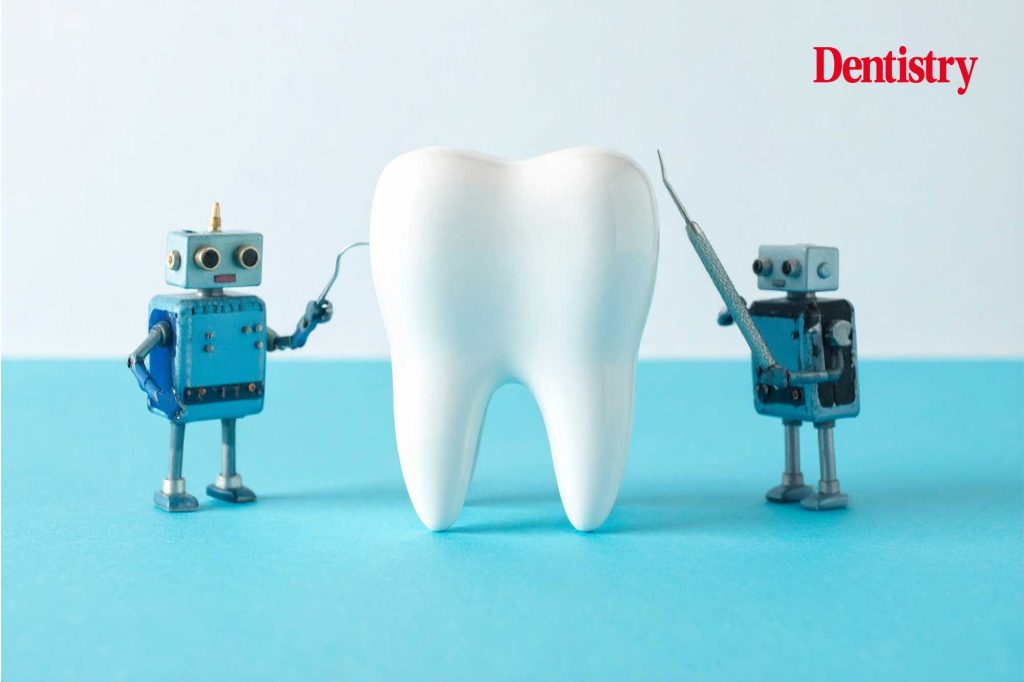
Magnetic nanobots – microscopic robots that penetrate deep into the dentinal tubules – have been designed to combat tooth sensitivity.
The robots use a new class of bioceramic cement to form durable seals in worn enamel. This reduces tooth sensitivity in one application by limiting access to nerve endings.
While desensitising toothpastes have a similar effect at surface level, the robots are able to travel 300-500 micrometers into the dentinal tubules and form a solid plug.
Shanmukh Peddi is a postdoctoral researcher at the Centre for Nano Science and Engineering (CeNSE) and first author of the study. He said: ‘We didn’t want to create a slightly better version of what’s already out there. We wanted a technology that solves a real problem in a way that no one’s attempted before.’
How were the robots tested?
The robots were trialled on human teeth with exposed dentine that had been extracted for clinical reasons. The robots were applied under a magnetic field for 20 minutes, during which time they successfully formed deep, stable plugs.
The study then progressed to animal trials. Mice with tooth sensitivity were found to prefer room temperature water over cold, while those with healthy teeth showed no preference.
Dr Peddi said: ‘After we treated the sensitive mice with our Calbot solution, they started drinking cold water again – the treatment worked like a charm. We saw 100% behavioural recovery. That was a big moment for us.’
‘Tiny mechanical surgeons’
According to the researchers, tooth hypersensitivity affects nearly one in four people worldwide. While the robots were successful in their immediate goal of reducing sensitivity, the research also has wider implications.
Corresponding author Debayan Dasgupta said: ‘We’ve created a regenerative, active nanomaterial – a step towards the kind of “tiny mechanical surgeons” Richard Feynman once envisioned. This is something we’ve worked towards silently for years.’
‘This is a compelling demonstration of what nanorobotics can achieve, and how they could significantly impact future healthcare,’ added corresponding author Ambarish Ghosh. ‘We’re excited to see this work progress toward clinical use.’
Written by researchers at the Indian Institute of Science (IISc), the study was published in Advanced Science in July.
Follow Dentistry.co.uk on Instagram to keep up with all the latest dental news and trends.