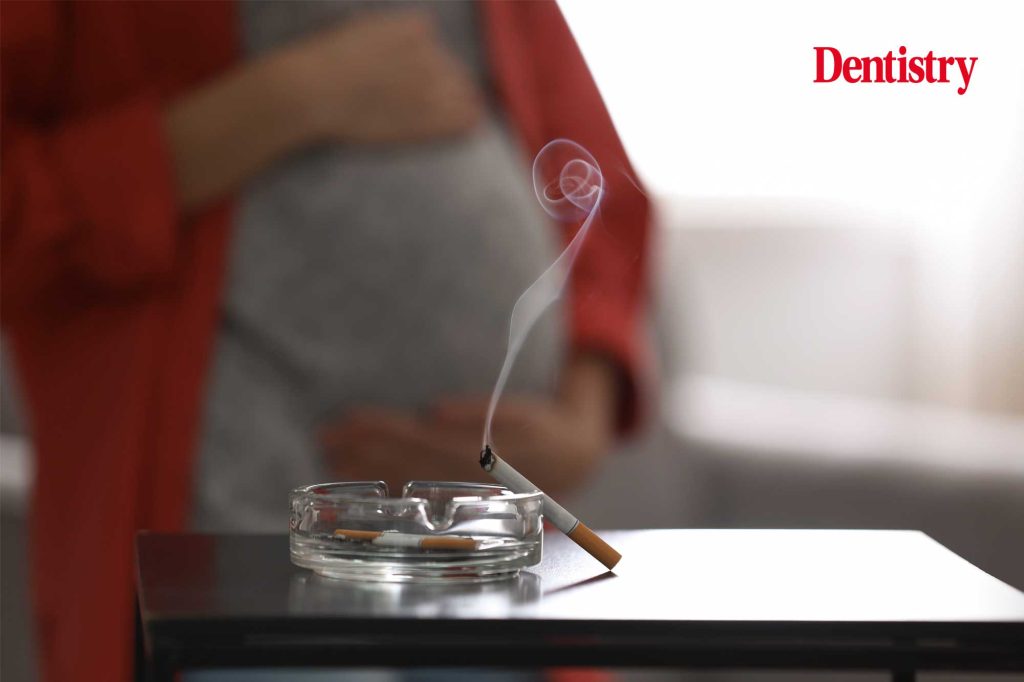
Enamel defects and hypodontia were linked with maternal smoking during pregnancy in a new literature review.
The review explored the association of various dental development disorders with smoking during pregnancy.
Many of the studies included found that hypodontia, or teeth failing to develop, was more common in babies whose mother had smoked while pregnant. The researchers suggest that as smoking reduces oxygen flow to the placenta, it can negatively impact the cells responsible for forming deciduous teeth. This could prevent them from maturing, leading to hypodontia.
The presence of nicotine can also disrupt the development of enamel and dentine, resulting in hypomineralisation and enamel defects. Several of the studies supported an association between antenatal smoking and molar incisor hypomineralisation.
Similarly, the review found that smoking during pregnancy was highly associated with enamel hypoplasia (insufficient or missing enamel). This was particularly strong in cases of smoking during the second and third trimesters.
Which aspects of tooth development are not affected by smoking during pregnancy?
On the other hand, most of the studies did not find a strong link between smoking during pregnancy and tooth eruption patterns. While it has been hypothesised that smoking during the first trimester may accelerate tooth eruption, the evidence surveyed in the review did not support this theory.
There was also some evidence of smoking during pregnancy being associated with short root anomalies. However the researchers acknowledged that the evidence was very limited in this area.
Published in Evidence-Based Dentistry, the review concludes that smoking during pregnancy poses ‘significant risks in the development of hypodontia and enamel defects in offspring’. However, the strength of the evidence remains limited due to inconsistencies in the methods used in different studies.
The researchers called for ‘further high-quality and well-controlled research’ to validate the evidence of risks to dental development in babies.
Follow Dentistry.co.uk on Instagram to keep up with all the latest dental news and trends.